Festae- Quality VS Trash!!

  • We are currently upgrading MFK. thanks! -neo
What do you mean by improperly labelled?

The fish being sold may look as right as rain, but if the genetics for some of these traits are carried by the fish that eventually are later bred, some of those traits can & usually will show up in at least some of their offspring. There's no telling what quality of offspring two fish will throw, until you breed them and find out. With most species of cichlids these type of genetic defoties are not something that one generally sees in F1 and/or F2 specimens, even when bred to siblings.

I agree with you. What I meant by improperly labeled was importers, distributors, vendors, etc claiming fish to be f0 or f1 when the fish is f2 or f100. I have seen this done. I do not care to go into that discussion. However like you said about the genetics being passed on and not knowing what you have until you grow it out, is completely true. The majority of deformities should be able to be identified by an inch or so and then should be culled.
 
what i meant when i said closer to wild meaning a fish as close as f2 or f3 could posess the deformities in festae vs other cichlids which can be bred for generations without major problems in terms of deformities. mel o meras dovii comes to mind. i believe his male originates from his first male from the 70s and is breeding with one of his offspring and is still producing unbelievable young doviis without any deformities which would suggest a much stronger gene pool to me.

Oh ok. Now I know what you meant. And very good point. I don't have a clue about that question.
 
I guess I'm thinking along the same lines as fishman. It may not be a case of the breeders being "trash", but more along the lines that the more you breed within the same gene pool the weaker all future generations become. I would have never suspected this until I saw what I considered deformed (downward curved mouths) on an F1 pair, and some of their fry. Obviously anyone breeding the fry not showing any of these deformaties may be in for a surprise down the road.
 
This is not just a festae issue. When any cichlid spawns in nature (any fish in fact). Most of the fry will be lost. The one or 2 that survive, in theory, will be the fittest, the best, maybe most colorful.
When we breed our cichlids for volume, and do not cull most, when we give 100 or more fry to a fish store, we are asking for the trash we sometimes end up with. And will obviously get many of the less desirable traits don't show up until they 3" or more.
 
While there is definitely some truth to what you are saying duanes, how many species of cichlids toss a large volume of culls in each spawn? If this was the case most commercial farms in Florida would have been out of business decades ago, that or the price of healthy juvies would be 10x what they currently are.

Jason previously brought up midevils, and like most people I have seen a bazillion mass produced midevils over the years, yet I don't recall ever seeing one with such obvious deformaties as what we are seeing in only a generation or two of captive bred festae.

Fish such as the one shown in the link below, and previously owned by Jason.
http://www.monsterfishkeepers.com/forums/showthread.php?467637-Shortbody-Festae-NJ-NYC-PU

Certainly these types of deformaties should be culled by the breeder before they are passed on to hobbyists, but at the same time I wouldn't expect to see so many problems in most cichlids within only a generation or two removed from the wild.
 
The characteristics that you site for "quality" festaes are highly subjective based on what appeals to human aesthetic desires (and specifically yours) than what makes a festae likely to survive in a river somewhere.

Having "High profile, solid bars, strong mouths, colors" are characteristics that are as likely than not selected AGAINST by Mother Nature than for (in the wild).

Line breeding (i.e. inbreeding to develop lines with desired characteristics...like the ones you identified) requires breeding related fish (or else it won't work).

Matt
 
Absolutely deformities occur in the wild...it's one mechanism by which new populations of fish (or other animals for that matter) develop from others.

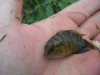
Here's a picture of a chanchito that I netted in Uruguay a couple of weeks ago. Whether the funny mouth on this guy is due to an injury or genetics is unknown...but he's certainly got a weird mouth (and is probably 1-2 years old). Only one I found like that, but who knows!

Uruguay 328.jpg


Matt

An interesting discussion from a few years ago.

http://www.monsterfishkeepers.com/forums/showthread.php?283557-Congenital-abnormality-FISH-BEAK!!

Note that Modest Man saw the same type of beaked shaped mouths in FO festae that were imported by the commercial wholesaler in his area.

Uruguay 328.jpg
 
Great example Matt. I don't doubt that deformaties can occur in wild populations, especially those caused from physical trauma at an early age, but with the festae that I saw it was a clear case of genetics gone awry, not trauma, which I didn't expect to see in only a few generations of captive bred stock. (F1's & F2's) Perhaps this may be a larger issue with festae, than other species of cichlids?
 
RD - one key point is that all wild fish aren't created equal. I didn't bring home the funny-mouthed guy above because it wouldn't make sense to risk having the (possible) genes that caused , even if 99% of the viable (F1) offspring have typical mouths. I took more typical stock.

Somewhere along the way (perhaps in a pond in Florida), festae that should have been culled (b/c of strange mouths) were allowed to reproduce. That the genetically problematic fish at the heart of the genetic anomoly were wild, F1, F2 or F100 has little to do with it. They were deformed and should not have been bred for the aquarium.

Another misconception is that wild fish are not siblings. The "Arroyo" above is likely only populated with new blood when there is a big flood. How often that occurs is anyone's guess. Rest assured that there are more than likely related fish pairing off and breeding there. Such natural line breeding (for traits that make the animals better adapted to that pond vs. the traits that make them desirable for aquarists) is the reason that fish from that pond ("Arroyo Cardozo") are "different" than in the ones a few miles away.

Matt
 
MonsterFishKeepers.com