


I realize most people that use sumps, think of them as simply a necessary, utilitarian piece of bio and mechanical filtration gear.
to be hidden in a cabinet, with all the other unsightly mechanical objects (maybe not if you’re a gear head), and especially, if space is at a premium.
And although I have sometimes thought of a sump, somewhat in the same bio filtration image, just not in the last couple decades.
I also want my sumps to be (at least partially) visually interesting aesthetic gardens, and…… I want more then just water clarity, and ammonia and nitrite reduction,
I also want as much nitrate consumption as I can get, to match as close as possible, to natural water parameters, in between water changes.
Wherever I collect fish, I also test the water parameters, and have yet to find any” natural waters" containing the type fish I collect, with any measurable nitrate, testing with a normal aquarium test method I use, the API liquid type.


Above are a couple grab samples from rivers where I collect (pH left, Nitrate right)
For that reason, my sump/refugiums are only about 10% bio-and mechanical media, and another 90% of the space dedicated to plants (and even a few animals).

In nature plants, do everything, from primitive algae to dense forests, they are what does the filtering, and a good job they do. I try to get this effect with oodles of plants, and the help of more primitive and tiny animals to help break things down.


To do this in a sump (as in nature) the plant mass ratio, must be “much” larger than the animal ratio. So for my 180 gal mostly cichlid tank, I use a 125 heavily planted tank as a sump, and use terrestrial plants (the cichlids don’t eat) in the 180.

Below are the water parameter results of that configuration, along with a regular schedule of partial water changes.


I also like to use sumps as grow out tanks, for species I catch that are too small to coexist with cichlids, like the juvie plecos, mollies, and juice cichlids,
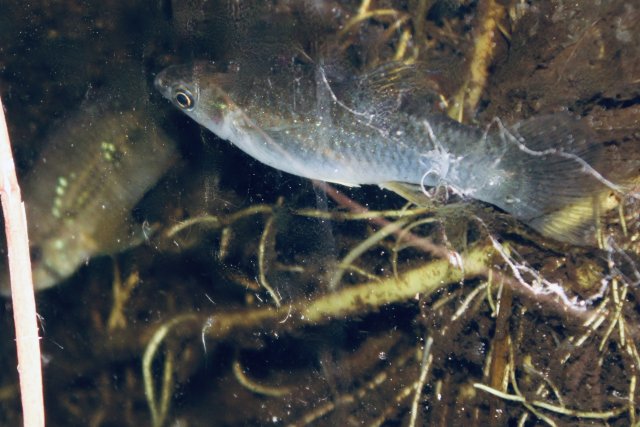

and/or fry the cichlids produce.


to be hidden in a cabinet, with all the other unsightly mechanical objects (maybe not if you’re a gear head), and especially, if space is at a premium.
And although I have sometimes thought of a sump, somewhat in the same bio filtration image, just not in the last couple decades.
I also want my sumps to be (at least partially) visually interesting aesthetic gardens, and…… I want more then just water clarity, and ammonia and nitrite reduction,
I also want as much nitrate consumption as I can get, to match as close as possible, to natural water parameters, in between water changes.
Wherever I collect fish, I also test the water parameters, and have yet to find any” natural waters" containing the type fish I collect, with any measurable nitrate, testing with a normal aquarium test method I use, the API liquid type.
Above are a couple grab samples from rivers where I collect (pH left, Nitrate right)
For that reason, my sump/refugiums are only about 10% bio-and mechanical media, and another 90% of the space dedicated to plants (and even a few animals).
In nature plants, do everything, from primitive algae to dense forests, they are what does the filtering, and a good job they do. I try to get this effect with oodles of plants, and the help of more primitive and tiny animals to help break things down.
To do this in a sump (as in nature) the plant mass ratio, must be “much” larger than the animal ratio. So for my 180 gal mostly cichlid tank, I use a 125 heavily planted tank as a sump, and use terrestrial plants (the cichlids don’t eat) in the 180.
Below are the water parameter results of that configuration, along with a regular schedule of partial water changes.
I also like to use sumps as grow out tanks, for species I catch that are too small to coexist with cichlids, like the juvie plecos, mollies, and juice cichlids,
and/or fry the cichlids produce.



