Andinoacara species question

  • We are currently upgrading MFK. thanks! -neo

coltiger1975

Polypterus
MFK Member
May 31, 2016
404
272
87
50
Edmonton
Good day, I am curious on how to tell the differences between pulcher and latifrons? I checked that site about andinoacara species and the differences in their photos is hard for me to distinguish. I see the differences in the rivulatus complex but pulcher is more difficult. I am beginning to think most are multi generation hybrids.

Second is kind of related to acaras lol I have a group of bujurquina vittata I think 6 left. They're in a 125 with a dimerus male. Once I have a pair would I be safe to add the three pulcher 1 male and 2 females. I'd remove 4 of the bujurquina so it would just be the six cichlids and a few Colombian tetras and Buenos Aires.

 
I .believe the only way to distinguish the differences between latifrons, and pulcher, is by knowing the ancestral locations they were caught in.
And even then, differences can be more different depending on the geography of river to river.
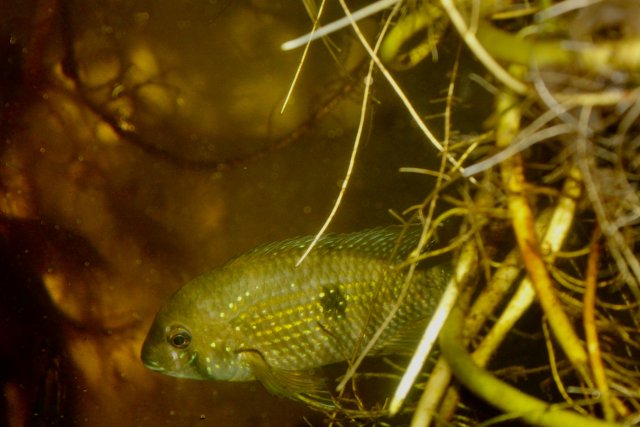
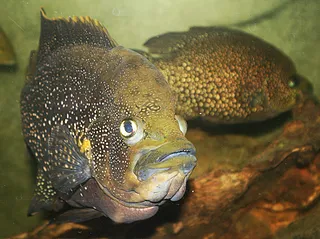
IMG_2850.jpeg
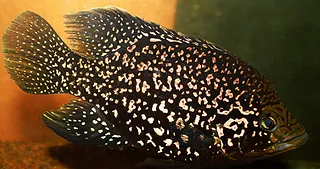
Above Andinoacara coerleopunctatus from the river Bayano basin
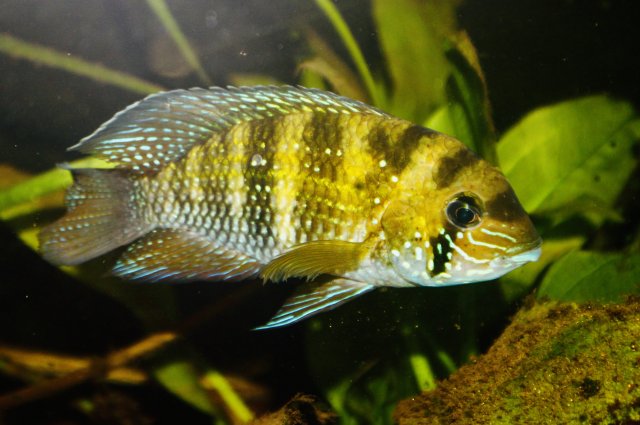
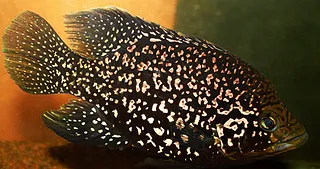
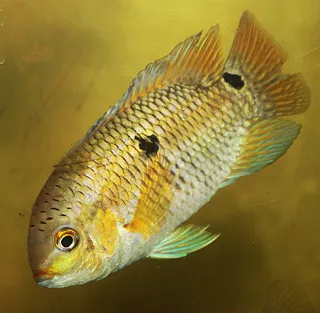
Below is Andinoacara coerleopunctatus from the Chagres river basin.
IMG_5623.jpeg
To me, the Bayano variant more closely resembles a latifrons, but because it was caught in Panama, of course it isn't.
And the Chagres river variant more closely resembles pulcher, but was caught in more western Panama, so we know it isn't.
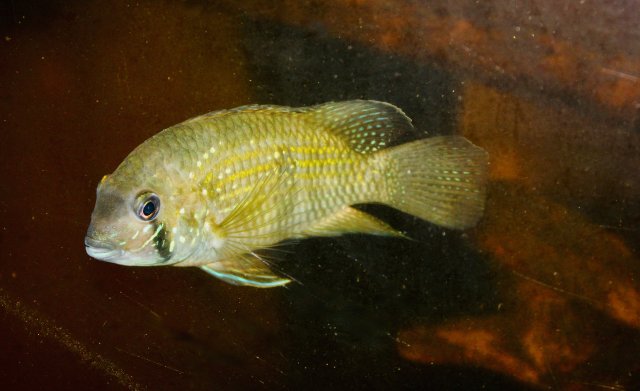
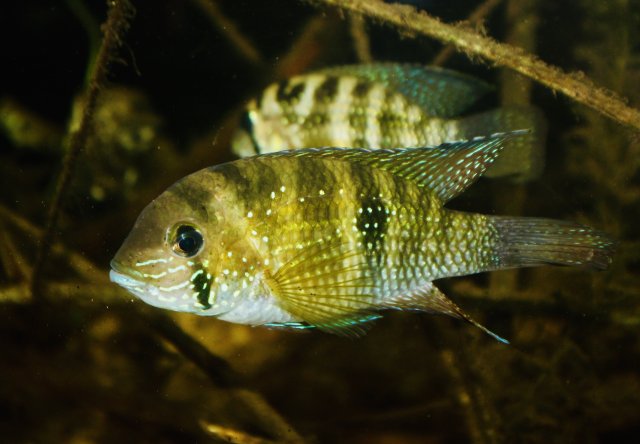
Species differentiation, is often"not" determined by looks, but other factors, especially in these more northern Andinoacara species.
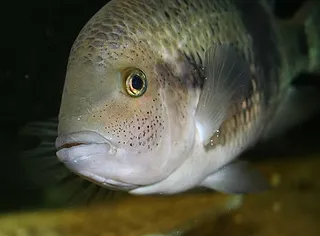
IMG_2153.jpeg
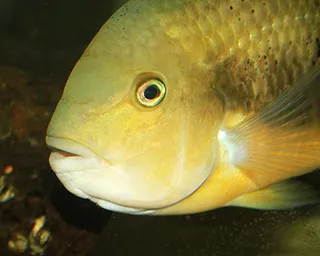
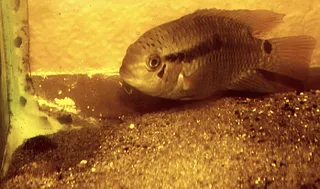
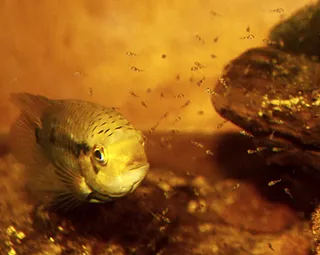
Same species above and below, again different location variants.
IMG_5465.jpeg
 
  • Like
Reactions: coltiger1975
Just some geographic data I should have included above.
If the Andinoacara was caught in Colombia, (specially in the Rio Magdalena river system), it may presume to be considered A latifrons.
If the Andinoacara in question came from Venezuela, or the islands of Trinidad and Tobago, is should likely be considered pulcher.
But if caught on the border of the two countries, natural hybridization is a distinct possibility.
And if the cichlids have ancestors going back decades in th hobby, hybridization is also a distinct possibility, because care may not have been taken in those early years to keep populations apart that resemble each other, creating an impossiblity of accurate ID.
 
Agree with duanes duanes that provenance to the location collected is a (or the) determining factor. A problem with using internet photos as a basis for identification in some very similar species is their appearance can vary over their geographic range and can also change with mood. The same fish in one photo can look like a completely different fish in another photo. Sometimes it's frustrating or misleading to conclude this is what species X looks like-- sure, they look like this in one particular mood or particular tank and water chemistry or with these particular tank mates, but they can also look like that. Also true of some Aequidens species, some Satanoperca species, when distinguishing catch locations of very similar looking populations of Heros, etc.
 
  • Like
Reactions: coltiger1975
Just some geographic data I should have included above.
If the Andinoacara was caught in Colombia, (specially in the Rio Magdalena river system), it may presume to be considered A latifrons.
If the Andinoacara in question came from Venezuela, or the islands of Trinidad and Tobago, is should likely be considered pulcher.
But if caught on the border of the two countries, natural hybridization is a distinct possibility.
And if the cichlids have ancestors going back decades in th hobby, hybridization is also a distinct possibility, because care may not have been taken in those early years to keep populations apart that resemble each other, creating an impossiblity of accurate ID.

Ah that is interesting, the parents of mine come from Trinidad, at least that is what the breeder had said. I never heard of them being imported lately so this was why I had the question. My friend has a male latifrons and to be honest looks very much like my male pulcher perhaps the latifrons is slightly lighter more silver. I think my male has a bit of a tear drop over its eye but his doesn't. But his is solo and does not get too excited.
 
  • Like
Reactions: neutrino
Funny, I had some A. metae from Rio Atabapo from TUIC (I recently moved them on) and had communicated with Kevin (owner/importer) some about their collection location. I like to save order confirmations, etc. to help me remember collection locations and how long I've had something, so I went back and looked and he said this about latifrons/pulcher: "Another good example could be Andinoacara latifrons vs. Andinoacara pulcher. Side by side they look nearly identical with again some individual variation between fish. Knowing the location is really the only true way to be certain (or DNA)."

The metae were a fish that looked different in different moods, including the eye spot appearing and disappearing. Just to make the point of how different some species can look in different moods I posted some photos and got some way off base guesses on what they were, including from guys who are typically good at IDs.
 
Last edited:
  • Like
Reactions: coltiger1975
This is a very interesting topic for me, in a positive, and negative way, because the propensity seems to be these days, is the intensional random creation of illegitimate mutts is now the rule, rather than the exception
so just to add to the confusion.........
Back in the late 80s when Paratilapia were 1st imported from Madagascar, they were all lumped together as Paratilapia polleni (Bleeker 1868)
And even though we now know (only a few decades later) there are perhaps half dozen separate Paratilapia species, that back then, through ignorance were unknowingly interbred creating the now commonly called and popular Starry Night cichlid, a mutt of what may be many Paratilapia species.
The true species look superficially similar, but on close examination, not really.
,1702566390543.png1702566538179.png
On the left above, P sp East coast small spot, on the right above P andapa.
To me it seems pretty obvious they are different species.

Yet in the same breath, below are two Chuco intermedium, both the same species, but from different river systems.
1702566714708.png1702566744546.png
As neutrino mentioned, other than location, the only real way to know is DNA.

1702566489195.png
 

Attachments

  • 1702566390543.png
    1702566390543.png
    141.3 KB · Views: 36
  • 1702566538179.png
    1702566538179.png
    110.1 KB · Views: 35
  • 1702566714708.png
    1702566714708.png
    96.4 KB · Views: 36
  • 1702566744546.png
    1702566744546.png
    118.9 KB · Views: 35
  • Like
Reactions: coltiger1975
Funny, I had some A. metae from Rio Atabapo from TUIC (I recently moved them on) and had communicated with Kevin (owner/importer) some about their collection location. I like to save order confirmations, etc. to help me remember collection locations and how long I've had something, so I went back and looked and he said this about latifrons/pulcher: "Another good example could be Andinoacara latifrons vs. Andinoacara pulcher. Side by side they look nearly identical with again some individual variation between fish. Knowing the location is really the only true way to be certain (or DNA)."

The metae were a fish that looked different in different moods, including the eye spot appearing and disappearing. Just to make the point of how different some species can look in different moods I posted some photos and got some way off base guesses on what they were, including from guys who are typically good at IDs.

I think both species are very alike, has there been DNA done on these? I know they belong to the same complex.

I have a trio of aequidens diadema as well, I think much like the aequidens metae you had I do notice they are constantly changing their appearance.
 
  • Like
Reactions: neutrino
This is a very interesting topic for me, in a positive, and negative way, because the propensity seems to be these days, is the intensional random creation of illegitimate mutts is now the rule, rather than the exception
so just to add to the confusion.........
Back in the late 80s when Paratilapia were 1st imported from Madagascar, they were all lumped together as Paratilapia polleni (Bleeker 1868)
And even though we now know (only a few decades later) there are perhaps half dozen separate species, that back then, through ignorance were unknowingly interbred creating the now commonly called and popular Starry Night cichlid, a mutt of what may be many Paratilapia species.
The true species look superficially similar, but on close examination, not really.
,View attachment 1531610View attachment 1531613
On the left above, P sp East coast small spot, on the right above P andapa.
To me it seems pretty obvious they are different species.

Yet in the same breath, below are two Chuco intermedium, both the same species, but from different river systems.
View attachment 1531614View attachment 1531615
As neutrino mentioned, other than location, the only real way to know is DNA.

View attachment 1531612

I very much agree and have the same thoughts as you. This has unfortunately happened to many species and there are plenty of examples in our hobby.

With Paratilapia species I always thought there were different ones. I remember working at a store and we would have Paratilapia 'poleni' come in and the next order the fish were different.

I also have three species of cichlasoma dimerus two different catch locations, amazonarum and bimaculatum. Even at times I see many similarities between them and even with 'acara' species as well. I have had a electric blue acara try and breed with dimerus but no eggs hatched. But this is how it can get out of control with hybrids. I also keep hybrids but I don't actually sell or distribute them.
 
  • Like
Reactions: neutrino
Cichlasoma dimerus is so wide spread in S America, as far north as central Brazil, west into Paraguay, and south as far as Uruguay Argentina border.
I kept the Uruguayan variant from Bella Union. These handled temps down to the low 50s'F, and spawned unheated tanks, and in outdoor ponds in Milwaukee into Oct.
1702918109012.png1702918174863.png1702918299864.png
1702918336070.png1702918370107.png
 
  • Love
Reactions: coltiger1975
MonsterFishKeepers.com