

I just saw the thread started with all kinds of out of this world (literally) scenarios with regards to where was Jeff.
It's more than a little odd - don't you think? Jeez. Can't a guy take some time without an explanation for his absence?
Actually, I have a good excuse for not being at my desk. Three other intrepid traveling cichlid collectors and I were in Nicaragua.
We covered a lot of ground and sampled fish from many watersheds far north and east of the better documented Nicaraguan crater lakes.
We fished rivers that may very well have never been collected in other than by the native Nicaraguans seeking food fish.
The bottom line is that there is much more to explore, so we plan to follow up on unfinished business in Nicaragua again next year.
Another task I aimed to accomplish was to reestablish export trade of Nicaraguan fish. As some of our members may recall from long ago, I did have exclusive Nicaraguan import trade established about 10 years ago and then again about 7 years ago. It's been THAT long since wild Nicaraguan fish were imported.
I believe that there will be more Nicaraguan fish to come now that I do have a willing and able contact to procure stocks from various collection areas.
I do have some habitat photos still in my camera, but I think the majority of readers prefer to see the fish now.
Keep in mind that this was more of an exploration trip and not of so much a 'grab all the fish you can to resell' kind of trip, so while I did have some fish to distribute, they were mostly in limited quantities. Many were sold for my export customers as well.

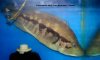


So the wild collected 'guapotes', or species of genus Parachromis, do indeed appear quite 'predatory'. Take a look at these pseudo-canines!
On our last night in Nicaragua, we ate fresh fish at a lake side restaurant with a beautiful view of the great lake, Lake Nicaragua.
I totally enjoyed a 12" or so whole cooked dovii. The flesh was very white and slightly sweet. Actually some of my traveling companions ordered fresh guapote as well. They recevied whole managuense. We shared and agreed that the dovii was superior in taste to managuense.
One of my buddies has the photos of these fish on our plates. I'll try and get those to share later.


There is no question that the great lake labiatus forms are spectacular. They've always reminded me of koi. I could describe individuals as bekko, hi utsuri, kohaku, utsurimono, etc.
More to come I trust; these sold out really fast.


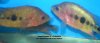
What Nicaraguan stock is not complete without midas cichlids?! The 'midas complex' is what is referred to as the vehicle by which all other Amphilophus forms have evolved within the rivers and lakes of Nicaragua.
I refer to the 'red head barred midas' as 'red head Isletas-like' because these were not collected behind the great lake islands called 'Las Isletas' - near Granada as previous import from 7 years ago. These current imports were still collected in Lake Nicaragua waters, just to the north of Las Isletas. They are identical to wild collected 'Las Isletas' forms, just not collected from behind Las Isletas. Hopefully you understand my explanation.

Not collected in the lake proper, these river dwelling 'neets' have some green coloration in maturity.


Colorful Astatheros longimanus and one pics of A. rostratus. I am going to work on spawning the rostratus, so hopefully there will be some juves to go around in the future.


Here are some more smaller-growing, less demanding Nicaraguan cichlid species.


Central American livebearers and characins are frequently collected with the cichlids we seek (usually in far greater numbers than actual cichlids). While livebearer species do have a dedicated following and network, the Central American characins are really very rarely seen in the trade.
Here is a rare opportunity to acquire actual tetras that are found in same native waters as many of the Central American cichlid species we keep!
The Brycon are very powerful swimmers and can grow quite large. They may be compared to the South American 'dorado' species.
The Roeboides 'hump backed tetra' grow to around 7" or so. That makes them an easier species to keep in groups as well.
I have never seen either species offered in the ornamental trade - ever!
More on this expedition at a later time.
Thanks for reading and thanks very much for your continued interest.
It's more than a little odd - don't you think? Jeez. Can't a guy take some time without an explanation for his absence?
Actually, I have a good excuse for not being at my desk. Three other intrepid traveling cichlid collectors and I were in Nicaragua.
We covered a lot of ground and sampled fish from many watersheds far north and east of the better documented Nicaraguan crater lakes.
We fished rivers that may very well have never been collected in other than by the native Nicaraguans seeking food fish.
The bottom line is that there is much more to explore, so we plan to follow up on unfinished business in Nicaragua again next year.
Another task I aimed to accomplish was to reestablish export trade of Nicaraguan fish. As some of our members may recall from long ago, I did have exclusive Nicaraguan import trade established about 10 years ago and then again about 7 years ago. It's been THAT long since wild Nicaraguan fish were imported.
I believe that there will be more Nicaraguan fish to come now that I do have a willing and able contact to procure stocks from various collection areas.
I do have some habitat photos still in my camera, but I think the majority of readers prefer to see the fish now.
Keep in mind that this was more of an exploration trip and not of so much a 'grab all the fish you can to resell' kind of trip, so while I did have some fish to distribute, they were mostly in limited quantities. Many were sold for my export customers as well.
So the wild collected 'guapotes', or species of genus Parachromis, do indeed appear quite 'predatory'. Take a look at these pseudo-canines!
On our last night in Nicaragua, we ate fresh fish at a lake side restaurant with a beautiful view of the great lake, Lake Nicaragua.
I totally enjoyed a 12" or so whole cooked dovii. The flesh was very white and slightly sweet. Actually some of my traveling companions ordered fresh guapote as well. They recevied whole managuense. We shared and agreed that the dovii was superior in taste to managuense.
One of my buddies has the photos of these fish on our plates. I'll try and get those to share later.
There is no question that the great lake labiatus forms are spectacular. They've always reminded me of koi. I could describe individuals as bekko, hi utsuri, kohaku, utsurimono, etc.
More to come I trust; these sold out really fast.
What Nicaraguan stock is not complete without midas cichlids?! The 'midas complex' is what is referred to as the vehicle by which all other Amphilophus forms have evolved within the rivers and lakes of Nicaragua.
I refer to the 'red head barred midas' as 'red head Isletas-like' because these were not collected behind the great lake islands called 'Las Isletas' - near Granada as previous import from 7 years ago. These current imports were still collected in Lake Nicaragua waters, just to the north of Las Isletas. They are identical to wild collected 'Las Isletas' forms, just not collected from behind Las Isletas. Hopefully you understand my explanation.
Not collected in the lake proper, these river dwelling 'neets' have some green coloration in maturity.
Colorful Astatheros longimanus and one pics of A. rostratus. I am going to work on spawning the rostratus, so hopefully there will be some juves to go around in the future.
Here are some more smaller-growing, less demanding Nicaraguan cichlid species.
Central American livebearers and characins are frequently collected with the cichlids we seek (usually in far greater numbers than actual cichlids). While livebearer species do have a dedicated following and network, the Central American characins are really very rarely seen in the trade.
Here is a rare opportunity to acquire actual tetras that are found in same native waters as many of the Central American cichlid species we keep!
The Brycon are very powerful swimmers and can grow quite large. They may be compared to the South American 'dorado' species.
The Roeboides 'hump backed tetra' grow to around 7" or so. That makes them an easier species to keep in groups as well.
I have never seen either species offered in the ornamental trade - ever!
More on this expedition at a later time.
Thanks for reading and thanks very much for your continued interest.
