

I'm using an AquaClear 70 powerhead in my 135 gallon tank. I know it is technically not the correct rating for this sized tank, but I like to have deadspots for my fish to rest in. But that is beside the point. The AC70's aeration feature is sensitive. Once the powerhead get's a little dirty or is not in the exact right depth or spot, the bubblemaker stops working. What is the best aeration device for a 135 g? Preferrably, a powerhead with bubblemaker.
Best aeration device for 135 gallon tank
- Thread starter wartooth
- Start date
You are using an out of date browser. It may not display this or other websites correctly.
You should upgrade or use an alternative browser.
You should upgrade or use an alternative browser.

Please elaborate. I thought that feeding air into the impeller was bad.rallysman;1940746; said:hook an air pump up to the powerhead.
With all due respect to my colleagues, IMO, anything that bubbles is next-to-useless. You must establish a water movement pattern which I will describe as "sideways cyclonic". Gas exchange is occuring at the very surface, across the entire surface. You must generate a flow pattern which pushes as much of the surface water as possible over to one of the sides and then down, and then back along the bottom of the tank in the opposite direction. This can be achieved with spray bars that are placed 1-2 inches under the surface with holes oriented to the 1:00 or 2:00 position. I'm sure you can accomplish the same thing with a powerhead.
wartooth;1940789; said:Please elaborate. I thought that feeding air into the impeller was bad.
It would be after the impeller. Most of the time there is a spot near the end of the powerhead where you can hook an air line. I do agree that bubbles arent completely necessary, but if done right they sure look cool lol.
brianp;1940812; said:With all due respect to my colleagues, IMO, anything that bubbles is next-to-useless. You must establish a water movement pattern which I will describe as "sideways cyclonic". Gas exchange is occuring at the very surface, across the entire surface. You must generate a flow pattern which pushes as much of the surface water as possible over to one of the sides and then down, and then back along the bottom of the tank in the opposite direction. This can be achieved with spray bars that are placed 1-2 inches under the surface with holes oriented to the 1:00 or 2:00 position. I'm sure you can accomplish the same thing with a powerhead.
Respectfully, the highlighted part of your statement is incorrect. Anytime you introduce air into the water column you have gas exchange, the volume of the air bubbles (surface area of the bubble x quantity of bubbles) far surpasses the surface area of the tank even under agitation. The rising of the air bubbles causes a current (includes surface agitation) as you describe in the rest of your statement without further equipment. I do suggest the use of wooden air stones as they create finer and more prolific bubbles.
The way you have describe the setup is basically standard issue and does work just fine too.
Bubble systems are used to degas faster without strong currents, both systems have their place.
Dr Joe
.
rallysman;1940839; said:It would be after the impeller. Most of the time there is a spot near the end of the powerhead where you can hook an air line. I do agree that bubbles aren't completely necessary, but if done right they sure look cool lol.
Before the impeller does give you a finer bubble (impeller chops them up), but if you don't overdue it, I've had no problem with premature impeller wear. It does cut the volume of water down tho.
Dr Joe
.
Dr Joe;1941380; said:Respectfully, the highlighted part of your statement is incorrect. Anytime you introduce air into the water column you have gas exchange, the volume of the air bubbles (surface area of the bubble x quantity of bubbles) far surpasses the surface area of the tank even under agitation. The rising of the air bubbles causes a current (includes surface agitation) as you describe in the rest of your statement without further equipment. I do suggest the use of wooden air stones as they create finer and more prolific bubbles.
The way you have describe the setup is basically standard issue and does work just fine too.
Bubble systems are used to degas faster without strong currents, both systems have their place.
Dr Joe
.
Gas exchange between water and a rising column of bubbles? Smaller diameter bubbles would have a higher surface-to-volume ratio and would be better for gas exchange, but would cause less agitation. The smaller the bubble, the better the gas exchange, but the less water movement invoked. The converse would be true for larger diameter bubbles. Theres no question that some gas-exchange would occur, regardless of bubble diameter. Would the resultant amount of oxygenation (and CO2 uptake) occurring be routinely useful? Ill have to think about this. Thanks.

Any powerhead venturi will stop producing bubbles when it gets plugged , or something gunks up the impeller. Regular maintenence is part of normal use. I use a 1200 GPH pump on one system, and a 2400 GPH pump on another. A grain of sand, a tiny snail, or even a plant fiber thinner than a thread can interupt a pump. Cleaning this equipment is part of successful fishkeeping.
Dirt or any tiny object can ruin a pump/powerhead very easily, that is another reason for regular cleaning.
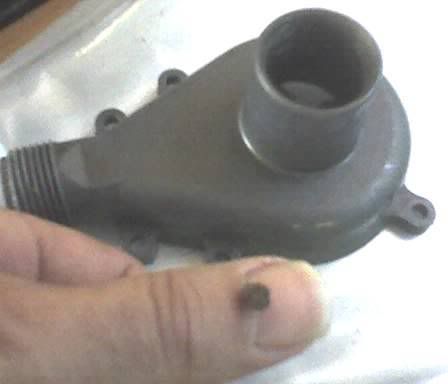
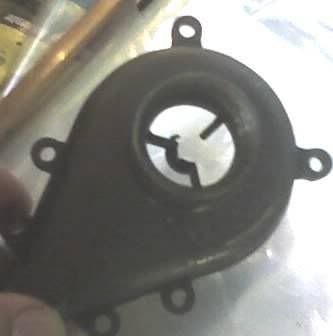
Luckily the volute is inexpensive to replace, as is an impeller compared to the price of a pump.
Dirt or any tiny object can ruin a pump/powerhead very easily, that is another reason for regular cleaning.
Luckily the volute is inexpensive to replace, as is an impeller compared to the price of a pump.