

Bleheri with ich ?

  • We are currently upgrading MFK. thanks! -neo

Drunken

Feeder Fish
MFK Member
Jul 29, 2007
200
0
0
Denmark
If you have read this thread http://www.monsterfishkeepers.com/forums/showthread.php?542521-Wild-C-Bleheri-delivery-and-problems , i took delivery of 5 wild channa bleheri and lost 3 to fungus infections.
My battle with fungus seem to be over, but late last night i noticed small white spots on the head, dorsal fin, pectoral fin and cadual fin. (see pic below, click to zoom)

I just took some readings form the tank:
NH3 = 0
NO2 = 0
NO3 = nothing readable
Temp : 75 F / 24c ( Can`t get it lower, do to weather/room temprature)
I`ve searched the net regarding snakeheads and ich, but all i come up with is: Rarely/Never seen with snakeheads, dont do a heat/table salt threatment. I`ve found 1 place where one suggested marine salt, any thruth to that ?
I`ve put in an order for some ich meds, but its 3-4 days away, and i want to prevent it developing any further.

Do you think its ich, or am i dealing with something else ?
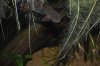
DSC_0062.JPG
 
it does look like it might be ich, hard to see in the pic . I haven't ever come across ich in snake heads. Normally I recommend heat treatment with any other species of fish, but I would NOT advise that with bleheri they will not be able to handle the high temps. They also do not like salt, so dont ad any, also salt wont treat ich, that's a myth, i've had ich in my brackish tanks lol. Also to answer our question Marine salt is no different then any other salt.

Before I start my rant i want to state I've even seen ich on a snakehead let alone treated snakeheads for ich . I can tell you I know snakeheads are very sensitive to most medications so I would recommend you attempt treatment without medications. This species also can't handle high heat so bumping temps to 86 on them would do more harm then ground and probably would bring back your fungal problem.

Personally in your shoes i would move them into a QT tank with no substrate but lot's of hiding spots (PVC pipes work well and are cheap ), then crank the temps in the main tank to about 90 degrees.

In this time the current ich spots you see should move into the next stage of development, in an unheated tank it will take a couple days but the spots will drop off , it will then take few more days for those ich to gestate before they go into free swimming form and re-attach to the fish . Do regular water changes and try to vacuum the bottom of the tank, this will help decrease the numbers of developing ich parasites laying on the bottom.

After 7-10 days turn the heaters off in your other tank and move the snake heads back into there home. this should be sufficient to insure all existing ich in the tank have moved into free swimming form and died off without finding a host.

I would personally watch closely and as each snakehead becomes spot free I'd scoop it up, and return it to it's home before any more ich get a chance to latch onto them and start the process over again(AFTER HEATERS ARE OFF) .

Of course this is 100% theory ! I have never tried it but from what i know about the life cycle of ICH and about sub-tropical Channa that's is how i would approach the issue, and hope that the combination knocks ich populations in the main tank down to almost nothing and then let the snake heads natural resilient immune system take care of the rest !

Hope that helps! and good luck, If you have any questions about what i'm suggesting/why just ask!
 
I dont know what it was, i kept a close eye on the fish while i waited for the meds to arrive. After 2-3 days the spots were gone, and not shown up since. (no meds added)

Thanks for all the help -DC-
 
Glad to hear it cleared up ! I recommend you keep a close eye on all of them for another week or so watching for any spots, just in case .

With an unheated tank the life cycle of ich is prolonged, IF it was ich those spots would have disappeared because the next stage of the reproduction cycle takes place in the substrate, in an unheated tank it can be a while before the next wave of ich appears on the fish. The lower the temps the longer it takes for the ich parasites to developed in the substrate before turn free swimming and eventually re-attach to a host fish. And dont forget to check all the fish in the tank, just because on fish was host to the first batch, doesn't mean another will get the next wave of ich first.

Hopefully it's gone, but well worth watching closely for another week to be safe, if you see ANY spots on any of them I would remove ALL of them from the tank right away and follow the steps i mentioned above before it gets a chance to infect the other fish.
 
MonsterFishKeepers.com
