It's true! I lost an entire tankful of fish and the fault lies entirely with duckweed. I flew home after an absence of just over two weeks, and the next morning I wandered out to my stock tanks in the corner of my yard. As expected, each was covered with a thick layer of duckweed, which I proceeded to thin out by the simple expedient of skimming off about 95% of it and tossing it on the compost heap.
Hanky-panky had obviously been running rampant; there were fry everywhere. A couple cichlid species...my sentimental favourite Green Swordtails...a couple bubblenests of Hoplo cats...my Heterandria colony...even the freebie goldfish I got from a neighbour this spring were chasing each other around in my single inground pond in what appeared to be a display of unbridled love, or at least lust.
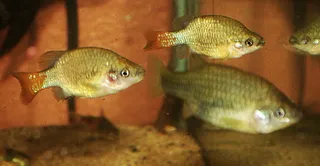
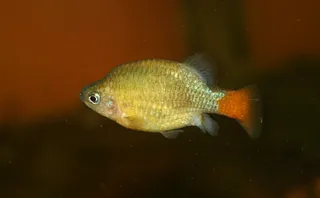
Ah, but then I moved towards the last stock tank in the line, containing my entire (!) population of Xenotoca livebearers. These are the only Goodeid species I currently have; I semi-regretfully sold off all my Ameca splendens and Skiffia francesae last year because I was starting to get overrun with them, but the Red-tail Xenotocas were not going anywhere; I absolutely love those little guys, one of my favourite small species of fish. I paddled the surface of the stock tank a wee bit, to rouse any small fry away from the duckweed that was about to be scooped...and paused as an unpleasant whiff hit my nose. Uh-oh...
Every fish dead, from full 2.5-inch adults right down to 1/4-inch newborns. Several females had given birth in my absence; all told there were well over 200 fish in there...every last one dead. The stench was terrible. I was devastated.
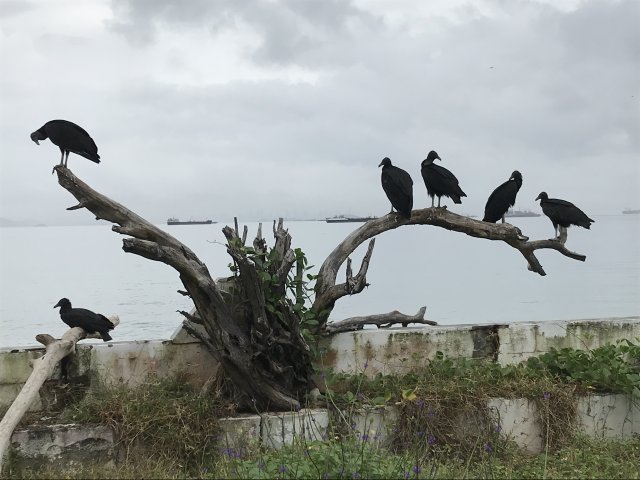
I drained the tank immediately, watching the outflow carefully for a few survivors: nothing. But when I got to the bottom, I was mortified to find the putrid, rotting carcass of a Grackle, a species of large blackbird that is common hereabouts and which I have noted on several occasions attempting to catch and eat small fish from the inground pond. I have, in past years, improved the genetic strength of the local Grackle population by shooting the ones that ate my fish, thus removing from the gene pool the ones that were predisposed towards pissing me off...but this is obviously a trait which continues to resurface.
I dipped the disgusting cadaver out of the few inches of water at the bottom...and in doing so disturbed a second, even-longer-dead one next to it. This one wasn't even a body anymore; it would better be described as a skin bag full of pus...and it broke open.
My excellent hindsight tells me that these stupid birds were standing on the smooth rounded top edge of the tank, looking for a Goodeid snack, and must have slipped in. Once in the water, they were unable to take flight and drowned. Each stock tank contains a small floating piece of wood, placed there to allow any wayward treefrogs a chance to escape if they fall in, but the wood pieces are very small and were obviously insufficient to save the much larger birds.
Why, oh why, did I put all my eggs in one basket, er, stock tank? Beats me; Xenotocas are tough, hardy fish, and it never even occurred to me that they would be struck down by disease, or that such a lethal tank mishap would occur and get all of them. Should have had them separated out into at least a couple of smaller groups, but...there ya go.
And, no, of course I don't blame the duckweed. Whenever we read about a devastated tank here on MFK, there is always some obscure, pie-in-the-sky cause that is selected as the explanation...obscure poisons or toxins, never-before-imagined diseases, supernatural forces...so I figured I'd jump on the bandwagon. The real reason in this case? Laziness...cockiness...and a healthy dose of "s*** happens"...
Hanky-panky had obviously been running rampant; there were fry everywhere. A couple cichlid species...my sentimental favourite Green Swordtails...a couple bubblenests of Hoplo cats...my Heterandria colony...even the freebie goldfish I got from a neighbour this spring were chasing each other around in my single inground pond in what appeared to be a display of unbridled love, or at least lust.
Ah, but then I moved towards the last stock tank in the line, containing my entire (!) population of Xenotoca livebearers. These are the only Goodeid species I currently have; I semi-regretfully sold off all my Ameca splendens and Skiffia francesae last year because I was starting to get overrun with them, but the Red-tail Xenotocas were not going anywhere; I absolutely love those little guys, one of my favourite small species of fish. I paddled the surface of the stock tank a wee bit, to rouse any small fry away from the duckweed that was about to be scooped...and paused as an unpleasant whiff hit my nose. Uh-oh...
Every fish dead, from full 2.5-inch adults right down to 1/4-inch newborns. Several females had given birth in my absence; all told there were well over 200 fish in there...every last one dead. The stench was terrible. I was devastated.
I drained the tank immediately, watching the outflow carefully for a few survivors: nothing. But when I got to the bottom, I was mortified to find the putrid, rotting carcass of a Grackle, a species of large blackbird that is common hereabouts and which I have noted on several occasions attempting to catch and eat small fish from the inground pond. I have, in past years, improved the genetic strength of the local Grackle population by shooting the ones that ate my fish, thus removing from the gene pool the ones that were predisposed towards pissing me off...but this is obviously a trait which continues to resurface.
I dipped the disgusting cadaver out of the few inches of water at the bottom...and in doing so disturbed a second, even-longer-dead one next to it. This one wasn't even a body anymore; it would better be described as a skin bag full of pus...and it broke open.
My excellent hindsight tells me that these stupid birds were standing on the smooth rounded top edge of the tank, looking for a Goodeid snack, and must have slipped in. Once in the water, they were unable to take flight and drowned. Each stock tank contains a small floating piece of wood, placed there to allow any wayward treefrogs a chance to escape if they fall in, but the wood pieces are very small and were obviously insufficient to save the much larger birds.
Why, oh why, did I put all my eggs in one basket, er, stock tank? Beats me; Xenotocas are tough, hardy fish, and it never even occurred to me that they would be struck down by disease, or that such a lethal tank mishap would occur and get all of them. Should have had them separated out into at least a couple of smaller groups, but...there ya go.
And, no, of course I don't blame the duckweed. Whenever we read about a devastated tank here on MFK, there is always some obscure, pie-in-the-sky cause that is selected as the explanation...obscure poisons or toxins, never-before-imagined diseases, supernatural forces...so I figured I'd jump on the bandwagon. The real reason in this case? Laziness...cockiness...and a healthy dose of "s*** happens"...