Well I haven't been terribly active here for a long time. I was busy moving myself into the frigid north. In this process I tore down a tank I built in 2006/2007 (See here: http://www.monsterfishkeepers.com/forums/showthread.php?t=78335), that had been in service for about 3 years. It's been sitting, empty in my new place for 6 months or so, and just this weekend I started having a look-see whether it could be set back up.
The construction method was plywood and oak structure, sealed with industrial formulators cold cure epoxy, tinted black. I used short strand fiberglass filler to fill the corners before applying the epoxy.
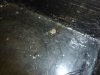
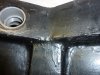
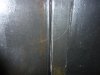
When I examined the tank this weekend, I was amazed that it had been still holding water at all. some screw heads had begun to rust beneath the epoxy, and at every corner joint the epoxy had cracked and begun to peel. There are long cracks all over all the flat surfaces, and in one place there is even a small fungi growing where the epoxy cracked away from the wood.
Knowing what I know now, I believe there are a number of reasons this epoxy was a poor choice:
1) This epoxy product cures quite hard, while any wood structure will shift and move over the course of it's life, with moisture, temperature, and age. When the tank flexed, the epoxy did not.
2) The epoxy I used was not a very runny variety, and as such it would not have sunk in very far to form a heavy mechanical bond with the wood surface. Because of this, it will seperate from the surface when strained. Also where I put it over the short strand fiberglass filler, the bond would have been very poor. (Most epoxy does not bond very well to other plastics).
3) I did about 8 coats of expoxy "just to be sure". This made for a thick coating, which would have been even more susceptible to cracking. Had I used a sprayer and only done one coat, things might have been different.
IF I WERE TO DO IT AGAIN: Well for those of you who followed my 600gl build you know I used polyester resin, and sprayed it on. The difference in that build was I used fiberglass matting in all the corners, so I'm relatively certain cracking won't be a problem in the corners. Polyester is also quite a bit thinner than this epoxy was, so I'm hoping it formed a better bond with the wood and will cope with the movement. However, having witnessed the condition of this 200gl tank that used a 'hard' type sealant, I am planning to evacuate my 600gl into a temporary pond and reseal it with one of the liquid rubber products like zavlar or pond coat or wetsuit. That way even if tiny cracks form in the fiberglass, they will be covered with a flexible coating. I think if I were to make another tank with a painted on sealer, I would do the corners with fiberglass again, but I'd use a liquid rubber top coat.
Hopefully this adds some depth to MFK's view on sealing. I know it's a common request to hear from people who have had home made tanks set up for a number of years.
The construction method was plywood and oak structure, sealed with industrial formulators cold cure epoxy, tinted black. I used short strand fiberglass filler to fill the corners before applying the epoxy.
When I examined the tank this weekend, I was amazed that it had been still holding water at all. some screw heads had begun to rust beneath the epoxy, and at every corner joint the epoxy had cracked and begun to peel. There are long cracks all over all the flat surfaces, and in one place there is even a small fungi growing where the epoxy cracked away from the wood.
Knowing what I know now, I believe there are a number of reasons this epoxy was a poor choice:
1) This epoxy product cures quite hard, while any wood structure will shift and move over the course of it's life, with moisture, temperature, and age. When the tank flexed, the epoxy did not.
2) The epoxy I used was not a very runny variety, and as such it would not have sunk in very far to form a heavy mechanical bond with the wood surface. Because of this, it will seperate from the surface when strained. Also where I put it over the short strand fiberglass filler, the bond would have been very poor. (Most epoxy does not bond very well to other plastics).
3) I did about 8 coats of expoxy "just to be sure". This made for a thick coating, which would have been even more susceptible to cracking. Had I used a sprayer and only done one coat, things might have been different.
IF I WERE TO DO IT AGAIN: Well for those of you who followed my 600gl build you know I used polyester resin, and sprayed it on. The difference in that build was I used fiberglass matting in all the corners, so I'm relatively certain cracking won't be a problem in the corners. Polyester is also quite a bit thinner than this epoxy was, so I'm hoping it formed a better bond with the wood and will cope with the movement. However, having witnessed the condition of this 200gl tank that used a 'hard' type sealant, I am planning to evacuate my 600gl into a temporary pond and reseal it with one of the liquid rubber products like zavlar or pond coat or wetsuit. That way even if tiny cracks form in the fiberglass, they will be covered with a flexible coating. I think if I were to make another tank with a painted on sealer, I would do the corners with fiberglass again, but I'd use a liquid rubber top coat.
Hopefully this adds some depth to MFK's view on sealing. I know it's a common request to hear from people who have had home made tanks set up for a number of years.