

Hey guys, new to the forum but I had a questions about Geophagus Altifrons, I’m wanting to set up a 75 gallon tank for a pair and was thinking of a hand full of tank mates. I really love the blood fin tetra and some threestripe Cory but I don’t know if these tank mates would be to small and would end up as dinner, any suggestions helps.
Geophagus Altifrons
- Thread starter Snarbleglarf
- Start date
You are using an out of date browser. It may not display this or other websites correctly.
You should upgrade or use an alternative browser.
You should upgrade or use an alternative browser.



Hey guys, new to the forum but I had a questions about Geophagus Altifrons, I’m wanting to set up a 75 gallon tank for a pair and was thinking of a hand full of tank mates. I really love the blood fin tetra and some threestripe Cory but I don’t know if these tank mates would be to small and would end up as dinner, any suggestions helps.
Welcome aboard
It probably would work especially if you got the Geophagus Altifrons at a small size.
Ok thanks!Welcome aboard
It probably would work especially if you got the Geophagus Altifrons at a small size.

I have a group of 8 SB altifrons with several smaller tetras and assorted fish. The altifrons are sweet hearts you should be coolOk thanks!

I think you should be fine mixing these species. I have kept large geophagus with small tetras as well as Corydoras and they seem to pay them no attention. They barely ever would go to the upper levels of the tank and interact with the tetras. Plus the corydoras have pectoral spines so I highly doubt they’d eat them.Hey guys, new to the forum but I had a questions about Geophagus Altifrons, I’m wanting to set up a 75 gallon tank for a pair and was thinking of a hand full of tank mates. I really love the blood fin tetra and some threestripe Cory but I don’t know if these tank mates would be to small and would end up as dinner, any suggestions helps.
You will most likely have aggression towards the other fish however when they spawn.
G. Altifrons also isn’t the smallest geophagus so eventually the 75G may seem cramped as they can reach sizes of 9 inches
Thanks! Im hoping to get as much information as I can on the G. Altifrons, what size tank would you suggest to be able to keep them in there for their whole life?I think you should be fine mixing these species. I have kept large geophagus with small tetras as well as Corydoras and they seem to pay them no attention. They barely ever would go to the upper levels of the tank and interact with the tetras. Plus the corydoras have pectoral spines so I highly doubt they’d eat them.
You will most likely have aggression towards the other fish however when they spawn.
G. Altifrons also isn’t the smallest geophagus so eventually the 75G may seem cramped as they can reach sizes of 9 inches
And I’m hoping to have a breeding pair as well any suggestions on how I can get a good pair? I have heard about getting a group and letting them pair on their own and removing the extra, will the male get aggressive towards the female if I remove the other fish?

When I had a breeding pair of altifrons, I started by getting a group of 6 juvies and growing them out together.
The pair selected each other and moved away from the group to spawn, and they shared mouth brooding the fry at between 7 and 8 " when they spawned.
I had tetras as dithers which picked off the fry one by one, so if wanting to keep fry, I would move the pair (once established) to its own tank, with no other fish.
They are a shoaling species in nature when not spawning so need a long tank to interact as a group, to choose compatible partners. i used 6 ft tanks, like 125s or 150s, I doubt depth matters much, but enough length to provide substantial, open, sandy swimming area as a group seemed important.
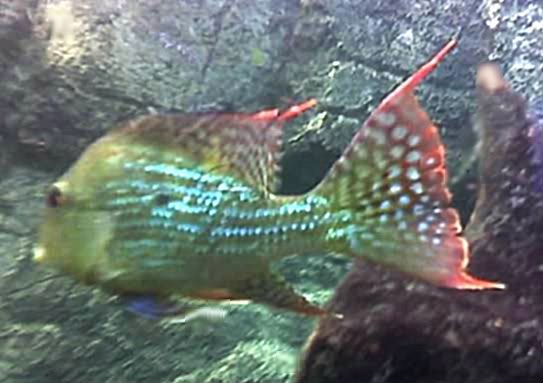
The shoal technique, and later separating out the compatible pair to a breeding tank has worked for me, with many Geophagine species.
And sometimes in the end removing the male, and putting him back in the shoal, as he sometimes harasses the brooding female.
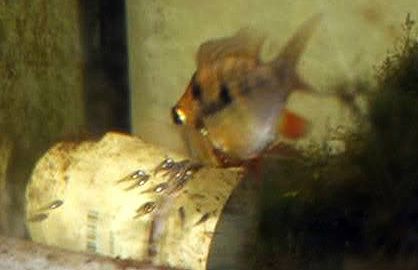

The pair selected each other and moved away from the group to spawn, and they shared mouth brooding the fry at between 7 and 8 " when they spawned.
I had tetras as dithers which picked off the fry one by one, so if wanting to keep fry, I would move the pair (once established) to its own tank, with no other fish.
They are a shoaling species in nature when not spawning so need a long tank to interact as a group, to choose compatible partners. i used 6 ft tanks, like 125s or 150s, I doubt depth matters much, but enough length to provide substantial, open, sandy swimming area as a group seemed important.

The shoal technique, and later separating out the compatible pair to a breeding tank has worked for me, with many Geophagine species.
And sometimes in the end removing the male, and putting him back in the shoal, as he sometimes harasses the brooding female.


Wow those are awesome pics! So after they have established the pair at about 7-8” do I need to keep them in a shoal when they are not breeding, or do you think I am able to keep them as just the pair?When I had a breeding pair of altifrons, I started by getting a group of 6 juvies and growing them out together.
The pair selected each other and moved away from the group to spawn, and they shared mouth brooding the fry at between 7 and 8 " when they spawned.
I had tetras as dithers which picked off the fry one by one, so if wanting to keep fry, I would move the pair (once established) to its own tank, with no other fish.
They are a shoaling species in nature when not spawning so need a long tank to interact as a group, to choose compatible partners. i used 6 ft tanks, like 125s or 150s, I doubt depth matters much, but enough length to provide substantial, open, sandy swimming area as a group seemed important.
The shoal technique, and later separating out the compatible pair to a breeding tank has worked for me, with many Geophagine species.
And sometimes in the end removing the male, and putting him back in the shoal, as he sometimes harasses the brooding female.
Also about how long does it take them to grow to full size? I’m wanting to start them out in a 75gal with some Corydoras and in about a year or two upgrade them to a bigger tank if their growth rate isn’t very fast
I would usually put the male back in the tank with the shoal, soon after spawning, he would sometimes then hook up with another female.
After the fry could fend for themselves, the female needed some time alone time to recover, and feed then back to the group.
(mouth brooding takes a lot of resources)
It took about 1.5 to 2 years to get to spawning size and maturity to get from the 1-1.5" juvies (the size I first got them as).
Growth rate may depend on water change schedule, the more and larger water changes, the faster they grow, I normally do 30-40% every other day.
If I had access to only a 75 gal, I would choose a smaller growing Geophagines.
Red Head Tapajos are kind of smaller growing Geo's of the altifrons group.
For that size tank, the Gymnogeophagus group would work well averaging around 5".
Gymno species yerbalito, male below, the one mouthing fry above is a female.

Gymnogeophagus sp Paso Pache below
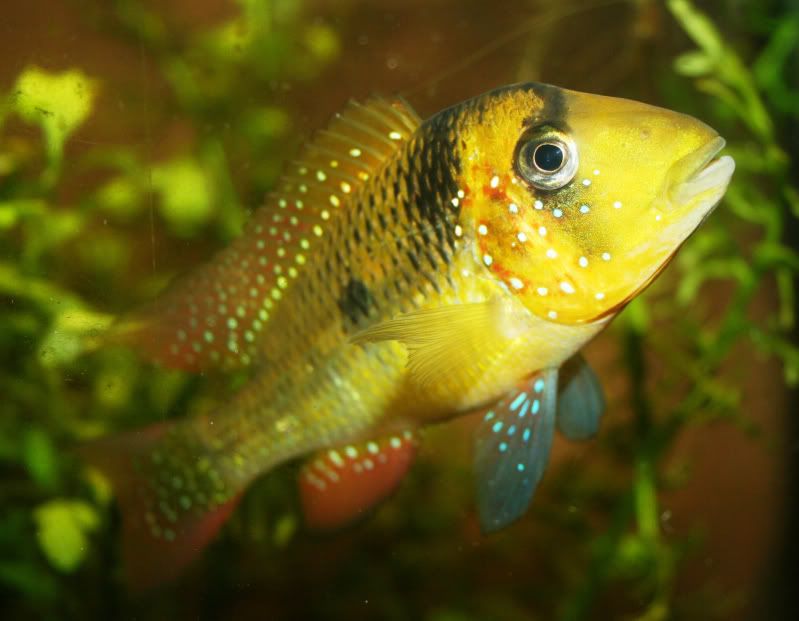
The 2 mentioned above are Uruguayan so are cooler water species (room temp, no heaters), I kept them with uruguayan corys, and tetras such Buenos Aires that also do best with cool downs.
Gymnogeophagus balzani "Bella Union" with Uruguayan Corry's below

After the fry could fend for themselves, the female needed some time alone time to recover, and feed then back to the group.
(mouth brooding takes a lot of resources)
It took about 1.5 to 2 years to get to spawning size and maturity to get from the 1-1.5" juvies (the size I first got them as).
Growth rate may depend on water change schedule, the more and larger water changes, the faster they grow, I normally do 30-40% every other day.
If I had access to only a 75 gal, I would choose a smaller growing Geophagines.
Red Head Tapajos are kind of smaller growing Geo's of the altifrons group.
For that size tank, the Gymnogeophagus group would work well averaging around 5".
Gymno species yerbalito, male below, the one mouthing fry above is a female.

Gymnogeophagus sp Paso Pache below

The 2 mentioned above are Uruguayan so are cooler water species (room temp, no heaters), I kept them with uruguayan corys, and tetras such Buenos Aires that also do best with cool downs.
Gymnogeophagus balzani "Bella Union" with Uruguayan Corry's below

Ok, I’m personally not a fan of the Gymnogeophagus but I do really like the tapajos, could I do a small group of those in a 75 comfortably?I would usually put the male back in the tank with the shoal, soon after spawning, he would sometimes then hook up with another female.
After the fry could fend for themselves, the female needed some time alone time to recover, and feed then back to the group.
(mouth brooding takes a lot of resources)
It took about 1.5 to 2 years to get to spawning size and maturity to get from the 1-1.5" juvies (the size I first got them as).
Growth rate may depend on water change schedule, the more and larger water changes, the faster they grow, I normally do 30-40% every other day.
If I had access to only a 75 gal, I would choose a smaller growing Geophagines.
Red Head Tapajos are kind of smaller growing Geo's of the altifrons group.
For that size tank, the Gymnogeophagus group would work well averaging around 5".
Gymno species yerbalito, male below, the one mouthing fry above is a female.
Gymnogeophagus sp Paso Pache below
The 2 mentioned above are Uruguayan so are cooler water species (room temp, no heaters), I kept them with uruguayan corys, and tetras such Buenos Aires that also do best with cool downs.
Gymnogeophagus balzani "Bella Union" with Uruguayan Corry's below