


So this is going to sound dumb as I had several tanks as a child and have 2 I've resently started up but, in y'all'a opinion what is the proper way to do a water change and how much how often? (Yes I know that depends some what on the type of fish and how many) I was always taught to put the siphon down into the gravel. If I was to want to increase water changes, would just taking out top water and replacing it good enough?
How to do a water change?
- Thread starter Buphy
- Start date
You are using an out of date browser. It may not display this or other websites correctly.
You should upgrade or use an alternative browser.
You should upgrade or use an alternative browser.

I do between 25-40% twice a week. Unless you are vacuuming the gravel it really doesn't matter were the siphon goes.

I agree with predatorkeeper, you can take water out anywhere.
But consider how oil sits on water....
Most of the unseen and semi-unseen pollutants are attracted to the air water interface, oils proteins, etc.
And notice how if your pumps go out because of a power outage, you quickly see a white film develop on the surface.
Although important to vacuum out detritus, it is just as important to remove those unseen chemicals, proteins, scum from the water.
This one of the reasons skimmers were developed.
But enough on that...
I have 1000 gals of tanks, and in summer change 20-30% per day.
Because I pump old water to my lawn and garden, this is a very easy task.
And beyond the pumping, I siphon out detritus into buckets, and use that to flush toilets.
In winter the routine of pumping water, switches to drains, and cuts water changes back to about 30% every other day.
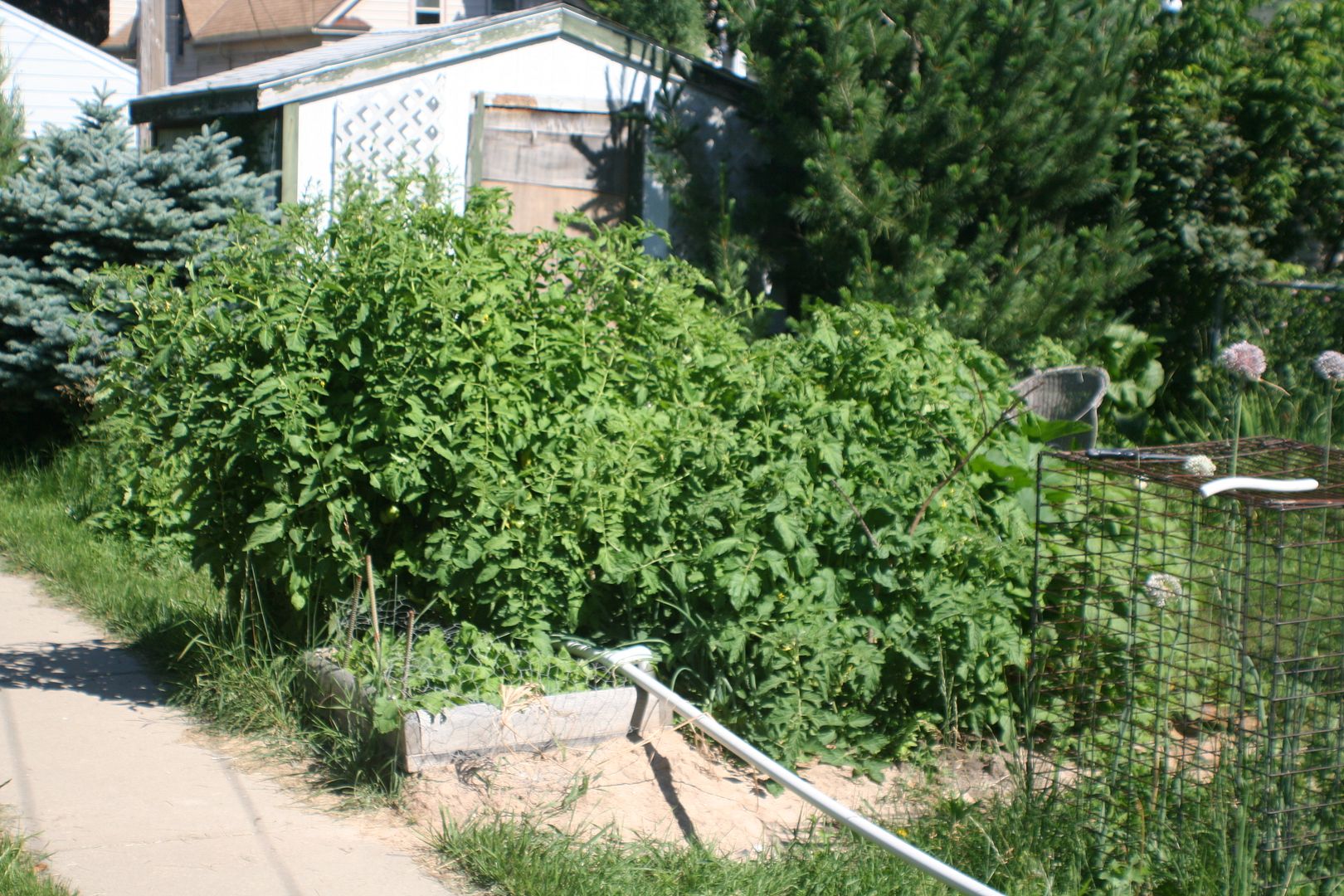
But consider how oil sits on water....
Most of the unseen and semi-unseen pollutants are attracted to the air water interface, oils proteins, etc.
And notice how if your pumps go out because of a power outage, you quickly see a white film develop on the surface.
Although important to vacuum out detritus, it is just as important to remove those unseen chemicals, proteins, scum from the water.
This one of the reasons skimmers were developed.
But enough on that...
I have 1000 gals of tanks, and in summer change 20-30% per day.
Because I pump old water to my lawn and garden, this is a very easy task.
And beyond the pumping, I siphon out detritus into buckets, and use that to flush toilets.
In winter the routine of pumping water, switches to drains, and cuts water changes back to about 30% every other day.


I recently started siphoning water from my AC110 on my 180, I also have prefilter that hangs on the back so as for the surface water debris isn't a problem. I realized by doing that it keeps filter housing nice clean.: BTW be very careful plastic can crack if handled to roughly.
BTW be very careful plastic can crack if handled to roughly.Hello; You have reopened a topic with a very wide range of views on the "how much water to change" part. This has been bandied about on this and other forums. I have seen reports of over 50% water change every day. I have also seen reports of water change every two weeks or more.
A point of view that has made sense to me revolves around checking water parameters. There are a variety of tank setups. From bare tanks with lots of fish (bioload) to heavily planted tanks with few fish. Water quality being the key to how often to change water, not some rigid schedule as to the amount and how often. Use the available test kits to get a value for the testable water conditions and then set up a water change schedule around the results.
I get the sense, probably in error, that some feel that making massive and often water changes makes for a better fish keeper. I suppose there is truth in that such a practice will result in good water. I question the necessity of such massive/often water changes. My take is that while it results in good water, there is a lot of unnecessary waste of water and a lot of effort.
Allow me to give an historical perspective. I started keeping fish around 1958. Back then I had not heard of nor figured out for myself the notion of changing water. I , and all other fish keepers I knew, simply added more water as it evaporated. Tanks ran for a time but I tended to break down a tank every year or so for cleaning. There were few home tests available at the time, pH being one I recall.
Two things came along. One being the HOB filters, at first back then air bubble operated. This allowed for the removal of some detritus (mulm) physically from the tank. At things progressed the early impeller type HOB's showed up. These made much more flow than the air powered type but the early models were not reliable. They would lose siphon very often, sometimes every day or two, so I ran the UGF and air powered type along with them. I did have a very strong HOB with a large electric motor that was positioned on top of the filter box. It had a shaft extending down into the filter box with an impeller on the shaft. I ran a 125 with it for a long while. Now my impeller HOB's run for months to years without problems.
The best filters, however, dot not remove all of the stuff that accumulates in tank water. By adding new water to a tank as it evaporates I was allowing a build up of various things dissolved in the water. This was the first thing I considered when the notion of doing water changes crossed my horizon. It made sense to remove some water to dilute these things. I also had been using a siphon to remove water when breaking down a tank for complete cleaning for years. It was a natural thing to have a hose big enough to siphon gravel along with the water during the water changes. This became the next thing to be of significance in my fish keeping. I would from time to time siphon out water and gravel during a water change. I would have some cleaned gravel ready to put back so. These two changes extended the run time of my tanks from a year or so to years.
I am not sure when the water test kits became as they are today. I do recall back in the 1970's doing water testing during field work for a Limnology class and for a graduate field study. We would collect water at a source and "set" some things with a chemical additive at the site. We then had to take the samples back to a lab to get the actual readings. I seem to recall it taking around an hour or so to do all of the tests. I can now test my tank water in a few minutes.
Now days I run tanks with lots of live plants and a very light bioload of fish. The water stays good for a fair time. I do not need to do changes so often as tanks from the past. I went thru periods of keeping too many fish or fish too big for a tank and those tanks need more frequent water changes.
In summary; test the water to help determine a water change schedule.
Good luck
A point of view that has made sense to me revolves around checking water parameters. There are a variety of tank setups. From bare tanks with lots of fish (bioload) to heavily planted tanks with few fish. Water quality being the key to how often to change water, not some rigid schedule as to the amount and how often. Use the available test kits to get a value for the testable water conditions and then set up a water change schedule around the results.
I get the sense, probably in error, that some feel that making massive and often water changes makes for a better fish keeper. I suppose there is truth in that such a practice will result in good water. I question the necessity of such massive/often water changes. My take is that while it results in good water, there is a lot of unnecessary waste of water and a lot of effort.
Allow me to give an historical perspective. I started keeping fish around 1958. Back then I had not heard of nor figured out for myself the notion of changing water. I , and all other fish keepers I knew, simply added more water as it evaporated. Tanks ran for a time but I tended to break down a tank every year or so for cleaning. There were few home tests available at the time, pH being one I recall.
Two things came along. One being the HOB filters, at first back then air bubble operated. This allowed for the removal of some detritus (mulm) physically from the tank. At things progressed the early impeller type HOB's showed up. These made much more flow than the air powered type but the early models were not reliable. They would lose siphon very often, sometimes every day or two, so I ran the UGF and air powered type along with them. I did have a very strong HOB with a large electric motor that was positioned on top of the filter box. It had a shaft extending down into the filter box with an impeller on the shaft. I ran a 125 with it for a long while. Now my impeller HOB's run for months to years without problems.
The best filters, however, dot not remove all of the stuff that accumulates in tank water. By adding new water to a tank as it evaporates I was allowing a build up of various things dissolved in the water. This was the first thing I considered when the notion of doing water changes crossed my horizon. It made sense to remove some water to dilute these things. I also had been using a siphon to remove water when breaking down a tank for complete cleaning for years. It was a natural thing to have a hose big enough to siphon gravel along with the water during the water changes. This became the next thing to be of significance in my fish keeping. I would from time to time siphon out water and gravel during a water change. I would have some cleaned gravel ready to put back so. These two changes extended the run time of my tanks from a year or so to years.
I am not sure when the water test kits became as they are today. I do recall back in the 1970's doing water testing during field work for a Limnology class and for a graduate field study. We would collect water at a source and "set" some things with a chemical additive at the site. We then had to take the samples back to a lab to get the actual readings. I seem to recall it taking around an hour or so to do all of the tests. I can now test my tank water in a few minutes.
Now days I run tanks with lots of live plants and a very light bioload of fish. The water stays good for a fair time. I do not need to do changes so often as tanks from the past. I went thru periods of keeping too many fish or fish too big for a tank and those tanks need more frequent water changes.
In summary; test the water to help determine a water change schedule.
Good luck
Funny Skyl47 both started keeping fish the same year, went thru many of the same historic changes in the hobby.
And brings up a very good point about plants.
The use of plants (but I don't mean 1 or 2 java ferns) but heavily planted tanks, can reduce the need for water changes significantly.
Also the use of terrestrial or marginal plants can do the same.
But one should consider the ratio of needed plants to animals (biomass) it takes to do this in any meaningful manner.
Plants and bacteria make up the largest percentage of life on earth, and higher animals a very small part.
Because cichlids (my main focus) are very hard on plants, I use separate planted refugiums to take up the slack, where invertebrates are also added further to help to break down organic matter.
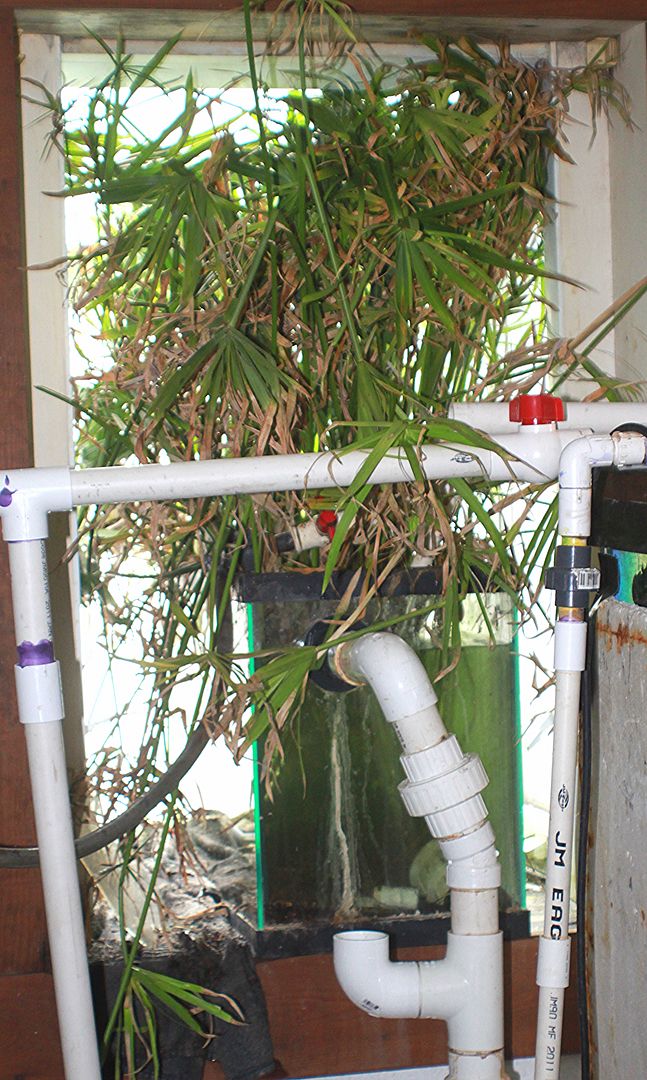


And brings up a very good point about plants.
The use of plants (but I don't mean 1 or 2 java ferns) but heavily planted tanks, can reduce the need for water changes significantly.
Also the use of terrestrial or marginal plants can do the same.
But one should consider the ratio of needed plants to animals (biomass) it takes to do this in any meaningful manner.
Plants and bacteria make up the largest percentage of life on earth, and higher animals a very small part.
Because cichlids (my main focus) are very hard on plants, I use separate planted refugiums to take up the slack, where invertebrates are also added further to help to break down organic matter.


These days, I have a different water change routine for every tank. The 40 breeder gets a 50% change every Sunday, the 36 gets a 50% change when I feel like doing it (intervals anywhere from 2 weeks to a month), and the 225 only gets 30% changed every 4 weeks or so. I clean my filters a bit more often than I change the water, and I have enough plant life growing in/out of all of my aquariums to keep the nitrates pretty low. Once all my growouts are in the 225, I will probably have to bump it up to weekly 50% water changes, though.
As for how I actually do my water changes, I actually haven't used an old fashioned siphon in over a year now. I use a Pondmaster submersible pump, with 3/4" tubing to drain my tanks, and then to refill them, with the 36 and the 40, I fill up 5 gallon buckets and then use the pump again, but with the 225, I just run the water hose directly into the tank (though in the winter, I do have to go back to using the buckets, which is a pain).
As for how I actually do my water changes, I actually haven't used an old fashioned siphon in over a year now. I use a Pondmaster submersible pump, with 3/4" tubing to drain my tanks, and then to refill them, with the 36 and the 40, I fill up 5 gallon buckets and then use the pump again, but with the 225, I just run the water hose directly into the tank (though in the winter, I do have to go back to using the buckets, which is a pain).

Tanks with pothos filtration gets a 50% w/c every 4-5days.
Tanks without pothos get 50% w/c every 3 days
Tanks without pothos get 50% w/c every 3 days
Pothos filtration can be set up very easily, for very cheaply, and can be set-up with cichlids. Just type in pothos in the search box above and you'll get a bunch of threads on the subjectPlants are very hard for me because I too have cichlids. As much as I would love to have a skimmer and do lots of plants I don't have the experience, room and/or money for these things =S