

General Information:
Scientific Name Hypancistrus zebra Isbrücker & Nijssen, 1991 - add this species to your "My Cats" page.
Common Name(s) Imperial Pleco, L046, L098, Zebra Pleco
Species Information:
Size 80mm (3.1") SL
Identification:
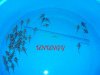
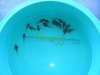
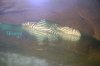
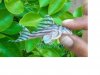
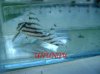
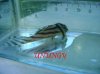
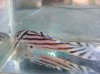
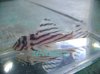
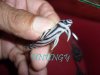
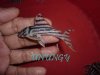
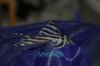
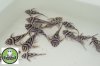
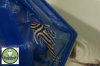
The most high-profile aquarium catfish of our time. Known by the l-number L046 (the common form) and L098 which is a uncommonly found wavy / broken line colour variation.
Sexing:
The first pectoral fin ray of the male is somewhat thicker than that of the female. Males in breeding condition further develop their spine-like ''odontodes'' on this ray. The male has a slightly broader head than the female, best observed from above.
Habitat information:
Rio Xingú, Brazil Amazon, Lower Amazon, Xingu, Middle Xingu
PH 6.0 - 7.5
Temperature 26.0-30.0°C or 78.8-86°F (Show others)
Other Parameters:
The water chemistry of the Rio Xingú is well documented, but it is not that important as H. zebra seems to do well in just about any water provided it is high in oxygen content and warm. pH and DH do not seem to matter since the fish has been spawned in all types of water, even water that was hard and alkaline. To best replicate their natural habitat the water would be neutral to slightly acidic and soft.
Feeding:
Unlike the popular opinion of many other loricariids, H. zebra is more of a carnivore than an algae eater. This is backed up by a small and lightly toothed mouth that indicates it is a poor algae eater. Provide mainly meaty foods such as bloodworm and even brineshrimp.
Furniture:
The Rio Xingú is full of rocks of many sizes with some fine sand between them. H. zebra is collected in deeper mid-water channels where it hides in crevices. The ideal H. zebra tank would be set up much differently than what we picture as a typical ''South American'' biotope. The tank should resemble a rocky riffle area in a stream with jumbles of rounded rocks and good water movement. Provide lots of small caves as the fish normally live and spawn in the caves and cracks of rocks. The rocks should be assembled in a haphazard fashion to create lots of crevices and shelves in which the fish can cram themselves. Sand is preferable, but large rounded gravel or bare-bottomed tanks are also accepted. Prefers dark rock to bogwood but I would provide some wood (many people claim that their zebras never touch the stuff) - better safe than sorry in my opinion.
Compatibility:
Peaceful but choose tankmates wisely as Zebras do not compete well for food with particularly fast or aggressive tankmates.
Suggested Tankmates An ideal (although expensive) addition to any community tank especially one stocked with active, but not boisterous, current loving fish. For some reason many people ask if this species can be kept with discus or loaches, it can, but you are unlikely to get the best out of this fish in such company. Best kept in groups of 1 male and 2-3 females with active, current loving dither fish.
Breeding:
Raise temp. to at least 82°F and ensure the tank is well aerated and heavily filtered (A tank turnover rate of 6 times an hour is not excessive). Ensure there are many spawning caves and crevices available for the fish to select. During spawning - which takes place in several batches - the male blocks the cave entrance with his head. The female persuades the male away from guarding the cave entrance to fertilize the eggs. Once this is complete the male will often have to push the female out of the cave before he can resume his parental guarding. It is quite common that the first spawn will be more of a ''trial run'' and the eggs will remain infertile. There are typically between seven and 15 eggs laid. They take around 7 days to hatch, after 10 the yolk sac should be completely consumed and feeding begins. They immediately take dried foods and frozen or live brine shrimp nauplii. They will take about 2.5 months to reach 1'' in length.
Price
$150 dollars each @ 2.2 inches other sizes available.
Please note the minimum order is 5 or more no exceptions. I don't sell only females or singles.
If you have any questions PM me or email me at unungy@gmail.com
Serious Inquires ONLY
Unungy



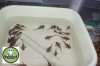
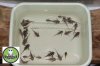

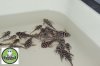
Scientific Name Hypancistrus zebra Isbrücker & Nijssen, 1991 - add this species to your "My Cats" page.
Common Name(s) Imperial Pleco, L046, L098, Zebra Pleco
Species Information:
Size 80mm (3.1") SL
Identification:
The most high-profile aquarium catfish of our time. Known by the l-number L046 (the common form) and L098 which is a uncommonly found wavy / broken line colour variation.
Sexing:
The first pectoral fin ray of the male is somewhat thicker than that of the female. Males in breeding condition further develop their spine-like ''odontodes'' on this ray. The male has a slightly broader head than the female, best observed from above.
Habitat information:
Rio Xingú, Brazil Amazon, Lower Amazon, Xingu, Middle Xingu
PH 6.0 - 7.5
Temperature 26.0-30.0°C or 78.8-86°F (Show others)
Other Parameters:
The water chemistry of the Rio Xingú is well documented, but it is not that important as H. zebra seems to do well in just about any water provided it is high in oxygen content and warm. pH and DH do not seem to matter since the fish has been spawned in all types of water, even water that was hard and alkaline. To best replicate their natural habitat the water would be neutral to slightly acidic and soft.
Feeding:
Unlike the popular opinion of many other loricariids, H. zebra is more of a carnivore than an algae eater. This is backed up by a small and lightly toothed mouth that indicates it is a poor algae eater. Provide mainly meaty foods such as bloodworm and even brineshrimp.
Furniture:
The Rio Xingú is full of rocks of many sizes with some fine sand between them. H. zebra is collected in deeper mid-water channels where it hides in crevices. The ideal H. zebra tank would be set up much differently than what we picture as a typical ''South American'' biotope. The tank should resemble a rocky riffle area in a stream with jumbles of rounded rocks and good water movement. Provide lots of small caves as the fish normally live and spawn in the caves and cracks of rocks. The rocks should be assembled in a haphazard fashion to create lots of crevices and shelves in which the fish can cram themselves. Sand is preferable, but large rounded gravel or bare-bottomed tanks are also accepted. Prefers dark rock to bogwood but I would provide some wood (many people claim that their zebras never touch the stuff) - better safe than sorry in my opinion.
Compatibility:
Peaceful but choose tankmates wisely as Zebras do not compete well for food with particularly fast or aggressive tankmates.
Suggested Tankmates An ideal (although expensive) addition to any community tank especially one stocked with active, but not boisterous, current loving fish. For some reason many people ask if this species can be kept with discus or loaches, it can, but you are unlikely to get the best out of this fish in such company. Best kept in groups of 1 male and 2-3 females with active, current loving dither fish.
Breeding:
Raise temp. to at least 82°F and ensure the tank is well aerated and heavily filtered (A tank turnover rate of 6 times an hour is not excessive). Ensure there are many spawning caves and crevices available for the fish to select. During spawning - which takes place in several batches - the male blocks the cave entrance with his head. The female persuades the male away from guarding the cave entrance to fertilize the eggs. Once this is complete the male will often have to push the female out of the cave before he can resume his parental guarding. It is quite common that the first spawn will be more of a ''trial run'' and the eggs will remain infertile. There are typically between seven and 15 eggs laid. They take around 7 days to hatch, after 10 the yolk sac should be completely consumed and feeding begins. They immediately take dried foods and frozen or live brine shrimp nauplii. They will take about 2.5 months to reach 1'' in length.
Price
$150 dollars each @ 2.2 inches other sizes available.
Please note the minimum order is 5 or more no exceptions. I don't sell only females or singles.
If you have any questions PM me or email me at unungy@gmail.com
Serious Inquires ONLY
Unungy
