

So after popular demand, I am doing this thread on how to step by step build your very own snake, lizard or almost any kind of reptile enclosure. You will need power tools, and know how to use them. This can be pricey but pays for themselves after a couple of uses. And most importantly of all, safety first. Table and miter saws can easily take away fingers at the very least and eye and ear protection is important too. So here we go, pictures and descriptions all the way.
Now I do not have a picture of my note book, but I always have it on me. Making sure you draw and measure what you want before anything is purchased or cut is very important. Get a vision of what you want to see and simply draw it out. Takes notes from forums and other resources to get idea and help you make your one of a kind cage. I always build my cage specifically for an animal, nothing universal about it. I know I will be keeping a long, slender species of semi arboreal python so a long, tall and skinny cage will work nicely.
Secondly, layout is important. Make sure you have lot's of room to move around. A cramped work area is not your friend and accidents can and will happen.

My first draw back was the size of the cage. I wanted it to be 8 feet long but it needs to stand up on its end to fir down in the basement. So I needed to trim a foot off of my wood. Easier said then done. I came up with the idea of stacking the bottom, back and top together and cutting all three at once to get a perfect cut....

And this is what happened. I used a circular saw and the blade over heated and warped. SO the ends of my wood was crap. So instead of 84 inches long, the cage is now 83.5 inches long as I needed to re cut it.

Well this is how the floor is done. I put down some caulking and then the linoleum flooring with a rolling pin. Roll it for a god 5 minutes until the caulk gets tacky and holds it down. Roll out all air bubbles.


To install the side panels to the back, I used clamps too hold them on while it sits upright like it would when finished. I pre drill all holes and the wood is glues and screwed into place. I use 2" screws giving me 1 1/4" hold into the 3/4 inch plywood. I use one screw every 4 inches throughout the cage. Always mark where your holes will be. You need to be dead on center on 3/8" to get the best hold. Nothing worse then blowing threw your plywood with a screw on the inside of the cage.
Once the sides are connected to the back, I use my 220 grit sanding sponge and sand the wood. The wood comes smooth, but is nothing compared too sanding it. If you only wish too paint the inside of the cage, 150 grit will work, but I am staining.

Now staining. This does take practice and I have a lot of that from the past. Stain for those of you who do not know is nothing like paint. It goes on like water and it is up to you to push it into the wood. Unlike paint that just sits on top. I use a rag to push the stain all over always going with the grain. The more coats you do, the darker the color becomes. I did three coats of stain to achieve the tone of brown I wanted.


Once my three coats where on, I needed to add some clear coat. This is the product I use. It's water based and for outdoors. It should hold up to the heat and humidity my snake needs.

I also use the gloss or semi gloss for my cages. I like a nice shine and it is easier to clean then a satin or egg shell look. Here is what it looks like going on.

After every coat, I lightly sanded the clear coat with my sponge and whipped off any dust with a micro fiber cloth. I did 4 coats of clear. This should be considered the minimum as anything less shows the brush marks. I used a quality paint brush to apply the clear coat. I clean and re us my paint brush's and so should you, I am not a fan of this "disposable society". I waited a minimum of 8 hours in between the sanding/coats of clear.

Once that is dry and you are happy with the results, you can apply the bottom to the back/side you have been working on. This is a several day process since you cannot speed up the dry time of stain or the clear coat. I used a silicone before sandwiching the two together. This give it a water proof seal.


Now that we have that complete, we will work on the front panels. Now the size of these is optional but you need to take things into consideration. The taller the panels are the less glass you need so it saves you money, but on the other hand you will have a harder time taking out your animal or even viewing him/her. My cage is 30 inches tall, and my window is 18" tall, I am happy with this ratio. So what we do is lay out the top and bottom panels and paint one edge and one large surface area.


I always do 3 coats of paint on anything facing inwards of the cage, and 2 coats on anything that is the outside. Now lets move onto the ceiling.
I like getting fancy once and awhile so honestly, you could have installed the top along with the sides+back all at the same time and stain it but I wanted to give it a "look up at the sky" effect. But first, we need lighting and some 4" holes are needed. Mark out where you want them and get to work.


I wanted two lights for ambient, and two halogens for heat. It is up to you for the placement and amount of lighting you will use. I do now show my electrical work for I am no electrician and if you do not know what you are doing, PLEASE consult an expert. I did however use outdoor extension cord to wire the cage. I had a lot left over and its a durable cord. It is 16 gauge and is plenty to handle the needs I will be using it for. It's also red and black and I like those colors lol.
Now this is an expensive part but I will let you see the transformation off the "sky ceiling"


Once the roof of the cage is done, you can install that as well. I used once again clear silicone before sandwiching them together.

Now flip the cage on its back and install the front panels as you wish. I normally do a 2" top and bottom on "normal" cages but this time the top was 5" and the bottom 8". Always put the triple coat of black facing in and the one edge that is painted facing up for the bottom, and down for the top.

Once they are installed, measure the space between the top and bottom panel, inside spacing. I was only 1/16 off end to end(not too shabby). These measurements are needed for the front panels. This is optional but it saves me from buying a larger heavier sheet of glass and I can have the vents up front so I can push the cage right to the wall if I choose too one day.
Once you have measured that height, cute wood to the desired size. I went with 8" wide pieces as the vents are 4" and it give it a more symmetrical look. Using my table saw, I notched out just over 1/2 inch in and 3/8 out of the side panels. This is so the glass slides past the wood and not but up against it. This works 100x better the butting the glass up. Your snake or animal will not be able to get out if you choose to go this way, more work but worth it in my opinion. PLEASE NOTE, they need to be reversed on each end, I failed to realize this until the cage was done. I ended up cutting silicone, sanding down the piece, a lot of painting and re installing it upside down to get the right effect, you will see this later.

Next, cut holes for vents and sand them down.

I used a combination of hand and 5" orbital sanding depending on how much I need to take off. This here is the center brace. This will keep the cage from sagging and bring in the top and bottom panels to keep the straight. I used my power sander to give it a rounded edge so my snake cannot hurt herself. Then, 3 coats was applied to all 6 sides.

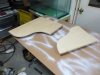
Now that we have covered all the basic cage building stuff, I will show you one of the reasons why you guys love me so much. I formed this idea from where I work. I saw a prototype plate of steel with half circle cut out to hold exhaust pipes for cars. I needed branch holders. BINGO. Just take a look.


The straight ones are for the basking area and the triangles are for the middle. They are really easy to do and are very effective. All you need to do is measure what you want and spacing of your branches. Cut a piece of wood that works for you. I had scrap 3/4 inch so I used that. Use your hole saw, in this case 2 1/2 inch to cut the holes and then cut the piece of wood down the middle. I even notched out this piece to conceal the probe that will control my radiant heat panel that will be going over the middle of the cage.


Of course, they have three coats of paint on them. Next up I wanted some shelves in the cage for my snake to sit on. I did two. Just get as creative as you like here. Sand them down when done and paint.


Once that is complete, you can install them into your cage. For the basking spot, I set up a thermometer under the lights and turned them on. Once I got the desired temperature, I mark how high they need to be from the floor and siliconed and screwed them into place. I knew the triangle hangers where for the middle and 11 inches from the ceiling and the shelves fit in the corner respectively. The bottom shelve acts as a dark ave for the snake too hid in and the top one allows the snake to go as high as she can in her cage to make her feel safe and secure. I cut some 2x4 to the desired hight to keep the shelf in place. I needed help from someone to hold the against the walls as I screwed from the other side. It is easy to do. Simply take your 2x4 you pre cut, move it along the back wall, then with your drill, drill from the inside out your hole roughly 3/8 of an inch. Silicone and push shelf into place. Make sure your friend is holding it then go from behind, pre drill into the shelf then impact the screw. I own both corded impact and drill, this way I do not need to swap bits/tools constantly, makes life a lot easier. Check out the results.


Now let's install them front panels. The right way...

As you can see I did this part wrong and realized it after the outside was painted. Here is me ripping it apart and putting it back the right way. It works now, and I don't mind the vents being none symmetrical.
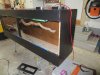


You may paint the inside or outside the color you wish. I like black because it works. I would like to someday do a bunch of cages pastel colors. Now let's see those branch holders in action and wrap up this thread!


After every cage is built I wash it out with an all purpose cleaner to get all the dust and contaminates out of it. This also acts as a water test, making sure its water tight. This took place in my drive way.


I constructed a simple and effective 2x4 stand for this cage that also holds two other cages of similar design on the bottom.


I will be adding water bowl and other things soon. The glass has been ordered but it might come in in a few days. Just a reminder, I use glass track. I do not like flip down plexi glass doors for anything. I built cages with them once and was not impressed. I only use this product to glue down the track :

It is the only thing that really holds the plastic track to the wood.
Now just a word from me. If you are trying to save money on doing something like this, don't. I built this cage because I love the animal that will be housed in it. It cost me roughly 5-7 hundred dollars to build this cage and 3 weeks time. I am not a fan of generic PVC enclosure and bin set ups. I think every cage should be as unique as the animal in it and I take great pride in my craftsmanship and quality control.
I hope everyone enjoys this thread, took me almost 2 hours to put together. Please leave comments down bellow, I will get back to you. I even added a poll just for fun
Now I do not have a picture of my note book, but I always have it on me. Making sure you draw and measure what you want before anything is purchased or cut is very important. Get a vision of what you want to see and simply draw it out. Takes notes from forums and other resources to get idea and help you make your one of a kind cage. I always build my cage specifically for an animal, nothing universal about it. I know I will be keeping a long, slender species of semi arboreal python so a long, tall and skinny cage will work nicely.
Secondly, layout is important. Make sure you have lot's of room to move around. A cramped work area is not your friend and accidents can and will happen.
My first draw back was the size of the cage. I wanted it to be 8 feet long but it needs to stand up on its end to fir down in the basement. So I needed to trim a foot off of my wood. Easier said then done. I came up with the idea of stacking the bottom, back and top together and cutting all three at once to get a perfect cut....
And this is what happened. I used a circular saw and the blade over heated and warped. SO the ends of my wood was crap. So instead of 84 inches long, the cage is now 83.5 inches long as I needed to re cut it.
Well this is how the floor is done. I put down some caulking and then the linoleum flooring with a rolling pin. Roll it for a god 5 minutes until the caulk gets tacky and holds it down. Roll out all air bubbles.
To install the side panels to the back, I used clamps too hold them on while it sits upright like it would when finished. I pre drill all holes and the wood is glues and screwed into place. I use 2" screws giving me 1 1/4" hold into the 3/4 inch plywood. I use one screw every 4 inches throughout the cage. Always mark where your holes will be. You need to be dead on center on 3/8" to get the best hold. Nothing worse then blowing threw your plywood with a screw on the inside of the cage.
Once the sides are connected to the back, I use my 220 grit sanding sponge and sand the wood. The wood comes smooth, but is nothing compared too sanding it. If you only wish too paint the inside of the cage, 150 grit will work, but I am staining.
Now staining. This does take practice and I have a lot of that from the past. Stain for those of you who do not know is nothing like paint. It goes on like water and it is up to you to push it into the wood. Unlike paint that just sits on top. I use a rag to push the stain all over always going with the grain. The more coats you do, the darker the color becomes. I did three coats of stain to achieve the tone of brown I wanted.
Once my three coats where on, I needed to add some clear coat. This is the product I use. It's water based and for outdoors. It should hold up to the heat and humidity my snake needs.
I also use the gloss or semi gloss for my cages. I like a nice shine and it is easier to clean then a satin or egg shell look. Here is what it looks like going on.
After every coat, I lightly sanded the clear coat with my sponge and whipped off any dust with a micro fiber cloth. I did 4 coats of clear. This should be considered the minimum as anything less shows the brush marks. I used a quality paint brush to apply the clear coat. I clean and re us my paint brush's and so should you, I am not a fan of this "disposable society". I waited a minimum of 8 hours in between the sanding/coats of clear.
Once that is dry and you are happy with the results, you can apply the bottom to the back/side you have been working on. This is a several day process since you cannot speed up the dry time of stain or the clear coat. I used a silicone before sandwiching the two together. This give it a water proof seal.
Now that we have that complete, we will work on the front panels. Now the size of these is optional but you need to take things into consideration. The taller the panels are the less glass you need so it saves you money, but on the other hand you will have a harder time taking out your animal or even viewing him/her. My cage is 30 inches tall, and my window is 18" tall, I am happy with this ratio. So what we do is lay out the top and bottom panels and paint one edge and one large surface area.
I always do 3 coats of paint on anything facing inwards of the cage, and 2 coats on anything that is the outside. Now lets move onto the ceiling.
I like getting fancy once and awhile so honestly, you could have installed the top along with the sides+back all at the same time and stain it but I wanted to give it a "look up at the sky" effect. But first, we need lighting and some 4" holes are needed. Mark out where you want them and get to work.
I wanted two lights for ambient, and two halogens for heat. It is up to you for the placement and amount of lighting you will use. I do now show my electrical work for I am no electrician and if you do not know what you are doing, PLEASE consult an expert. I did however use outdoor extension cord to wire the cage. I had a lot left over and its a durable cord. It is 16 gauge and is plenty to handle the needs I will be using it for. It's also red and black and I like those colors lol.
Now this is an expensive part but I will let you see the transformation off the "sky ceiling"
Once the roof of the cage is done, you can install that as well. I used once again clear silicone before sandwiching them together.
Now flip the cage on its back and install the front panels as you wish. I normally do a 2" top and bottom on "normal" cages but this time the top was 5" and the bottom 8". Always put the triple coat of black facing in and the one edge that is painted facing up for the bottom, and down for the top.
Once they are installed, measure the space between the top and bottom panel, inside spacing. I was only 1/16 off end to end(not too shabby). These measurements are needed for the front panels. This is optional but it saves me from buying a larger heavier sheet of glass and I can have the vents up front so I can push the cage right to the wall if I choose too one day.
Once you have measured that height, cute wood to the desired size. I went with 8" wide pieces as the vents are 4" and it give it a more symmetrical look. Using my table saw, I notched out just over 1/2 inch in and 3/8 out of the side panels. This is so the glass slides past the wood and not but up against it. This works 100x better the butting the glass up. Your snake or animal will not be able to get out if you choose to go this way, more work but worth it in my opinion. PLEASE NOTE, they need to be reversed on each end, I failed to realize this until the cage was done. I ended up cutting silicone, sanding down the piece, a lot of painting and re installing it upside down to get the right effect, you will see this later.
Next, cut holes for vents and sand them down.
I used a combination of hand and 5" orbital sanding depending on how much I need to take off. This here is the center brace. This will keep the cage from sagging and bring in the top and bottom panels to keep the straight. I used my power sander to give it a rounded edge so my snake cannot hurt herself. Then, 3 coats was applied to all 6 sides.
Now that we have covered all the basic cage building stuff, I will show you one of the reasons why you guys love me so much. I formed this idea from where I work. I saw a prototype plate of steel with half circle cut out to hold exhaust pipes for cars. I needed branch holders. BINGO. Just take a look.
The straight ones are for the basking area and the triangles are for the middle. They are really easy to do and are very effective. All you need to do is measure what you want and spacing of your branches. Cut a piece of wood that works for you. I had scrap 3/4 inch so I used that. Use your hole saw, in this case 2 1/2 inch to cut the holes and then cut the piece of wood down the middle. I even notched out this piece to conceal the probe that will control my radiant heat panel that will be going over the middle of the cage.
Of course, they have three coats of paint on them. Next up I wanted some shelves in the cage for my snake to sit on. I did two. Just get as creative as you like here. Sand them down when done and paint.
Once that is complete, you can install them into your cage. For the basking spot, I set up a thermometer under the lights and turned them on. Once I got the desired temperature, I mark how high they need to be from the floor and siliconed and screwed them into place. I knew the triangle hangers where for the middle and 11 inches from the ceiling and the shelves fit in the corner respectively. The bottom shelve acts as a dark ave for the snake too hid in and the top one allows the snake to go as high as she can in her cage to make her feel safe and secure. I cut some 2x4 to the desired hight to keep the shelf in place. I needed help from someone to hold the against the walls as I screwed from the other side. It is easy to do. Simply take your 2x4 you pre cut, move it along the back wall, then with your drill, drill from the inside out your hole roughly 3/8 of an inch. Silicone and push shelf into place. Make sure your friend is holding it then go from behind, pre drill into the shelf then impact the screw. I own both corded impact and drill, this way I do not need to swap bits/tools constantly, makes life a lot easier. Check out the results.
Now let's install them front panels. The right way...
As you can see I did this part wrong and realized it after the outside was painted. Here is me ripping it apart and putting it back the right way. It works now, and I don't mind the vents being none symmetrical.
You may paint the inside or outside the color you wish. I like black because it works. I would like to someday do a bunch of cages pastel colors. Now let's see those branch holders in action and wrap up this thread!
After every cage is built I wash it out with an all purpose cleaner to get all the dust and contaminates out of it. This also acts as a water test, making sure its water tight. This took place in my drive way.
I constructed a simple and effective 2x4 stand for this cage that also holds two other cages of similar design on the bottom.
I will be adding water bowl and other things soon. The glass has been ordered but it might come in in a few days. Just a reminder, I use glass track. I do not like flip down plexi glass doors for anything. I built cages with them once and was not impressed. I only use this product to glue down the track :
It is the only thing that really holds the plastic track to the wood.
Now just a word from me. If you are trying to save money on doing something like this, don't. I built this cage because I love the animal that will be housed in it. It cost me roughly 5-7 hundred dollars to build this cage and 3 weeks time. I am not a fan of generic PVC enclosure and bin set ups. I think every cage should be as unique as the animal in it and I take great pride in my craftsmanship and quality control.
I hope everyone enjoys this thread, took me almost 2 hours to put together. Please leave comments down bellow, I will get back to you. I even added a poll just for fun



