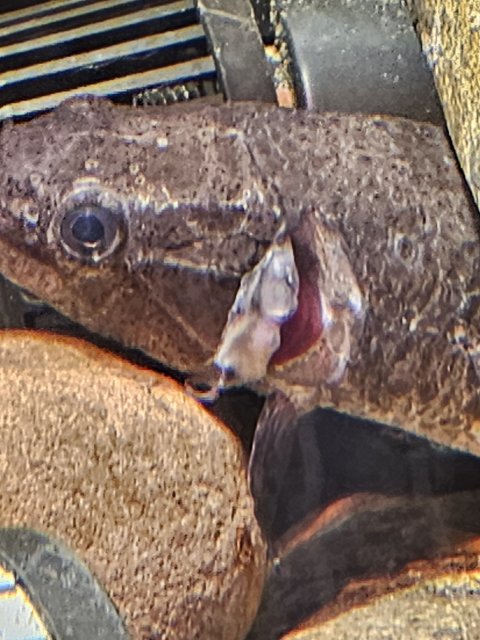
Mala wolf gill plate question

  • We are currently upgrading MFK. thanks! -neo

the big kahuna

Aimara
MFK Member
Oct 13, 2007
785
677
130
new york city
So a new employee at a lfs i frequent took in a trade for a mala wolf fish about 8". Obviously the new guy didn't inspect the fish because the entire gill plate is missing on one side. Owner telling me the story asks me if I want him cause he won't sell him like that. He bagged it up and gave it to me for free. He's been in my 300 gallon with my Aimara and other Mala for about 3 months now doing fine swimming freely. He's only eating live at the moment but otherwise no issues. Will the plate grow back? Not sure if he's was born that way or injured somehow or even going to live long. Will post pics

 
Can’t tell for sure without a pic but it’s most likely a deformity. It won’t grow back but still a cool fish to have!
 
  • Like
Reactions: Conchonius
Hmmm….that may actually be an injury now that I see the pic. But honestly mot sure. Has it grown back at all in 3 months? Are those white scales new growth? Personally, I still don’t think the gill plate will grow back but perhaps someone may share otherwise. Hope it does
 
This resource says that gill plate defects can be both genetic and environmental, with progressive erosion if the fish is kept in sub-par conditions (but see also this claim that the defects are mostly environmental with limited inheritance). This article adds nipping as a potential cause.

As for consequences, most of these studies are about growth rate in aquacultured fish, so they aren't interested in maximum lifespan. Growth and maximum size are affected, however, and the fish needs pristine water as the gill cover normally oxygenates the gills by pumping water over them.

This paper says they can heal, especially if the defect is only on one side of the body. But the healing is very slow, you're probably looking at several years of excellent care before the fish is back in shape. Sounds like a good excuse to make a long-term thread!

(For what it's worth, I also have a fish with opercular defects - in my case a featherfin synodontis. The defects are bilateral and present since I got the fish at a very small (~1.5") size. They have shown no sign of healing in a year and a half, I think they happened early enough in embryonic development that they're permanent.)
 
  • Like
Reactions: the big kahuna
MonsterFishKeepers.com