


I would like to start a thread on all the different types of vieja melanura and synspilum that I'm currently keeping. I would like to share with all of you the the catch region they are from, the behavioral differences, their appearances, breeding behaviors, etc...
All the fish I have are around the 4 inch range as of now but are growing fast so I don't see it being too far along they pairs start forming. The fish I have are as follows :
1. Group of vieja melanura lago peten from rapps.
2. Two red head synspilum from rapps, unsure of what region they originally are from.
3. Two other synspilum red heads from Imperial Tropicals but are much different looking then rapps red heads. I find these to end up having more of the yellow/orange on the body that'll eventually develop a red head but only time will tell.
4. Four F1 vieja melanura Rio sarstun from Don Conkel. He has them labeled as synspilum but I would consider them more the melanura type. Getting shipped to me next Tuesday.
Before everyone starts saying that synspilum and melanura are the same fish, I would like to state that I've done hours upon hours of research on the differences of melanura and synspilum and have learned, especially from my own experience, that they are quite different from each other starting from body shape, temperament, and coloring. I refer synspilum as your typical red head vieja with more blue throughout the body and melanura as more or your yellowish and orange color throughout the body that typically have the black belly.
The Lago peten melanura I have are very rich in orange and blue and have longer more slender bodies then the red head synspilum.
I will post pictures of each type of fish in this order :
1. Vieja melanura lago peten
2. Red head synspilum (Jeff rapps)
3. "Red Head" Synspilum from Imperial Tropicals but we will see in the next few months how they're color turns out. Reminds me more of the Rio De Chiapas melanura.
4. Vieja Melanura Rio Sarstun F1. Pics coming next week.
Please feel free to share pictures of your melanura and synspilum and which catch location /region they're from and share your experiences with them and differences you have seen compared to other melanura and synspilum.

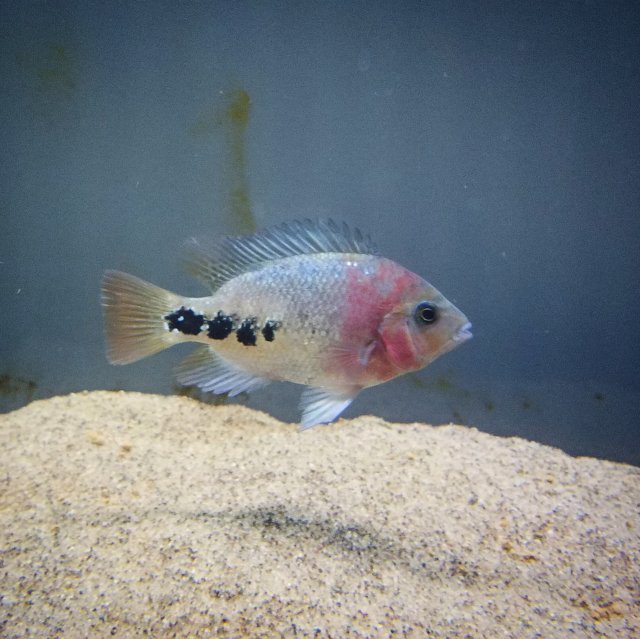

All the fish I have are around the 4 inch range as of now but are growing fast so I don't see it being too far along they pairs start forming. The fish I have are as follows :
1. Group of vieja melanura lago peten from rapps.
2. Two red head synspilum from rapps, unsure of what region they originally are from.
3. Two other synspilum red heads from Imperial Tropicals but are much different looking then rapps red heads. I find these to end up having more of the yellow/orange on the body that'll eventually develop a red head but only time will tell.
4. Four F1 vieja melanura Rio sarstun from Don Conkel. He has them labeled as synspilum but I would consider them more the melanura type. Getting shipped to me next Tuesday.
Before everyone starts saying that synspilum and melanura are the same fish, I would like to state that I've done hours upon hours of research on the differences of melanura and synspilum and have learned, especially from my own experience, that they are quite different from each other starting from body shape, temperament, and coloring. I refer synspilum as your typical red head vieja with more blue throughout the body and melanura as more or your yellowish and orange color throughout the body that typically have the black belly.
The Lago peten melanura I have are very rich in orange and blue and have longer more slender bodies then the red head synspilum.
I will post pictures of each type of fish in this order :
1. Vieja melanura lago peten
2. Red head synspilum (Jeff rapps)
3. "Red Head" Synspilum from Imperial Tropicals but we will see in the next few months how they're color turns out. Reminds me more of the Rio De Chiapas melanura.
4. Vieja Melanura Rio Sarstun F1. Pics coming next week.
Please feel free to share pictures of your melanura and synspilum and which catch location /region they're from and share your experiences with them and differences you have seen compared to other melanura and synspilum.




 the Lago peten seem much more high tempered compared to the typical red head synspilum