Midevil or something else??? Please Help!

  • We are currently upgrading MFK. thanks! -neo

krustyart

Feeder Fish
MFK Member
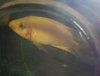
This fish is about five inches. Very timid. That's why he/she is in a jar just to get a photo.
WhatAmI1.jpgWhatAmI2.jpgWhatAmI3.jpgWhatAmI4.jpgWhatAmI5.jpgWhatAmI6.jpgWhatAmI7.jpgWhatAmI8.jpg
Is it a Midas/Red Devil or is it something else? Will the transparent/red gill plate become opaque like a "blushing" Angel does as it grows up?

These questions might seem overly basic to most of you. After 40 years of keeping and breeding fish, these past few weeks have been my first foray in CA Cichlids so cut me a break.

Thank You in advance

ART
Merritt Island, FL, USA


WhatAmI1.jpg

WhatAmI2.jpg

WhatAmI3.jpg

WhatAmI4.jpg

WhatAmI5.jpg

WhatAmI6.jpg

WhatAmI7.jpg

WhatAmI8.jpg
 
Not a week goes by lol. Read this


There have been a lot of threads lately from people asking if their fish is a Midas (Amphilophus citrinellum) or Red Devil (Amphilophus labiatum). A lot of these threads have pics of juvenile or sub adult fish. Trying to determine the identity of an adult fish is difficult enough, but these fish as juveniles look very similar to one another.

Here's the problem with these questions. It is impossible to simply eyeball a fully grown adult fish and determine 100% if it's A. labiatum or A. citrinellum. For far too many years, these two species have been crossed by breeders and farms all over the world. Some of these people may not have known the difference between the two while others simply may not have cared.

Either way, the fish commonly found in lfs and chain stores are most likely going to be hybrids of the two species. I don't recall who it was but someone on this site coined the term 'Midevil" for these fish and it's starting to stick. That's essentially how any "Red Devil" or "Midas" purchases from an lfs should be treated...as a hybrid of the two.

Add to the above the fact that other species of the Red Devil complex (such as A. xiloaensis, A. sagittae etc) are becoming more available, there's no telling how much more hybridization will occur with these closely-related species. We may eventually have to start calling them Midexiloittae.

The only way to know for sure is to get your fish from a reputable source. There are many reputable sources around such as Cichlid Connection, Jeff Rapps, Don Conkel, Ken Davis and I'm sure many others.

If you simply would like to know which yours more closely resembles, then here are some of the known characteristics.

A. citrinellum is typically going to be proportionally taller-bodied and a thicker, stockier fish. Midas will have a shorter snout with lips that (when viewed from above) will have more of a U shape. Midas are also likely to grow a larger nuchal hump.

A. labiatum is typically going to be a proportionally longer fish than it is tall. Red devils are a more stream-lined fish that doesn't quite attain the bulk that a Midas does. The lips, when viewed from above, are going to be more of a V-shape and the snout is a little longer than a midas. Wild fish typically have enlarged lips due to their specialized feeding habits. This usually goes away in captivity.

A. sagittae is, as far as I know, very similar to A. labiatum in that it is a longer bodied fish that does not get quite as bulky. A. sagittae is more of an open-water predator.

A. xiloaensis is, as far as I know, more closely related to Midas in that they are a bulkier, taller-bodied fish.

 
Please note that my question was NOT "Is this a Midas or a Red Devil?" but rather,

Is it a Midas/Red Devil or is it something else?

(when I said Midas/Red Devil, I meant "The Midas/Red Devil Complex") And,

Will the transparent/red gill plate become opaque like a "blushing" Angel does as it grows up?

So, while the long quote from another thread was informative, it did not touch either question. And, yes, before you ask, I did attempt to answer this question myself by searching threads on the subject, I just don't have the experience in CA cichlids to construct an answer. Yes, it looks very much like hundreds of photos of various Midas and Red Devil and Midevils, I have seen on this MFK. I think what I mean is "is there anything else it could be OTHER THAN something from that complex?" or "is there some trait that might indicate hybridization from something outside that group?" and finally again, "Will the transparent gill plates become opaque with age?"


Thank you Chrisplosion. Do all young fish in this group (midevils etc.) have the transparent gill plates when young? And at what age/length will the gill plates become opaque? All of the pictures of adults I have seen have gill plates that are the same color as the rest of the body...

ART
 
It appears to be a midevil. As to exactly how it will mature, is anyones guess. These fish can go through a lot of changes in coloration, including the gill plates as they mature, some reaching their final mature colors etc much more quickly than others.
 
It appears to be a midevil. As to exactly how it will mature, is anyones guess. These fish can go through a lot of changes in coloration, including the gill plates as they mature, some reaching their final mature colors etc much more quickly than others.

Agreed. I see nothing from the photo that would lead me to believe it is hybridized outside the Midas complex. As RD. stated they will go through many changes on the way to adulthood, however the gill plates should color up as the fish ages. The finished product is anybodys guess but it shows a lot of Citronellus traits around the face.
 
Thank you EVERYONE!!!
 
MonsterFishKeepers.com