

Here are some pictures of my recent trip to the Museum of the Earth located in central NY and part of the Paleontological Research Institute (PRI) who apperently has the 7th largest collection of fossils in the country...sadly, most aren't on display. It's not the American Museum of Natural History but it's local and it will do, plus it has a lot of local fossils from all over NY so that adds a bit to it.
Outside of the building is this sculpture of a coelophysus, currently the only known dinosaur to have lived in NY. The coelophysus is also the PRI symbol and mascot.

Just inside the building is this skeleton of a right whale, not a fossil but interesting none the less. The whale died tangled in a fishing net, this whale's "name" while alive was 2030. Learn more about her here...
http://www.priweb.org/whale2030/whale_home.htm


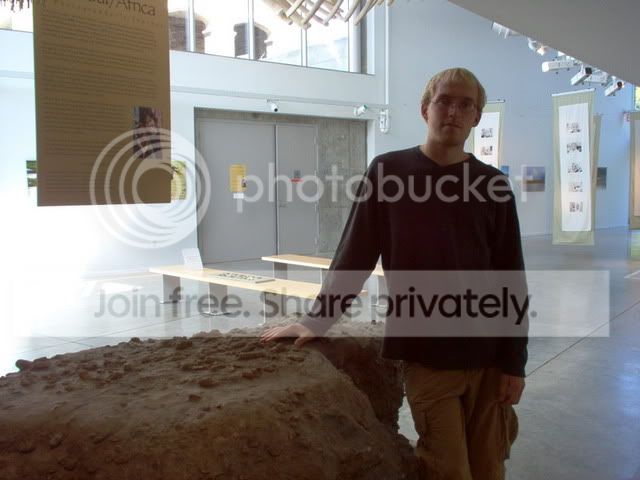
Here is me standing next to a chunk of local rock full of shells, crinoids and other fossils. NY used to be underwater and as such most of the fossils found are of sea going critters.
Where would this thread be without a fish? Sadly the picture is dark but here is a dunklosteus skull. This fish was a placoderm, an old group of extinct fishes. Learn more about them here... http://www.devoniantimes.org/who/pages/placoderm.html

Here is a very large Eurypterus remipes or "sea scorpion". These inverts are the official NY state fossil. Learn about them here...
http://www.statefossils.com/ny/ny.html

This is what it looked like in life...

Next are a couple large trilobites. These creatures died out completly in the Permian mass extinction 250 million years ago. There are over 15,000 species known. Probably the closest relative alive today would be the horseshoe crab.

Here are some crinoids. These are very common fossils in NY. Though they suffered greatly in the Permian extinction they, unlike trilobites survived and are still here today. They first evolved in the Ordovician period.
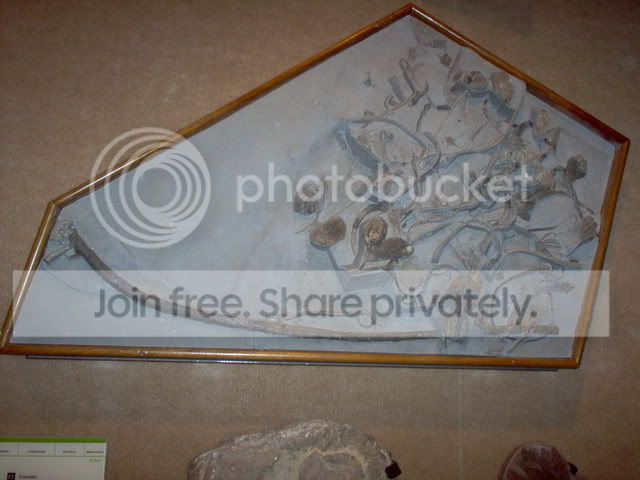
Here are todays crinoids...


Some fossil ferns.

Me visiting the Permian period. The extinction at the end of this period was the largest ever on this planet. Over 90% of all marine species died and over 70% of all terrestrial vertebrates died off. It was followed up by the age of dinosaurs that lasted over 140 million years (by compairison, humans have been here roughly 1 million years).
Check out the large amphibian skull in the above corner.

Learn more about this period here...http://en.wikipedia.org/wiki/Permian
Skull casts of Therapsid and Synapsid reptiles. Therapsids were mammal-like reptiles that were the dominant forms of life during the Permian period and nearly died out with it's mass extinction. Therapsids are an order within the Synapsids. While therapsids are now extinct synapsids later gave rise to mammals.

Skull of an extinct bird of the Phorusrhacos genus. They were large flightless birds that appeared after the Cretaceous extinction. These birds lived in South America and could grow over 5' tall. They were the largest predatory birds to ever exist.

This is what they looked like in life.

Lastly, the Hyde Park mastadon. This guy (and the tree with it) were found in New York...not far from where OTG lives I believe.

Read about this guy here...http://www.priweb.org/mastodon/HP_mast/HP_mast_main.html
Outside of the building is this sculpture of a coelophysus, currently the only known dinosaur to have lived in NY. The coelophysus is also the PRI symbol and mascot.
Just inside the building is this skeleton of a right whale, not a fossil but interesting none the less. The whale died tangled in a fishing net, this whale's "name" while alive was 2030. Learn more about her here...
http://www.priweb.org/whale2030/whale_home.htm
Here is me standing next to a chunk of local rock full of shells, crinoids and other fossils. NY used to be underwater and as such most of the fossils found are of sea going critters.
Where would this thread be without a fish? Sadly the picture is dark but here is a dunklosteus skull. This fish was a placoderm, an old group of extinct fishes. Learn more about them here... http://www.devoniantimes.org/who/pages/placoderm.html
Here is a very large Eurypterus remipes or "sea scorpion". These inverts are the official NY state fossil. Learn about them here...
http://www.statefossils.com/ny/ny.html
This is what it looked like in life...
Next are a couple large trilobites. These creatures died out completly in the Permian mass extinction 250 million years ago. There are over 15,000 species known. Probably the closest relative alive today would be the horseshoe crab.
Here are some crinoids. These are very common fossils in NY. Though they suffered greatly in the Permian extinction they, unlike trilobites survived and are still here today. They first evolved in the Ordovician period.
Here are todays crinoids...
Some fossil ferns.
Me visiting the Permian period. The extinction at the end of this period was the largest ever on this planet. Over 90% of all marine species died and over 70% of all terrestrial vertebrates died off. It was followed up by the age of dinosaurs that lasted over 140 million years (by compairison, humans have been here roughly 1 million years).
Check out the large amphibian skull in the above corner.
Learn more about this period here...http://en.wikipedia.org/wiki/Permian
Skull casts of Therapsid and Synapsid reptiles. Therapsids were mammal-like reptiles that were the dominant forms of life during the Permian period and nearly died out with it's mass extinction. Therapsids are an order within the Synapsids. While therapsids are now extinct synapsids later gave rise to mammals.
Skull of an extinct bird of the Phorusrhacos genus. They were large flightless birds that appeared after the Cretaceous extinction. These birds lived in South America and could grow over 5' tall. They were the largest predatory birds to ever exist.
This is what they looked like in life.
Lastly, the Hyde Park mastadon. This guy (and the tree with it) were found in New York...not far from where OTG lives I believe.
Read about this guy here...http://www.priweb.org/mastodon/HP_mast/HP_mast_main.html



