

First of all I got a drip emitter rated at a 1/2 gallon per hour. You also need a preasure regulator to regulate the preasure to around 25 psi. I plumbed this line directly to my tank where it drips in.
Now comes the little bit more complicated part. I have a float valve drilled into the sump that will let the excess water drain out and the emitter drips it in, but when the power goes out and the wet.dry filter gets flooded quickly the valve will float up and stop the water from draining, so that when the power turns back on the pump does not burn up. Also drilled in the sump is a another drain higher up in the sump, that way the water can never get too high while the power is out and flood the house. All the excess water is drained downstairs into the basement sump pump in the floor.
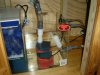
I just tapped into a cold water line. As you can see I installed a ball valve which then goes to the 25psi preasure regulator which you need to have with the drip emitter or your standard house hold preasure will cause the emitter to put out more water then its supposed to, let alone ruin it. After the regulator, is a 3/4" tp 1/4" compression fitting to connect to the 1/4" line, which runs to the 1/2gph drip emitter. These pictures are from my basement and my tank is on the first floor. When I run the 1/4" line and emitter to the tank I am going to lay it on top of my heating ducts that way the water is nice and way before it gets to the tank. More pictures to come once I get some more parts.
Alright here is how I am controlling the water level in my sump from the incoming water. The float valve that you see is always open and just big enough to let the 1/2gph of water trickle out. Now if the power happens to go out and the sump quickly fills because of the return lines emptying and overflow box still returning water, that float will rise and shut that drain off. Thus protecting my pump so that when the power turns back on there my pump will not burn up because of a low water level. Now I also drilled those 2 other drain lines higher up just in case the power is out long enough that the sump slowly fills to that height because of the drip system and it cant overflow.



Now comes the little bit more complicated part. I have a float valve drilled into the sump that will let the excess water drain out and the emitter drips it in, but when the power goes out and the wet.dry filter gets flooded quickly the valve will float up and stop the water from draining, so that when the power turns back on the pump does not burn up. Also drilled in the sump is a another drain higher up in the sump, that way the water can never get too high while the power is out and flood the house. All the excess water is drained downstairs into the basement sump pump in the floor.
I just tapped into a cold water line. As you can see I installed a ball valve which then goes to the 25psi preasure regulator which you need to have with the drip emitter or your standard house hold preasure will cause the emitter to put out more water then its supposed to, let alone ruin it. After the regulator, is a 3/4" tp 1/4" compression fitting to connect to the 1/4" line, which runs to the 1/2gph drip emitter. These pictures are from my basement and my tank is on the first floor. When I run the 1/4" line and emitter to the tank I am going to lay it on top of my heating ducts that way the water is nice and way before it gets to the tank. More pictures to come once I get some more parts.
Alright here is how I am controlling the water level in my sump from the incoming water. The float valve that you see is always open and just big enough to let the 1/2gph of water trickle out. Now if the power happens to go out and the sump quickly fills because of the return lines emptying and overflow box still returning water, that float will rise and shut that drain off. Thus protecting my pump so that when the power turns back on there my pump will not burn up because of a low water level. Now I also drilled those 2 other drain lines higher up just in case the power is out long enough that the sump slowly fills to that height because of the drip system and it cant overflow.



