


Maintenance is the most time consuming part of fish keeping and I think we all try to find ways to make it as easy as possible. Here is how I make it easier for me, along with my general filtration.
1: Tank Plumbing overview, nothing fancy just 2" drain to the sump, a 1" water changing drain that can be seen underneath the sump drain; lastly a 1" water return line and 3/4 fill line.

2 & 3: Filter overview. Just my diy take on a wet sump. It's essentailly only 2 compartments, allowing it to handle any flow rate the smallest opening is 1.5"x12". Filter media is mix between lava rocks and seachem biomatrix and fluval biomax. Pump just a small 1000gph little giant, 3 300watt heaters.


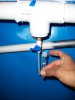
4: Testing can't get easier then this, a 1/4 water line with shutoff valve connected to the main drain. Put the test tube on it and turn it on, perfect amount of water each time, and no more wet hands. Plus during clean up it allows me to completely empty the drain line.
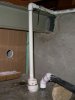
5: Ghetto rigged permanent gravel vac plumbed to the floor drain, used for cleaning the sump and tank if needed.

6 - 8: Water changing drain. This is a 1" drain that is drilled through the tank wall, and extends half way down for easy 50% WC, its hard plumbed from the tank to the floor drain and is operated by a ball valve.


9 & 10 : 3/4" hard plumbed fill line with 2" gap from the top of the tank to prevent backflow. The fill line is connected to both hot and cold water to allow me refill the water ate the correct temp. While you can't see it in the picture both the hot and cold water lines have their own level to control the amount. The hole in the wall, and in the top of the tank seen in 9 are for my feeding tub which I forgot to reattach after cleaning it.

11 & 12: Electrical, I have installed a 20amp breaker and connected it with 12 gauge wire to a GFI outlet attached to the ceiling. From this outlet I I have a power strip to feed the pump and heaters, and I have a timer for the lights.


13 & 14: Lighting I got creative here, I hooked the timer to the main power line, then ran power from the timer to a outlet, the outlet is then hooked to a light switch in the office. I did this so I can turn the lights off if I need to without messing up the timer.


15: Lastly what easy setup would be complete without the mag float.

Now here is my setup question, I have this 20G tank with the bottom drilled setup above the sump. I was going to toss in some plants and plumb it to the sump to help with nitrates; but now I am thinking the tank is to small to house enough plants. What do you think? The tank normally has 40PPM nitrate and my tap water has 20PPM.

At the end of the day this setup is about ease of use, and low cost. The lights are from a 55 gallon tank 17watts each. The pump uses 75 watts, almost on par with a Good canister. I have the top of the sump covered in 1/2 pink foam insulation, and always keep the tank covered. I do this to try and save as much heat as possible.
1: Tank Plumbing overview, nothing fancy just 2" drain to the sump, a 1" water changing drain that can be seen underneath the sump drain; lastly a 1" water return line and 3/4 fill line.
2 & 3: Filter overview. Just my diy take on a wet sump. It's essentailly only 2 compartments, allowing it to handle any flow rate the smallest opening is 1.5"x12". Filter media is mix between lava rocks and seachem biomatrix and fluval biomax. Pump just a small 1000gph little giant, 3 300watt heaters.
4: Testing can't get easier then this, a 1/4 water line with shutoff valve connected to the main drain. Put the test tube on it and turn it on, perfect amount of water each time, and no more wet hands. Plus during clean up it allows me to completely empty the drain line.
5: Ghetto rigged permanent gravel vac plumbed to the floor drain, used for cleaning the sump and tank if needed.
6 - 8: Water changing drain. This is a 1" drain that is drilled through the tank wall, and extends half way down for easy 50% WC, its hard plumbed from the tank to the floor drain and is operated by a ball valve.
9 & 10 : 3/4" hard plumbed fill line with 2" gap from the top of the tank to prevent backflow. The fill line is connected to both hot and cold water to allow me refill the water ate the correct temp. While you can't see it in the picture both the hot and cold water lines have their own level to control the amount. The hole in the wall, and in the top of the tank seen in 9 are for my feeding tub which I forgot to reattach after cleaning it.
11 & 12: Electrical, I have installed a 20amp breaker and connected it with 12 gauge wire to a GFI outlet attached to the ceiling. From this outlet I I have a power strip to feed the pump and heaters, and I have a timer for the lights.
13 & 14: Lighting I got creative here, I hooked the timer to the main power line, then ran power from the timer to a outlet, the outlet is then hooked to a light switch in the office. I did this so I can turn the lights off if I need to without messing up the timer.
15: Lastly what easy setup would be complete without the mag float.
Now here is my setup question, I have this 20G tank with the bottom drilled setup above the sump. I was going to toss in some plants and plumb it to the sump to help with nitrates; but now I am thinking the tank is to small to house enough plants. What do you think? The tank normally has 40PPM nitrate and my tap water has 20PPM.
At the end of the day this setup is about ease of use, and low cost. The lights are from a 55 gallon tank 17watts each. The pump uses 75 watts, almost on par with a Good canister. I have the top of the sump covered in 1/2 pink foam insulation, and always keep the tank covered. I do this to try and save as much heat as possible.

