Native Fish articles

  • We are currently upgrading MFK. thanks! -neo
Status
Not open for further replies.

sandtiger

Captain Planet
MFK Member
Feb 14, 2005
3,563
4
0
41
NY
In order to condence the sticky section a bit I moved three of my articles here.
Keeping Sunfish
Keeping Bullhead
Keeping and Breeding Fathead Minnows

Members are encouraged to write their own articles as well in order to further the information on native fish care.
I'm going to lock this in order to keep it clean and easy to navigate. If you write an article just post it in it's own thread or send it to me and I'll look it over.
 
Keeping Sunfish
By Arthur Masloski
000_0179.jpg

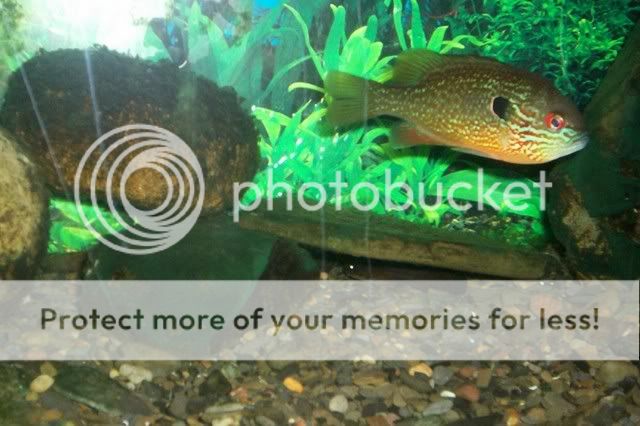
Central longear sunfish

Not many people think of keeping sunfish, normally people only want to catch them while fishing, use them as bait or eat them. Few people realize that sunfish make great additions to the aquarium. In many regards sunfish are a lot like cichlids, both in personality and behavior and they even look like cichlids as well. Many people keep cichlids without giving sunfish any thought at all but perhaps this article will show you why sunfish make a great alternative to cichlids and other fishes.

What is a sunfish? I have found that there is often a bit of confusion as to what a sunfish is exactly. Some people regard them as “pan fish” and thus think they are related to other pan fish such as perch and white bass. Then there are some sunfish that people don’t know are sunfish such as the black bass genus that includes largemouth, smallmouth, spotted and all the other bass. The most well known sunfish are the members of the lepomis genus. The common and popular pumpkinseed and bluegill are both sunfish that belong to the lepomis genus. Despite being very similar to cichlids they are not related beyond being in the same order. All sunfish are native to North America (though are introduced elsewhere) and are all freshwater. Most build nests and males guard the young.

Here is a family tree where you can take a look at what fish are considered sunfish by science. The sizes of the fish are listed next to them in order to help you figure out what size tank you will need. Lengths are taken from the "Peterson Field Guides: Freshwater Fishes" by Lawrence M. Page/Brooks M. Burr

CLASS: Actinopterygii (ray-finned fishes)
ORDER: Perciformes (perch-likes)
SUB ORDER: Percoidei
FAMILY: Centrarchidae
GENUS: Lepomis
Pumpkinseed 16”
Bluegill 16 1/4”
Green 12”
Redbreast 9.5”
Longear 9.5”
Orange Spotted 6”
Dollar Sunfish 4 3/4”
Redear 10”
Bantam Sunfish 3.5” max
Warmouth 12”

GENUS: Acantharchus
Mud Sunfish 8 1/4”

GENUS: Ambloplites
Rock Bass 17”
Shadow Bass 8 3/4”
Roanoke Bass 14.5”
Ozark Bass 7.5”

GENUS: Archoplites
Sacramento Perch 28 3/4” max

GENUS: Centrarchus
Flier 7.5”
GENUS: Enneacanthus
Bluespotted Sunfish 3 3/4”
BlackBanded Sunfish 3 1/4”
Banded 3 3/4"

GENUS: Micropterus
Shoal Bass 15 1/4”
Redeye Bass 18.5”
Spotted Bass 24”
Largemouth Bass 38"
Smallmouth Bass 27 1/4"
Guadalupe Bass 15 2/4”
Suwannee Bass 14 1/4”

GENUS: Pomoxis
White Crappie 21”
Black Crappie 19 1/4”


Now that we know what a sunfish is we can discuss how one must care for them.

TEMPURATURE: All sunfish are from North America, they are not really considered tropical but the temp. requirements really depend on the species. Some species prefer cooler water such as the smallmouth bass while others such as the bluegill can be found as far south as the Florida panhandle and can tolerate warmer temp. up in the 70’s and even 80’s.

DIET: Most sunfish will happily take dry foods and can be fed the same diet as many American cichlids. Some are more difficult to convert however. The black basses and crappies are two genuses that will often turn down dry foods. If they refuse flakes or pellets give frozen foods a try such as bloodworms, gradually mix some dry foods in with the frozen and with any luck they will realize that the dry foods are edible. Along with flakes and pellets sunfish should also be fed a varied diet that includes frozen foods, live foods such as worms and insects and plant material.

TANK SETUP/SIZE: Sunfish are messy like cichlids and can be quite aggressive, refer to the max size of the fish above for reference. A standard 55g works for many species. In a 55g you could house a single bluegill or crappie while if you were getting smaller sunfish you could get away with a couple. Keep in mind that sunfish are aggressive and will often not tolerate their own kind, as with cichlids it is pretty much hit or miss. Some sunfish like the largemouth bass grow to such an immense size that keeping them in aquaria is not often practical.
Tanks should be setup with driftwood, rocks and other natural décor. Make sure you add some open swimming space as sunfish often prefer that. If ever you have gone to a sunfish pond you will notice that many of them often hang out in plain view in the shallows. Most sunfish live in quite still waters in lakes or ponds so a powerhead or fast flowing water is not needed, if you look at the body shape you will see that they aren’t made for fast water. An exception to this is the smallmouth bass, they prefer oxygen rich fast flowing water. As for plants, you can try them but most sunfish will often attempt to eat them or destroy them/dig them up. A heater is not needed for any of the sunfish. Filtration should be excellent but avoid UG filters because like cichlids, sunfish are messy and often like to dig.

TANKMATES: Naturally, the best tank mates are fish that inhabit the same waters. Smaller fish will of course be eaten but there are some that can hold their own. As far as natives are concerned bullhead catfish, perch or other similar sized game fish will work well. Larger schooling cyprinids are also a good choice in a large enough tank, if they are large enough and fast enough they should serve as good dithers. Many of the sunfish listed can be housed with tropical fish problem free. Certain cichlids would make good tank mates provided aggression was not an issue, this is difficult to accomplish at times so be careful.

SUNFISH SHOPPING: Getting sunfish can be harder then you think, despite many being in your own backyard. Many states have laws against collecting sunfish and other natives. If you are going to collect your own make sure you know your local laws and have a fishing permit…these are needed to collect any fish. Hook and line works well but of course causes damage. Use barb-less hooks and play the fish quickly to avoid stress. You can also use minnow traps available at sporting good stores. These are easy to use, simply bait and toss into the water. I have found that sunfish…at least pumpkinseeds will enter the trap for dog food and chicken. Other capture methods include cast nets and seines. Young fish can be found in the shallows where there is dense weed cover. Sometimes all you need to do is drag a dip net through the water. When collecting try to take younger smaller fish, older fish have a harder time adjusting to captive life and are harder to convert to dry foods.
Few LFS carry sunfish, so if you want to buy them it takes a little research and work. Sunfish can be found in bait shops on occasion but if so they are normally there by mistake and you may be hard pressed to find any. A more reliable way to find and purchase sunfish is to buy them online, there are a few dealers who specialize in native fish or you can go to a fish hatchery. They are often very cheap when from a hatchery and used to dry foods.

BREEDING: Breeding sunfish is fun and a bit more challenging then breeding other fish. This is because many of them need a trigger. Depending on the species a trigger may include a temperature change and a change in amount of light received. This simulates the seasons, the closing of winter and the coming of spring when sunfish breed. Males are often more colorful then the females, species depending, and the females will often be larger and full of eggs. The male will dig a pit, not using his mouth so much as just moving it with his body sweeps. The female will enter the pit and breed with the male, sometimes several females will breed with him. The females will often be weak from this process and the male may hurt or kill her in defense of the nest. It is best to remove the female. You can remove the fry as well and treat them as you would cichlid fry. You could also leave them with the male but once they reach a certain size he may attempt to eat them.

CONCLUSION: I hope after reading this you will give our wonderful native fish a chance to prove themselves as great aquaria fish. They are very owner responsive and very hardy. If you are looking for a nice alternative to common tropical fish or cichlids, or want to own a piece of out natural heritage then sunfish are great starter fish for you.

 
  • Like
Reactions: Spikes92
Bullheads: The Little Monster Catfish
By Arthur Masloski (Sandtiger)

aboveb.jpg

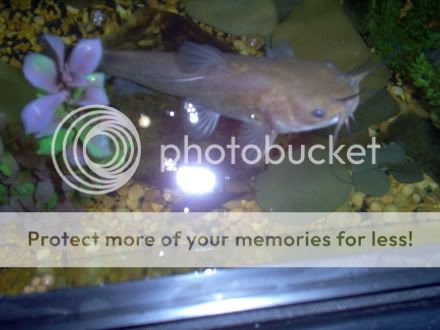
My brown bullhead greeting my at the surface.

Okay, so bullhead catfish aren’t really “little” but compared too many of the larger species of catfish available they are at least manageable. Some of the most popular catfish on the market are also the largest…red tails, tiger shovelnose, iridescent sharks, channel catfish. Bullhead, though not very flashy or colorful are at least a bit smaller but still large enough to achieve at least semi-monster status.

What is a bullhead?: Bullheads are medium to large sized catfish native to North America. They belong to the genus Ameiurus within the Ictaluridae family. Other members of the family include the smaller madtoms and larger fish such as channel and flathead catfish. This article will only concern the members of the Ameiurus genus. There are 7 recognized species of bullhead and they are listed below along with their length. Bullhead are pretty easy to ID, most of them…with the white catfish being the exception have a squared end to their tail rather than a forked end. Sizes were gathered from fishbase.org and may vary from individual to individual. The most common bullheads caught and kept are the brown, yellow and black.

Snail Bullhead (Ameiurus brunneus) 11”
White Catfish (Ameiurus catus) 3’
Brown Bullhead (Ameiurus nebulosus) 21”
Black Bullhead (Ameiurus melas) 25”
Yellow Bullhead (Ameiurus natalis) 18”
Flat Bullhead (Ameiurus platycephalus) 11”
Spotted Bullhead (Ameiurus serracanthus) 11”

Temperature and Tank Conditions: Bullheads are very hardy fish, capable of surviving a wide variety of climates and conditions. They can be found as far north as Canada and have been introduced to many tropical places around the globe, even places like Hawaii. Temperature is not a severe issue but I would avoid extreme high temps. IME, young bullhead fry do poorly in warm temperatures while older fish seem hardier. My bullhead fry died at a temp of 78 F but there was not additional supply of oxygen so a low DO may have been the cause of death. Bullheads are forgiving as far as water quality in concerned but they should still be treated as other aquaria fish and be provided with clean water and regular water changes. Try to match your water with where ever your fish came from if possible.

Diet: Bullheads will eat just about anything, in the wild they feed off anything that falls to the bottom. Dead fish, live fish, plant matter, invertebrates, fish eggs etc. In captivity they will also eat just about anything. Shrimp pellets, bloodworms, flakes, earthworms, algae wafers, cucumber and just about anything sold as fish food will make a bullhead happy. Variety in any fish is the spice of life so a varied diet is best. They can be trained to come to the surface for food and even eat straight out of your hand.

Tank Setup/Size: Bullheads are nocturnal so dim lighting is best, provide them with plenty of cover in the form of floating plants, driftwood and caves. A gravel bottom is probably best being they hang out on the bottom…sand is too messy and they do enjoy digging. Live plants will probably be uprooted or eaten. As for the size of a tank, being that all of the bullhead get over a foot long or close to it I would suggest at least a 50g tank. Of course, larger tanks should be given to larger species.

Tankmates: Being that bullhead will eat just about anything it goes without saying that tankmates should be large and hardy. Bullheads will attempt to eat just about any fish it thinks will fit in its mouth, even if it doesn’t. I have seen bullhead shove minnow after minnow into their mouths and allow their belly to grow larger and larger to the point that it looks like the fish will pop. Generally, larger sunfish, perch and cyprinids will make the best tankmates. Other bullheads are an option in larger tanks but they may squabble over territory.

Getting A hold of bullheads: Bullheads are easy to catch, just ask any fisherman. A simple hook and line with a worm on the end will do just fine but to reduce stress on your future pet use a barbless hook and bring the fish in quickly. Bullheads are most active at night and when it rains. Bullhead spawn in the spring and younger fish can be found at this time schooling around the shallows. Minnow traps can catch bullhead, use stinkbait, meat, dog food and just about anything smelly as bait…even soap will work in some cases. Netting bullhead can be tricky, the sharp locking spines can get tangled in nets and make it a real PITA to remove the fish safely. I don’t suggest using them. Bringing that to mind it is important to remember that bullheads are capable of piercing human skin and have a mild venom that will hurt, be careful handing a bullhead of any size. Make sure you check your local laws first on collecting bullhead. If you are lucky you may be able to purchase them online, from a hatchery or one of the few LFS allowed to sell natives.

Breeding: While bullhead breeding habits are interesting they are next to impossible to achieve in the home aquaria if not impossible all together. Why you ask? Because bullhead dig tunnels in the mud when they breed, something that cannot be replicated in fish tanks.

Conclusion: Bullheads are fascinating and intelligent catfish that every aquarist should consider. They are by far the most active catfish I have ever owned, putting even corydoras to shame. All the bullhead I have kept swim about the tank on the bottom, middle and surface layers. They are very owner responsive and curious fish. They will hand feed and come to the surface when they see you and even follow you around. They do get a bit of size on them but it is worth it and while they may look bland they are beautiful in their own rights and make up for it with a terrific personality. I hope you give bullhead a try or at least consider them when looking for a larger catfish species.
 
  • Like
Reactions: Spikes92
Keeping and Breeding the Fathead minnow (rosy red)
Arthur Masloski (Sandtiger)

000_0411.jpg

Male fathead

The fathead minnow (Pimephales promelas) is probably one of the most widely used fish for a number of different reasons. Aquarists will recognize it as a feeder fish, sold as “rosy reds” in their whitish/pink form. Fishermen will recognize it as a baitfish, sold all over the country. This species is also used in water toxicity tests, in laboratory experiments and as a form of mosquito control. These small cyprinids truly are a great resource. It’s their hardiness, readiness to breed and adaptability that makes them so great, both as a human tool and as one of nature’s creatures.
There are various reasons why you might want to keep these fish. Maybe you have large predatory fish you want to feed (as a treat only), maybe you are looking for an easy first time breeding project or perhaps you just want to get into the hobby of keeping North American species. Though they are not bright and flashy they are certainly interesting and extremely easy.

IDENTIFICATION: At first glance these fish look just like any other small cyprinid so identification might be difficult. If you have gotten your fish from the wild or a bait shop it is important to identify it as the right species. Look for the following…

1) An incomplete lateral line
2) A stubby first ray on the dorsal fin, this feature is shared with the only other member of the Pimephales genus, the bluntnose minnow (Pimephales notatus).
3) A dark spot on the front of the dorsal fin. Another feature shared with it’s relative.
4) A terminal mouth, the bluntnose minnow’s mouth will be underslung.

Those are the key characteristics of the fathead. Beyond that they are rather short and stubby looking, they only grow to about 2.5”.

DIET: These guys will eat all sorts of stuff. In the wild they eat algae, plankton and small insects. In captivity they will take just about anything including flakes, bloodworms, tubifex and shrimp among other things.

TANK REQUIREMENTS: These fish are used in toxicity studies so it should come to no surprise that they are hardy. The tank will not need heat of any kind, decorate the tank with plants and caves. I recommend at least a 10g for a couple pairs. For breeding a sponge filter works well, or something else that will not suck up the eggs/fry. A bit of filter floss attached to the intake on a HOB will work. For spawning caves use slate or small PVC pipe (4” diameter cut in half) to make some caves.

BREEDING: This is the interesting part, many people think these fish merely scatter their eggs around, this is not true, and their breeding is far more complex. To induce spawning all you really have to do is provide a 16 hour photo-period with 8 hours of darkness, this with a good diet of things like bloodworms, brine shrimp and daphnia is all it really takes. When ready to breed the males will develop a spongy pad around their head (hence the name fathead) with breeding tubercles on top. These tubercles look like small white bumps or pimples. He will also turn dark in color, almost completely black. The male will then stake out a territory. He will defend the cave and try to attract a female with the use of pheromones. He will also dance in a figure eight pattern. Once a female decides she wants to spawn with him he will lead her into the cave where they will spawn on the roof of the cave. Sometimes more than one female will spawn with a male. The male will care for the eggs, rubbing them with his spongy nape and snout in order to keep them clean. Spawning usually occurs in the morning.

THE EGGS AND FRY: What you choose to do with these is up to you, chances are the success rate will be higher is you move the eggs to another tank and place them next to an air stone. You can also keep them with the male but remove the others and remove him after they hatch. The young can be fed Artemia nauplii, Hikari first bites (or other baby fish food) and finely ground flakes.

BIBLOGRAPHY:

American Aquarium Fishes
Robert J. Goldstein

The Inland Fishes of New York State
C. Lavett Smith
 
  • Like
Reactions: Spikes92
Status
Not open for further replies.
MonsterFishKeepers.com