


Plecos
- Thread starter Xingu piranha 2022
- Start date
You are using an out of date browser. It may not display this or other websites correctly.
You should upgrade or use an alternative browser.
You should upgrade or use an alternative browser.


Great why is that why wouldn’t you want a common pleco
I think this sums it up:
... but common plecos get massive and stop eating algae when they grow larger. And they almost always start slime coat sucking ... common plecos, which are surprisingly aggressive and more often than not, they turn on large fish and just latch themselves on to suck the slime coat off.
Yea my Rhom is 6 inches and the pleco about 8 so I really didn’t think he would last this long but when I see it not doing it’s job a anymore I’ll donate it to a aquarium

I would venture to guess, at least 90% of MFK members have kept, or are keeping Pleco's.
Got my first common type n the 1960s. Outgrew my tank pretty quickly, commons usually reach over a foot long.
Had a couple more in between, but now choose Ansistrus species. because they stay smaller


My current one is Ancistrus chagrasi from Panama, and is kept in my Panamanian biotope tank (below)
caught about 3 years ago, started out about 4", when 1st caught in a river near San Martin

Is now about 8", still eats algae, but also eats fish flesh
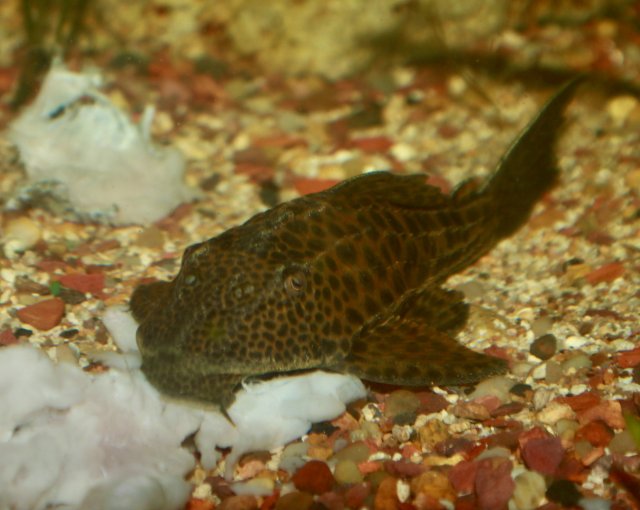
Photo below was taken @ a week ago in a 125 gal tank

As mentioned they should never be kept with Discus, or other slow flat fish like severums, and other substrate huggers, as they will eat the slime coat off their sides at night.
They will also eat fish eggs, and non-free swimming fry.
And as someone else said, often produce more waste than the algae they clean up, produced fertilizer for more algae, especially as adults when they need more protein.
Locals here in Panama eat them, and call them Chopa Piedras (stone suckers) they are said to taste like lobster
Got my first common type n the 1960s. Outgrew my tank pretty quickly, commons usually reach over a foot long.
Had a couple more in between, but now choose Ansistrus species. because they stay smaller
My current one is Ancistrus chagrasi from Panama, and is kept in my Panamanian biotope tank (below)
caught about 3 years ago, started out about 4", when 1st caught in a river near San Martin
Is now about 8", still eats algae, but also eats fish flesh
Photo below was taken @ a week ago in a 125 gal tank
As mentioned they should never be kept with Discus, or other slow flat fish like severums, and other substrate huggers, as they will eat the slime coat off their sides at night.
They will also eat fish eggs, and non-free swimming fry.
And as someone else said, often produce more waste than the algae they clean up, produced fertilizer for more algae, especially as adults when they need more protein.
Locals here in Panama eat them, and call them Chopa Piedras (stone suckers) they are said to taste like lobster
Last edited:

Yes they are heavily armored my Rhom has only attacked my pleco once but who knows when imI would venture to guess, at least 90% of MFK members have kept, or are keeping Pleco's.
Got my first common type n the 1960s. Outgrew my tank pretty quickly, commons usually reach over a foot long.
Had a couple more in between, but now choose Ansistrus species. because they stay smaller
View attachment 1499174
View attachment 1499175
My current one is Ancistrus chagrasi from Panama, and is kept in my Panamanian biotope tank (below)
caught about 3 years ago, started out about 4", when 1st caught in a river near San Martin
View attachment 1499176
Is now about 8", still eats algae, but also eats fish flesh
View attachment 1499177
Photo below was taken @ a week ago in a 125 gal tank
View attachment 1499178
As mentioned they should never be kept with Discus, or other slow flat fish like severums, and other substrate huggers, as they will eat the slime coat off their sides at night.
They will also eat fish eggs, and non-free swimming fry.
And as someone else said, often produce more waste than the algae they clean up, produced fertilizer for more algae, especially as adults when they need more protein.
Locals here in Panama eat them, and call them Chopa Piedras (stone suckers) they are said to taste like lobster
When I’m not home during the day
"Locals here in Panama eat them, and call them Chopa Piedras (stone suckers) they are said to taste like lobster"
That will probably be ChUpa Piedras (from Chupar, to suck). That's what locals call them in Colombia, as well as Chupas, Cuchas, and Corronchos (general terms, as they do have more specific names for particular types).
They are indeed very prized as food, in some locales they are wrapped in platano leaves and places between embers for royal local treat.
That will probably be ChUpa Piedras (from Chupar, to suck). That's what locals call them in Colombia, as well as Chupas, Cuchas, and Corronchos (general terms, as they do have more specific names for particular types).
They are indeed very prized as food, in some locales they are wrapped in platano leaves and places between embers for royal local treat.
My personal opinion based on my own rules of thumb is that a 6,869+ liter tank for an adult 61cm common pleco would be needed. Indeed, not many can provide this size tank.
I've had common and bristlenose before, both constantly made massive mountains of ?.
It is for this reason that any plecos I get in the future (looking for affordably priced L46, L129, L201, or L333) will be carnivorous. No strings of poop like in omnivores or herbivores.
I've had common and bristlenose before, both constantly made massive mountains of ?.
It is for this reason that any plecos I get in the future (looking for affordably priced L46, L129, L201, or L333) will be carnivorous. No strings of poop like in omnivores or herbivores.
Yes Chupa."Locals here in Panama eat them, and call them Chopa Piedras (stone suckers) they are said to taste like lobster"
That will probably be ChUpa Piedras (from Chupar, to suck). That's what locals call them in Colombia, as well as Chupas, Cuchas, and Corronchos (general terms, as they do have more specific names for particular types).
They are indeed very prized as food, in some locales they are wrapped in platano leaves and places between embers for royal local treat.
They wrap, and cook them in banana or platano leaves here too.
As they cook on the coals, the heat makes that bony plate split.
