

I understand that checking water parameters is always a high priority in aquatic hobbyist. Although my question is, is the water test kit as precise as it should be? I am not asking which test kits are better. From my standpoint, since you're testing the water in a more smaller and concentrated vial, it would give a much stronger reading. How does other water hobbyist feel about this? Or am I just the only one not on ease?
Question on Water test Kits
- Thread starter Fishowner
- Start date
You are using an out of date browser. It may not display this or other websites correctly.
You should upgrade or use an alternative browser.
You should upgrade or use an alternative browser.


The sample is not more concentrated, it is just a representative aliquot of tank, or tap water at the moment taken.
Over the years chemists have determined the most efficient sample size to use, which reacts with a small amount of reagent (testing agent) (a drop of so), and give a concise and "obvious" result. These chemicals agents (dyes and reacting solutions) are expensive, and only a small amount is needed to give a sufficient reaction.
I worked as a chemist in a water facility that pumped hundreds of millions of gallons of water per day. We used similar tests to determine the parameters of those millions of gallons. The efficacy these type tests was constantly being evaluated by experts at EPA and other agencies, and our own proficiency with these tests regularly evaluated.
We mixed many of our own reagents daily from dry substances, and went through what is in a single aquarium box kit almost every day.
We always ran a standard (known chemical concentrations) unit, a DI sample(free of all components), against our water samples to check our own work. Many simple aquarium tests kits remove these steps.
We also rinsed our cuvettes (test tubes) with DI water at least three times before and after each sample test run to remove any residual chemical in the glassware (a step which helps with accuracy, and many aquarist don't do).
When dealing with such tiny amounts, this lack of rinsing is I believe can screw up many aquarists results.
Over the years chemists have determined the most efficient sample size to use, which reacts with a small amount of reagent (testing agent) (a drop of so), and give a concise and "obvious" result. These chemicals agents (dyes and reacting solutions) are expensive, and only a small amount is needed to give a sufficient reaction.
I worked as a chemist in a water facility that pumped hundreds of millions of gallons of water per day. We used similar tests to determine the parameters of those millions of gallons. The efficacy these type tests was constantly being evaluated by experts at EPA and other agencies, and our own proficiency with these tests regularly evaluated.
We mixed many of our own reagents daily from dry substances, and went through what is in a single aquarium box kit almost every day.
We always ran a standard (known chemical concentrations) unit, a DI sample(free of all components), against our water samples to check our own work. Many simple aquarium tests kits remove these steps.
We also rinsed our cuvettes (test tubes) with DI water at least three times before and after each sample test run to remove any residual chemical in the glassware (a step which helps with accuracy, and many aquarist don't do).
When dealing with such tiny amounts, this lack of rinsing is I believe can screw up many aquarists results.


The sample is not more concentrated, it is just a representative aliquot of tank, or tap water at the moment taken.
Over the years chemists have determined the most efficient sample size to use, which reacts with a small amount of reagent (testing agent) (a drop of so), and give a concise and "obvious" result. These chemicals agents (dyes and reacting solutions) are expensive, and only a small amount is needed to give a sufficient reaction.
I worked as a chemist in a water facility that pumped hundreds of millions of gallons of water per day. We used similar tests to determine the parameters of those millions of gallons. The efficacy these type tests was constantly being evaluated by experts at EPA and other agencies, and our own proficiency with these tests regularly evaluated.
We mixed many of our own reagents daily from dry substances, and went through what is in a single aquarium box kit almost every day.
We always ran a standard (known chemical concentrations) unit, a DI sample(free of all components), against our water samples to check our own work. Many simple aquarium tests kits remove these steps.
We also rinsed our cuvettes (test tubes) with DI water at least three times before and after each sample test run to remove any residual chemical in the glassware (a step which helps with accuracy, and many aquarist don't do).
When dealing with such tiny amounts, this lack of rinsing is I believe can screw up many aquarists results.
duanes
I recently started rinsing and leaving water in the test tubes after testing. I rinse the test tubes prior to using. Should I just let test tubes dry out after rinsing prior to storing until next test time.From my standpoint, since you're testing the water in a more smaller and concentrated vial, it would give a much stronger reading.
The aquarium hobby tests give results in ppm. The size of the tank does not matter because the result takes the volume into account. Ammonia and nitrite tests unless skewed by a chemical, are reliable enough. Nitrate testing should be replaced by a TDS meter in my opinion. The first is completely unreliable, the second can cost 20 quid and last for years and gives a good indication of how much the tank water has changed from the tap water at the end of the week, which is enough to know how often and how large water change should be done to bring the levels back in line with the tap water.
The level of nitrates is irrelevant. It is the total of solids that matters and nitrates is just one of them. Nitrates on their own, based on scientific papers, needs to be in the hundreds and thousands to harm fish....but the water quality is not determined by just nitrate concentration. It is merely one of of the means of judging water deterioration, and if we were able to test accurately for nitrates, high nitrates, when regular and large water changes are done, means too high bioload for the tank. Because to have high nitrates, the ammonia and nitrites converted must also have been excessive. But nitrate tests are inaccurate by a big margin so one can't go by it. A TDS meter will also tell you the same, but more accurately and in a manner of seconds....The TDS in improperly unkept tank will gradually rise to hundreds of ppms difference to your tap/original water. A properly kept tank will have nearly the same reading as your tap water by 10-20ppm difference the most at the end of the week.
I understand that checking water parameters is always a high priority in aquatic hobbyist.
You can do without testing for years. The highest priority is big water changes each week...This way tests become redundant because its almost a guarantee for good and stable water quality providing the stock isn't excessive to start with.
In the lab after rinsing 3 Xs with DI water we would always let the tubes stand upside down to drain and dry.
Rinsing in DI will help remove components like nitrate, but rinsing in tank water or tap does not, because those waters can leave a bit of residual, and contain loads of minerals. And when you are dealing with parts per million, even a small residual can skew a result.
A gallon of DI water can sometimes be bought at grocery stores, and because the cuvetts are small, even rinsing times, a gallon can go a long way to assure correct results.
That said, remember I was a water chemist/microbiologist so I can be a bit anal about that kind of things, and may be over the top for many aquarists.
Rinsing in DI will help remove components like nitrate, but rinsing in tank water or tap does not, because those waters can leave a bit of residual, and contain loads of minerals. And when you are dealing with parts per million, even a small residual can skew a result.
A gallon of DI water can sometimes be bought at grocery stores, and because the cuvetts are small, even rinsing times, a gallon can go a long way to assure correct results.
That said, remember I was a water chemist/microbiologist so I can be a bit anal about that kind of things, and may be over the top for many aquarists.
Last edited:
Thank you for all your contribution. I will put all this into account.

In the lab after rinsing 3 Xs with DI water we would always let the tubes stand upside down to drain and dry.
Rinsing in DI will help remove components like nitrate, but rinsing in tank water or tap does not, because those waters can leave a bit of residual, and contain loads of minerals. And when you are dealing with parts per million, even a small residual can skew a result.
A gallon of DI water can sometimes be bought at grocery stores, and because the cuvetts are small, even rinsing times, a gallon can go a long way to assure correct results.
That said, remember I was a water chemist/microbiologist so I can be a bit anal about that kind of things, and may be over the top for many aquarists.
Great, now see what you've done...one more thing to be OCD about lol. Ignorance is truly bliss.

I use my API master test kit as more of a go, no-go type gauge for most of my testing. I can't decipher well between 5, 10 and 20ppm nitrates. To me, orange = OK. If the tube is reddish, you better up your WCs or figure out what's wrong.

Once you get an understanding of how your tank works with regards to your stock levels, feeding regime, maintainance schedule and the all important subsequent bio load, you find that you test less and less because you just know that your water changes are taking care of everything. But of course, fish grow, and some of them devilishly quick. This extra bio load, if left unchecked will mean your nitrates may be significantly higher than you originally tested when the fish were smaller. It's because of this very reason that i still check my water, though not half as much as i used to.
I agree about using the tests for a barometer.
I kept a log book, and tracked how pH and alkalinity were effected by water changes and adjusted my routines accordingly. After a while I went from daily testing to weekly, or even less.
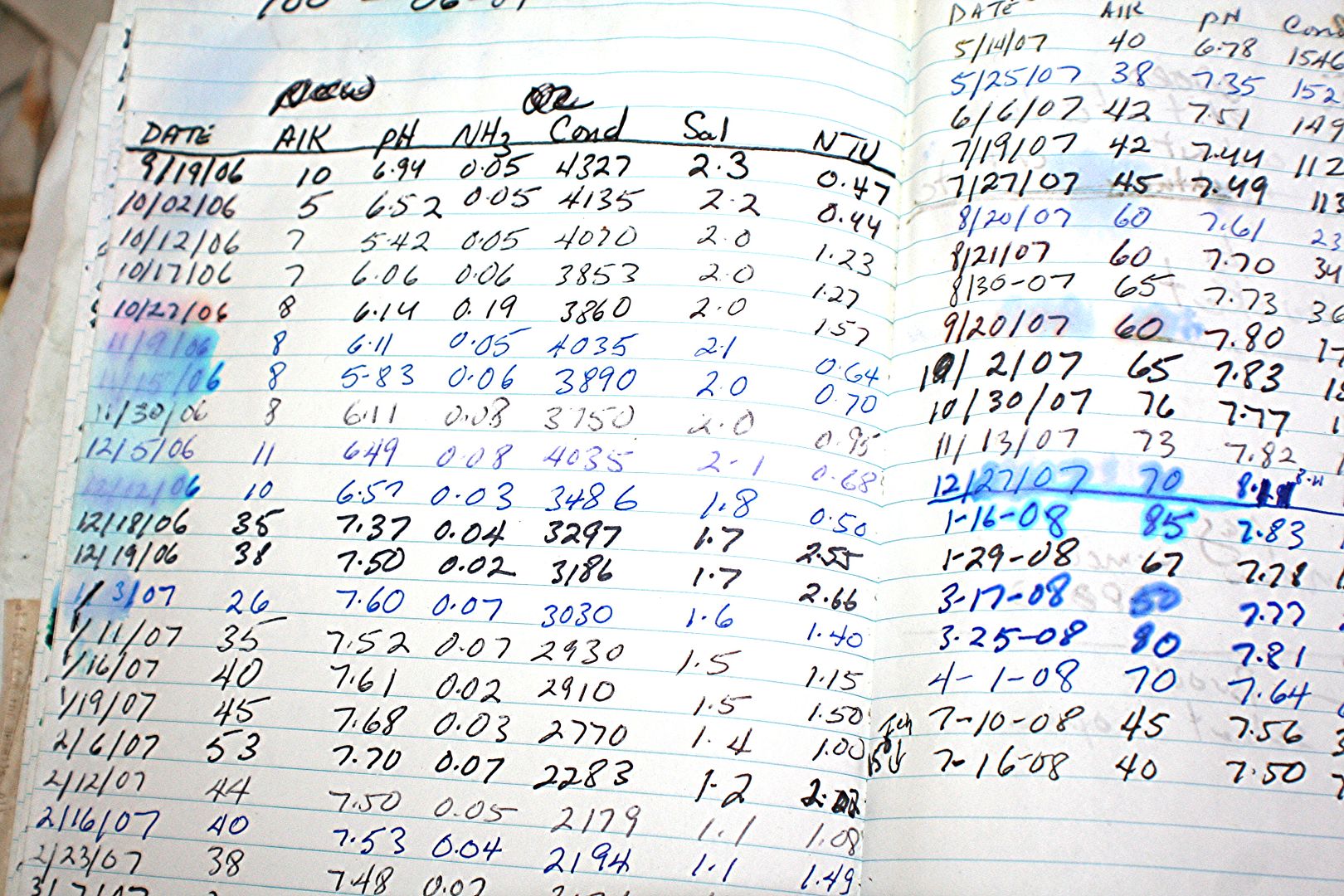
I kept a log book, and tracked how pH and alkalinity were effected by water changes and adjusted my routines accordingly. After a while I went from daily testing to weekly, or even less.
