

I’ve been out of the hobby for 15 years or so, so it’s been quite a while since I’ve had to cycle a brand new tank and didn’t have any media from an established tank to kick it off. I understand what the nitrogen cycle is. My question is, how many fish should be added to a 225 gallon tank to cycle it and if anybody has any recommendations on hardy fish to serve this purpose? The tank will eventually be used to house a ray pup. Thank you!
Refresh my memory on cycling a new tank?
- Thread starter Heymikki
- Start date
You are using an out of date browser. It may not display this or other websites correctly.
You should upgrade or use an alternative browser.
You should upgrade or use an alternative browser.


Welcome aboardI’ve been out of the hobby for 15 years or so, so it’s been quite a while since I’ve had to cycle a brand new tank and didn’t have any media from an established tank to kick it off. I understand what the nitrogen cycle is. My question is, how many fish should be added to a 225 gallon tank to cycle it and if anybody has any recommendations on hardy fish to serve this purpose? The tank will eventually be used to house a ray pup. Thank you!
Hopefully this helpshttps://www.monsterfishkeepers.com/forums/threads/what-is-cycling.702760/#post-7921684
Welcome aboard
Hopefully this helpshttps://www.monsterfishkeepers.com/forums/threads/what-is-cycling.702760/#post-7921684
I don't recommend using any feeder type fish to cycle the aquarium such as Rosy Reds, Goldfish, or Guppies. I personally would use a hardy group of tetra such as the Black Widow also called Blackskirt tetra.

Cocktail shrimp is an easy way to get it started without using fish. Or you can buy and dose ammonia.
If you do end up using fish, non-feeders like tlindsey
suggests are a good idea. Silver dollars can be had cheap, and are big enough to produce some ammonia, plus they are hardy. For a 225 I would start out with probably 10-15 depending on the size of them.
tlindsey
suggests are a good idea. Silver dollars can be had cheap, and are big enough to produce some ammonia, plus they are hardy. For a 225 I would start out with probably 10-15 depending on the size of them.
If you do end up using fish, non-feeders like
tlindsey
suggests are a good idea. Silver dollars can be had cheap, and are big enough to produce some ammonia, plus they are hardy. For a 225 I would start out with probably 10-15 depending on the size of them.Thanks all for the replies! I read the linked thread and it brings up many interesting ideas. I’ll certainly post around in some local Facebook groups to see if I can get my hands on some established media to kick this cycle off. I was also unaware of on of the QuickStart products now on the market. Have people had success with those?
Thanks all for the replies! I read the linked thread and it brings up many interesting ideas. I’ll certainly post around in some local Facebook groups to see if I can get my hands on some established media to kick this cycle off. I was also unaware of on of the QuickStart products now on the market. Have people had success with those?
I personally don't use Quick Start products but a few members here has used them to cycle a aquarium successfully.

Your local LFS might be able to hook you up with some seeded media or water that seeded media has been rinsed out in.

Because I live in a relatively remote area, cycling a tank could be difficult or not depending on how one looks at it.
In order go to a LFS, I must take a ferry to the mainland, catch a cab, and be back a few hours later in time to get the ferry back, along with also having time to get groceries and anything I need, because its an island, few things are easy to get.
A normal tank usually takes somewhere between 6 and 8 weeks to cycle. So waiting can be a painful experience for some.
Each method below
!.) Adding straight ammonia is a great way. You add it and test with something like an API kit until when you add ammonia, until disappears, and test some more until nitrite becomes nitrate, then add fish. A very accurate method, but complicated and fuzzy for some, although a good prep for regular testing that is a normal and important part of fish keeping.
2.) throwing a dead thing such as a shrimp, allowing it to rot (produce ammonia) and testing(as above) to find out when nitrate takes over.
Of course watching a piece of shrimp rot for 6 weeks or two moths can be excruciatingly boring
3.) adding some type of sacrificial fish, that produce ammonia, and before adding the fish (you really want) testing for ammonia spikes, and dips unti nitrate replaces lammonia and nitrite.
One problem with this method is the sacrificial fish could be asymptomatically carrying any number of disease vectors (Columnaris (bacterial), Ick (Protozoal), , Lymphocystis (viral ) that under the stress of spiking ammonia and nitrite, become more than asymptomatic, and seriously infect the tank and sit in wait for the new fish you have been anxiously to add. And then after adding that coveted species, watching it die inn epidemic.
Because of the remoteness of where I live (there are no LFSs on the island, (not even generic pet shops)), my general lack patience, and a few other factors, I chose the 3rd way....collected my substrate from nature, , filled the 180 gal tank, and started running the two thirty gallon sumps.
After letting the tank run with filtration for a week or so, I collected plants from a semi-local lake (some terrestrial plants too) , and 2 dozen mosquito fish, I dropped them in the tank, and started testing. Probably because of the plants, maybe because I placed 1 sump in direct sun (so it iimmediatly started growing algae) the tank never spiked, and plants got enough of a foothold before the expected fish arrived , 6 to 8 weeks, to consume chemical wastes.
After the 15 or so fish were added (12 Andinoacara cichlids, 2 tetras, and a Pleco )there was or has not been an ammonia spike.
I was surprised because, 2 dozen mosquito fish, cannot possibly produce a sufficient amount of ammonia to equal the output of the a dozen 4" cichlids, etc
The sacrificial mosquito fish were quickly eaten.
Since fish were added at the beginning of that tank 3 years ago, I have always done 30-40% water changes every other day.... that.... and the heavy planting (terrestrial and aquatic) are what I attribute to the lack of any ammonia, nitrite, or even nitrate readings.
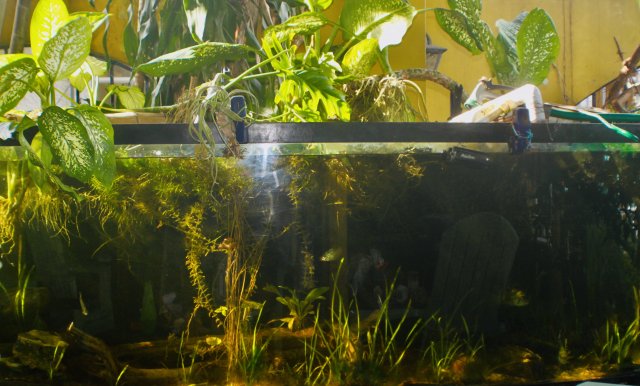

I only recommend this 3rd way, if tank is sufficiently planted, and the plants are established enough to consume the byproducts of waste of the intended fish.
i consider myself very lucky that that it worked as smoothly as it did.
In order go to a LFS, I must take a ferry to the mainland, catch a cab, and be back a few hours later in time to get the ferry back, along with also having time to get groceries and anything I need, because its an island, few things are easy to get.
A normal tank usually takes somewhere between 6 and 8 weeks to cycle. So waiting can be a painful experience for some.
Each method below
!.) Adding straight ammonia is a great way. You add it and test with something like an API kit until when you add ammonia, until disappears, and test some more until nitrite becomes nitrate, then add fish. A very accurate method, but complicated and fuzzy for some, although a good prep for regular testing that is a normal and important part of fish keeping.
2.) throwing a dead thing such as a shrimp, allowing it to rot (produce ammonia) and testing(as above) to find out when nitrate takes over.
Of course watching a piece of shrimp rot for 6 weeks or two moths can be excruciatingly boring
3.) adding some type of sacrificial fish, that produce ammonia, and before adding the fish (you really want) testing for ammonia spikes, and dips unti nitrate replaces lammonia and nitrite.
One problem with this method is the sacrificial fish could be asymptomatically carrying any number of disease vectors (Columnaris (bacterial), Ick (Protozoal), , Lymphocystis (viral ) that under the stress of spiking ammonia and nitrite, become more than asymptomatic, and seriously infect the tank and sit in wait for the new fish you have been anxiously to add. And then after adding that coveted species, watching it die inn epidemic.
Because of the remoteness of where I live (there are no LFSs on the island, (not even generic pet shops)), my general lack patience, and a few other factors, I chose the 3rd way....collected my substrate from nature, , filled the 180 gal tank, and started running the two thirty gallon sumps.
After letting the tank run with filtration for a week or so, I collected plants from a semi-local lake (some terrestrial plants too) , and 2 dozen mosquito fish, I dropped them in the tank, and started testing. Probably because of the plants, maybe because I placed 1 sump in direct sun (so it iimmediatly started growing algae) the tank never spiked, and plants got enough of a foothold before the expected fish arrived , 6 to 8 weeks, to consume chemical wastes.
After the 15 or so fish were added (12 Andinoacara cichlids, 2 tetras, and a Pleco )there was or has not been an ammonia spike.
I was surprised because, 2 dozen mosquito fish, cannot possibly produce a sufficient amount of ammonia to equal the output of the a dozen 4" cichlids, etc
The sacrificial mosquito fish were quickly eaten.
Since fish were added at the beginning of that tank 3 years ago, I have always done 30-40% water changes every other day.... that.... and the heavy planting (terrestrial and aquatic) are what I attribute to the lack of any ammonia, nitrite, or even nitrate readings.
I only recommend this 3rd way, if tank is sufficiently planted, and the plants are established enough to consume the byproducts of waste of the intended fish.
i consider myself very lucky that that it worked as smoothly as it did.

I would personally buy something very expensive and hard to come by like a zebra pike, give you some motivation to keep it alive with daily water changes and testing ?
idk if you plan on having a heavy bio load in the 225 with larger predators, if so Id spike the tank instead of any fish. Regardless I would go to an lfs that looks clean and buy a sponge filter in one of the existing tanks (zebra savor)
idk if you plan on having a heavy bio load in the 225 with larger predators, if so Id spike the tank instead of any fish. Regardless I would go to an lfs that looks clean and buy a sponge filter in one of the existing tanks (zebra savor)