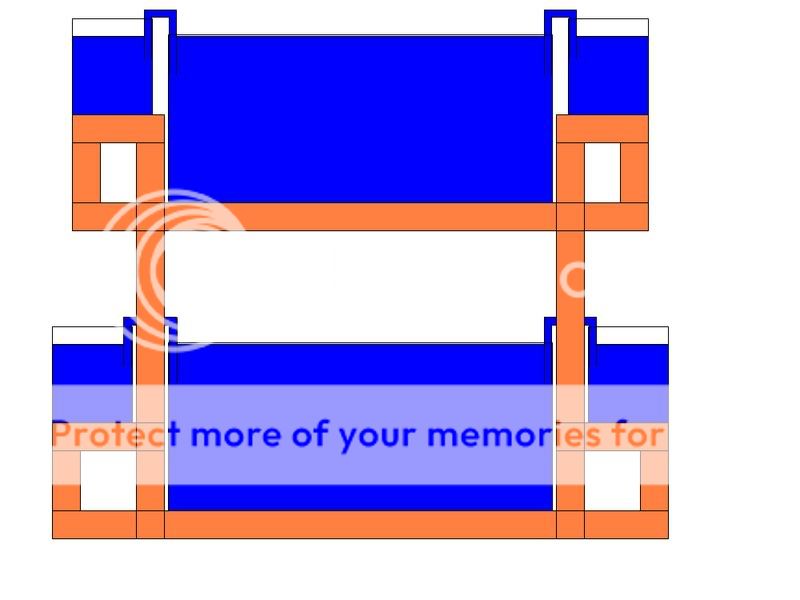
I am new to this hobby, so I could drive you crazy with questions. I also tend to be wordy, so I apologize in advance for the likely length of this.
Weve had a quite nice 90 gallon aquarium in storage for several years (it had belonged to my oldest son, who was not focused enough to responsibly keep the fish), and my wife recently decided shed like to see it put to use, so weve moved it downstairs to our family room. I have done a lot of study in a short period of time since weve come to this decision, and I am quite taken by the African cichlids, so I plan to set the aquarium up for the purpose of keeping that type of fish.
My current question(s) focus on a device that struck me as quite useful in terms of keeping the fish healthy and avoiding having the display aquarium laden with all sorts of unsightly equipment, such as heaters. One author even reported, beyond that, that some of the cichlids get aggressive enough that they go out of their way to destroy things, including heaters, for instance, so that would be another good reason to have means to heat the water outside of the display tank, for instance.
Specifically, while I was reading about sumps, part of the discussion revolved around using the output end of the sump tank for heating, testing, and adding chemicals to the water. While Ive come to the decision I dont need a sump, it seems it would be useful for several good reasons to have a second, smaller tank cycling water with the display aquarium for those purposes and for increasing the effective water volume of the system for the benefit of the fish. Several issues compel me to consider this idea seriously, but I have some questions about the physics of it that leave me a bit nervous about finding water all over the floor, and Id like some advice regarding how to set it up to minimize the likelihood of that happening.
In fact, I am dumbfounded to read about folks keeping the sump under their main aquarium. It strikes me (I must presume mistakenly, given that people do it!) that in that arrangement, siphoning should naturally result in the content of the main aquarium overhead running down into the sump and spilling over its walls to soak the floor around it, emptying a considerable part of the volume of the overhead tank. Perhaps, when the filter pump is running, it can exceed the siphon flow due to gravity, but what happens in the event of a power failure?
I have thought, instead, to have a second tank positioned so the water level is set at the same height as in the first, so that in the event of a power failure, the intentional siphoning from the bigger tank into the smaller that is driven by the filter pump drawing water from the smaller tank and pumping it to the bigger will stop the second a power failure shuts the filter pump down. If I am correct, I should never have fear of water running over, except perhaps in the unlikely event the siphon hose becomes significantly blocked while the pump is running. (Of course, having the second tank at that height will make working in it easier than if it were underneath the larger, as well, but that factor does not relate to my questionsit is just another benefit of the arrangement).
My questions boil down to simple physics, I imagine, and I suspect that is a science that must be on the minds of many who keep fish, so I hope someone can help me out with this and help set my mind at ease. Here are my two closely related questions:
First, am I correct to think that if the tanks are positioned so that the water level is the same in both, I do not have to worry about the content of one tank siphoning into the other, regardless of whether the pump is running or not?
Second, once the tanks are arranged in that fashion, does it matter at what level the opposite ends of the siphon tube rest in the two tanks (provided of course that they remain well within the depths of the water)? I ask this because I would like to put the intake end of the siphon hose in the larger tank at a greater depth than the output end in the smaller tank could possibly go (i.e., because it would have to go lower in the bigger tank than the full depth of the smaller tank).
I created an image that depicts the arrangement and the context of my questions, having misunderstood that I would be able to add attachments. Oh, well. I hope this is clear. Thanks in advance for consideration and any assistance with these questions.
Rob Redden
Weve had a quite nice 90 gallon aquarium in storage for several years (it had belonged to my oldest son, who was not focused enough to responsibly keep the fish), and my wife recently decided shed like to see it put to use, so weve moved it downstairs to our family room. I have done a lot of study in a short period of time since weve come to this decision, and I am quite taken by the African cichlids, so I plan to set the aquarium up for the purpose of keeping that type of fish.
My current question(s) focus on a device that struck me as quite useful in terms of keeping the fish healthy and avoiding having the display aquarium laden with all sorts of unsightly equipment, such as heaters. One author even reported, beyond that, that some of the cichlids get aggressive enough that they go out of their way to destroy things, including heaters, for instance, so that would be another good reason to have means to heat the water outside of the display tank, for instance.
Specifically, while I was reading about sumps, part of the discussion revolved around using the output end of the sump tank for heating, testing, and adding chemicals to the water. While Ive come to the decision I dont need a sump, it seems it would be useful for several good reasons to have a second, smaller tank cycling water with the display aquarium for those purposes and for increasing the effective water volume of the system for the benefit of the fish. Several issues compel me to consider this idea seriously, but I have some questions about the physics of it that leave me a bit nervous about finding water all over the floor, and Id like some advice regarding how to set it up to minimize the likelihood of that happening.
In fact, I am dumbfounded to read about folks keeping the sump under their main aquarium. It strikes me (I must presume mistakenly, given that people do it!) that in that arrangement, siphoning should naturally result in the content of the main aquarium overhead running down into the sump and spilling over its walls to soak the floor around it, emptying a considerable part of the volume of the overhead tank. Perhaps, when the filter pump is running, it can exceed the siphon flow due to gravity, but what happens in the event of a power failure?
I have thought, instead, to have a second tank positioned so the water level is set at the same height as in the first, so that in the event of a power failure, the intentional siphoning from the bigger tank into the smaller that is driven by the filter pump drawing water from the smaller tank and pumping it to the bigger will stop the second a power failure shuts the filter pump down. If I am correct, I should never have fear of water running over, except perhaps in the unlikely event the siphon hose becomes significantly blocked while the pump is running. (Of course, having the second tank at that height will make working in it easier than if it were underneath the larger, as well, but that factor does not relate to my questionsit is just another benefit of the arrangement).
My questions boil down to simple physics, I imagine, and I suspect that is a science that must be on the minds of many who keep fish, so I hope someone can help me out with this and help set my mind at ease. Here are my two closely related questions:
First, am I correct to think that if the tanks are positioned so that the water level is the same in both, I do not have to worry about the content of one tank siphoning into the other, regardless of whether the pump is running or not?
Second, once the tanks are arranged in that fashion, does it matter at what level the opposite ends of the siphon tube rest in the two tanks (provided of course that they remain well within the depths of the water)? I ask this because I would like to put the intake end of the siphon hose in the larger tank at a greater depth than the output end in the smaller tank could possibly go (i.e., because it would have to go lower in the bigger tank than the full depth of the smaller tank).
I created an image that depicts the arrangement and the context of my questions, having misunderstood that I would be able to add attachments. Oh, well. I hope this is clear. Thanks in advance for consideration and any assistance with these questions.
Rob Redden

 glad you took this hobby you'll have LOTS of fun!!