Scientific names...you know, the ones that some find so unpronounceable...are supposed to be the final authority when it comes to identifying living things. Common names are not trustworthy; they vary from one location to the next, and there is no rhyme nor reason to them...they are really just nicknames that have been attached to a critter over the years that happened to "stick". But the scientific designation...the capitalized generic name, followed by the small-case specific name, and sometimes with an added small-case subspecific name at the end...are intended to be unique and positive; the idea is that once you have the scientific name, you know beyond a shadow of doubt exactly which living thing is being discussed, with no ambiguity or confusion.
So...it really is a shame that this never works out in practice. Scientists are forever arguing, discussing, debating over changes in taxonomy. There are the "lumpers"; these are the guys who always try to "lump" more critters together into fewer and fewer species, but with more subspecies or varieties. Then there are the "splitters", who go the other way; they like every critter that displays even the slightest variation in colour or form or behaviour to be considered a separate, distinct species, and so if you follow their logic the number of species goes way, way up. We also must deal with species "complexes" or "clades", which seem to be terms indicating that no clear winner has been determined in the naming game. And of course, with the modern techniques of DNA analysis, huge changes are constantly being made to these categories, as guys sitting behind microscopes and lab equipment patiently explain to you how everything you "know" is completely wrong.
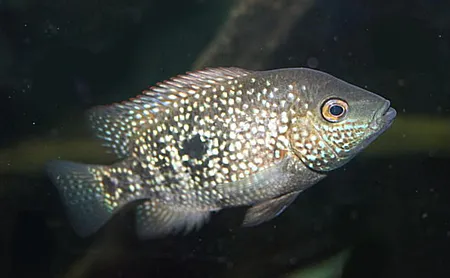
This hit home yesterday when I got my hands on some Cichlasoma dimerus fry from a local source. When I started in the hobby, just about every cichlid you could buy...which was a much smaller number than is available today...was in the genus Cichlasoma. Sure, there were a few exceptions...Oscars, Angels, Discus, Keyholes and Ports, Pikes and of course those mysterious Africans all had their own genera...but just about everything else was in Cichlasoma. There was no Herichthys, Thorichthys, Amphilophus, Australoheros, Parachromis or any of the other myriad "new" genera that we have to contend with today. The fish, of course, didn't and don't care; but the eggheads and lab-coat guys could not be happy with things as they were.
What struck me was that all the good old Cichlasoma species of my youth have all been moved into new taxonomic categories...but one look at these C.dimerus in person made me immediately think of the archetypical Port Cichlid, Aequidens portalegrensis. A bit of googling showed that many experts do indeed state that C.dimerus are very closely related to fish that i would have called Aequidens...but now they are in Cichlasoma! Huh? Take just about everything out of the genus, but then insert some stuff into it...stuff that would never have been considered to be a correct fit in the old days? I'm sure that there are rules that forced this; you know, somebody discovered that a previously-unknown expert back in 1926 used Cichlasoma first and so that's got to be the way it goes today. Pretty cool, in a weird way: you can keep and breed a fish all your life, and then suddenly, with the stroke of a pen...you have a new species!
But I'm not about to let science suck the joy out of the hobby for me just yet. You know what they say: i've read so many bad things about drinking, smoking and over-eating...that I've decided to give up reading...
So...it really is a shame that this never works out in practice. Scientists are forever arguing, discussing, debating over changes in taxonomy. There are the "lumpers"; these are the guys who always try to "lump" more critters together into fewer and fewer species, but with more subspecies or varieties. Then there are the "splitters", who go the other way; they like every critter that displays even the slightest variation in colour or form or behaviour to be considered a separate, distinct species, and so if you follow their logic the number of species goes way, way up. We also must deal with species "complexes" or "clades", which seem to be terms indicating that no clear winner has been determined in the naming game. And of course, with the modern techniques of DNA analysis, huge changes are constantly being made to these categories, as guys sitting behind microscopes and lab equipment patiently explain to you how everything you "know" is completely wrong.
This hit home yesterday when I got my hands on some Cichlasoma dimerus fry from a local source. When I started in the hobby, just about every cichlid you could buy...which was a much smaller number than is available today...was in the genus Cichlasoma. Sure, there were a few exceptions...Oscars, Angels, Discus, Keyholes and Ports, Pikes and of course those mysterious Africans all had their own genera...but just about everything else was in Cichlasoma. There was no Herichthys, Thorichthys, Amphilophus, Australoheros, Parachromis or any of the other myriad "new" genera that we have to contend with today. The fish, of course, didn't and don't care; but the eggheads and lab-coat guys could not be happy with things as they were.
What struck me was that all the good old Cichlasoma species of my youth have all been moved into new taxonomic categories...but one look at these C.dimerus in person made me immediately think of the archetypical Port Cichlid, Aequidens portalegrensis. A bit of googling showed that many experts do indeed state that C.dimerus are very closely related to fish that i would have called Aequidens...but now they are in Cichlasoma! Huh? Take just about everything out of the genus, but then insert some stuff into it...stuff that would never have been considered to be a correct fit in the old days? I'm sure that there are rules that forced this; you know, somebody discovered that a previously-unknown expert back in 1926 used Cichlasoma first and so that's got to be the way it goes today. Pretty cool, in a weird way: you can keep and breed a fish all your life, and then suddenly, with the stroke of a pen...you have a new species!
But I'm not about to let science suck the joy out of the hobby for me just yet. You know what they say: i've read so many bad things about drinking, smoking and over-eating...that I've decided to give up reading...