

This weekend I was on a field excursion with my University. We went to a moor in Carinthia where Rana arvalis woltersdorffi (moor frogs) are occurring. These frogs are explosive breeders and during these 2-3 days, the males turn blue. Also, we found 9 other species of Amphibians there, which is remarkable because there are only about 16 species in total in Austria.
We did some field work there, e.g. testing some animals for chytrid fungus.
Enough talking, here are the pictures:
Overview of the Eiblhofmoor:

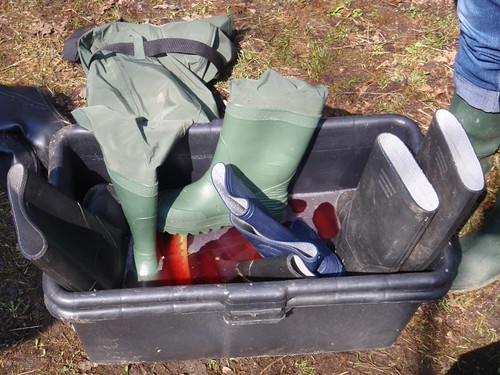
Desinfection of shoes to prevent spreading of chytrid fungus
Some frogs. They are getting more blue during the day

Moor(e) frogs

Amplexus

After some time... Many frogs, many eggs

Underwater pic

Dipnetting results:

Small bivalves (Pisidium sp.) attached to a common newt (Lissotriton vulgaris). This was pretty common there. Once the clams are attached, they can't let go of the newts because they are disturbed all the time through the newt's movements and so their reflexes close the shell.

Aberrant coloration on a common newt vs normal color

A crested newt (Tritures cristatus)

Breeding frenzy in common toads (Bufo bufo)

Males will mount anything. This one wouldn't let go for several minutes before I shook him off

Underwater pic of waiting males

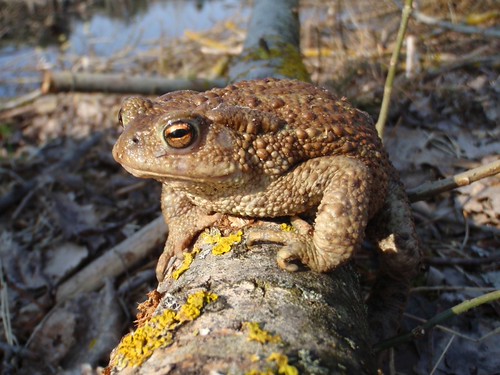
Female Bufo bufo
Green tree frog (Hyla arborea)

Yellow bellied toad (Bombina variegata). The only specimen we found

That's why they are called yellow bellied toads:

The following morning: Checking drift fences and helping Amphibians cross the street

These animals fell into the bucket during the night

Finally: Taking DNA samples from collected animals to check if there is chytrid fungus

We did some field work there, e.g. testing some animals for chytrid fungus.
Enough talking, here are the pictures:
Overview of the Eiblhofmoor:
Desinfection of shoes to prevent spreading of chytrid fungus
Some frogs. They are getting more blue during the day
Moor(e) frogs
Amplexus
After some time... Many frogs, many eggs
Underwater pic
Dipnetting results:
Small bivalves (Pisidium sp.) attached to a common newt (Lissotriton vulgaris). This was pretty common there. Once the clams are attached, they can't let go of the newts because they are disturbed all the time through the newt's movements and so their reflexes close the shell.
Aberrant coloration on a common newt vs normal color
A crested newt (Tritures cristatus)
Breeding frenzy in common toads (Bufo bufo)
Males will mount anything. This one wouldn't let go for several minutes before I shook him off
Underwater pic of waiting males
Female Bufo bufo
Green tree frog (Hyla arborea)
Yellow bellied toad (Bombina variegata). The only specimen we found
That's why they are called yellow bellied toads:
The following morning: Checking drift fences and helping Amphibians cross the street
These animals fell into the bucket during the night
Finally: Taking DNA samples from collected animals to check if there is chytrid fungus


 Did you go as a teacher or as a student?