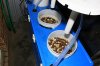
I just overhauled my filtration. I am now using overflows with bulkheads and as such ended up with some test samples from the process.

These are close up pics of the bits that were drilled out for the bulkheads.
I had to use a hammer and chisel to separate the epoxy fibreglass layer from the plywood.
As you can see, the bond between the two was exceptional. So much so that the two layers didn't separate cleanly at all.
Click the pics for a clearer view.

This is looking at the fibreglass on edge. It gives a good indication of uniformity of the layers.
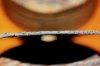
I used the reverse lens technique to get these last two macro shots.
You can clearly see the layers of resin that stayed attached to the plywood, they even show the
imprint of the glass fibres proving that marine grade epoxy resin can bond with wood just as well
as it does with the fibreglass cloth.
If you look closely where the wood is exposed, you can still see extra resin within the pores of the timber.
It shows just how well marine epoxy penetrates the plywood


These are close up pics of the bits that were drilled out for the bulkheads.
I had to use a hammer and chisel to separate the epoxy fibreglass layer from the plywood.
As you can see, the bond between the two was exceptional. So much so that the two layers didn't separate cleanly at all.
Click the pics for a clearer view.
This is looking at the fibreglass on edge. It gives a good indication of uniformity of the layers.
I used the reverse lens technique to get these last two macro shots.
You can clearly see the layers of resin that stayed attached to the plywood, they even show the
imprint of the glass fibres proving that marine grade epoxy resin can bond with wood just as well
as it does with the fibreglass cloth.
If you look closely where the wood is exposed, you can still see extra resin within the pores of the timber.
It shows just how well marine epoxy penetrates the plywood

 u just keep gettin better! props