Thoughts on sex of my freddie?

  • We are currently upgrading MFK. thanks! -neo

Chelu

Feeder Fish
MFK Member
Sep 4, 2018
29
11
8
I would like some expert thoughts on the sex. Some info that may help, I bought 4 of them at around an inch. Had them for a few months now. The Freddie in the pics is almost twice the size of the others. I have researched as much as possible and still can't figure it out. So any help is greatly appreciated. Thanks in advance.

20180907_215128.jpg 20180907_212906.jpg 20180907_212856.jpg 20180907_212831.jpg VideoCapture_20180907-213824.jpg VideoCapture_20180907-213447.jpg
 
When I try to determine the gender of most cichlids, the shape of the profile is very important.
fullsizeoutput_96a.jpeg
males normally have a steep profile, females normally more torpedo shaped, and pointed.
Your's may be too young to have developed, but it looks to be female to me.
When checking Parachromis (almost all) spotting on the lower jaw of females is very sparse, and males not. Although age is an important factor.
A mature male motaguense below (close cousin to fred)
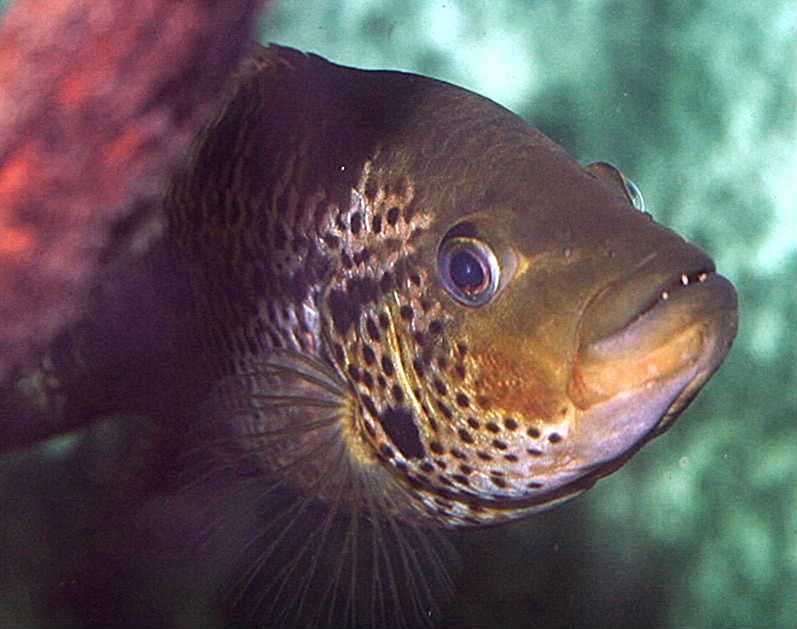
note the bulky head, and number of spots,
now below a female
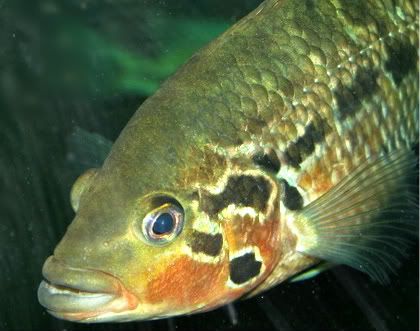
more pointed, torpedo shale, and lack of spots
now tetracanthus below less close relative but similar traits, no less
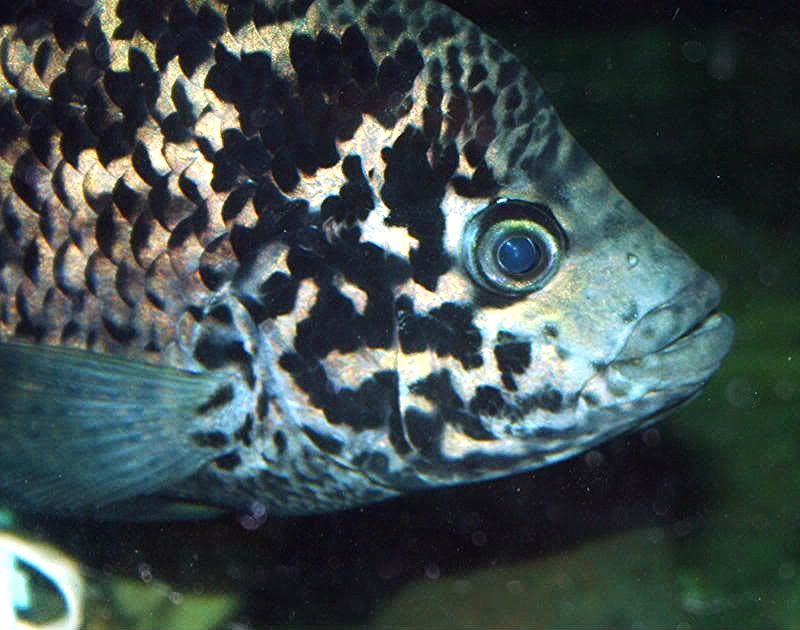
male above, female
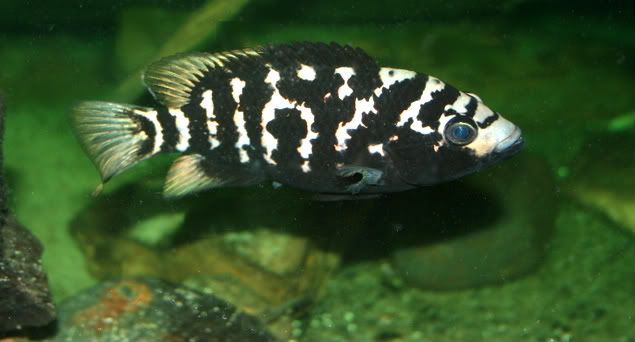
of course if you have a more dominant cichlid in the tank, this may influence a less dominant males trait development

 
This has been very helpful. Thank you. I am new to the species so I do have one last question. Is it normal for the female to out grow the rest of the group at a rapid rate if it is the dominant one in the tank? Also if it is true, would it stunt any of the other male traits? Because I do have other Freddie's growing out with her that tend to look like males based on the description you gave me. Thank you again. This has been very helpful and I appreciate it.
 
Although males usually tend to grow faster, I have had female Nandopsis haitiensus, Tomocichla tuba, and Vieja bifasciata, and V zonata females outgrow males by leaps and bounds, often the point where they killed the all males of a group, in a tank.
With the above, I had to go out and find larger males from another source to end up with a pair.
The female tuba then killed 2 out of 3 males her size, before settling on 1 to spawn with, then immediately killed him after the eggs were fertilized.
Similar scenario with the zonata.
This may be why one often finds pairs with males double the size of a feisty, tiny female.
 
Here are a few examples where males are much larger, and only size allowed them to be able to survive the females hormonal spawning defense mechanisms.


and in the gram modes directly above, another example of male female, bullies male shape.
 
Thank you again for the help. I attached a picture of a different Freddie in the tank. Same age as the other. If I am understanding this right. Based on this picture he has a higher chance at being a male because of the extra spangling and the steeper head? I also understand he may be a little to young to be accurate. Thanks again for your time.

VideoCapture_20180909-141811.jpg
 
Ok. Thank you. I'll try again in a month or so. Appreciate the time
 
MonsterFishKeepers.com

