

Hi there,
I was on a great trip last week and thought you might want to see the pics. It was an excursion with my university and we did some studies on alpine amphibians.
Starting the hike up to the "Hochmölbinghütte", a mountain shelter without warm water and electricity only during the generator is on. Elevation: 1700m above sealevel

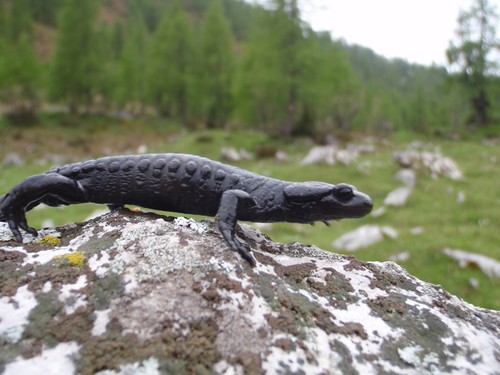
Our first alpine salamander, Salamandra atra. These salamanders bear fully developed Babysalamanders instead of laying eggs into the water. Gestation time is 3 years ~cnf-blink
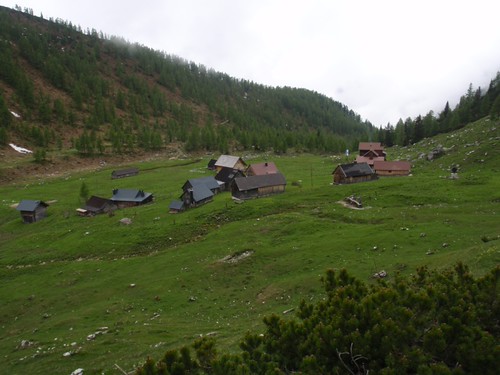
This is the alp where we the Hochmölbinghütte was situated:
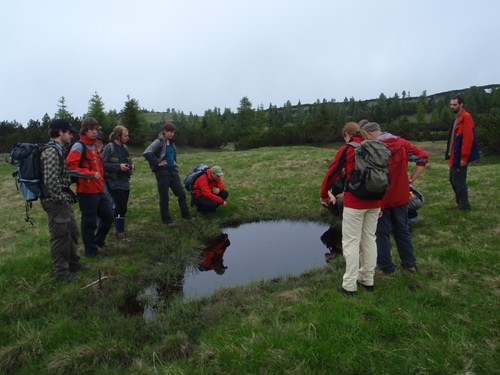
Checking out the ponds in an area called "Kirchfeld". There is a big population of mountain newts (Triturus alpstris), some of them tagged with transponders to recognize them individually. The oldest specimens are more than 20 years old!
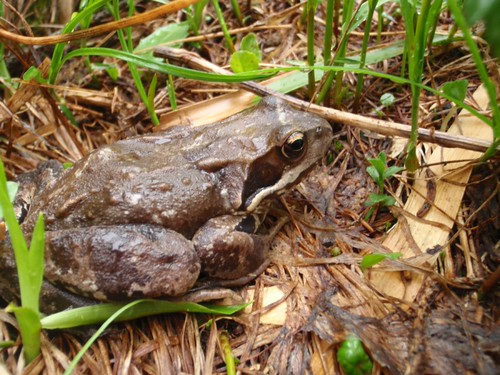
European common frog, Rana temporaria. They are the first amphibians to spawn in the year and newts feed on their eggs.
Overview of the Kirchfeld. The mountains in the back are the Niedermölbing and the Mittelmölbing
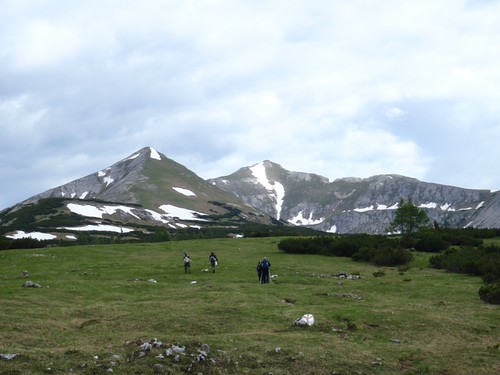
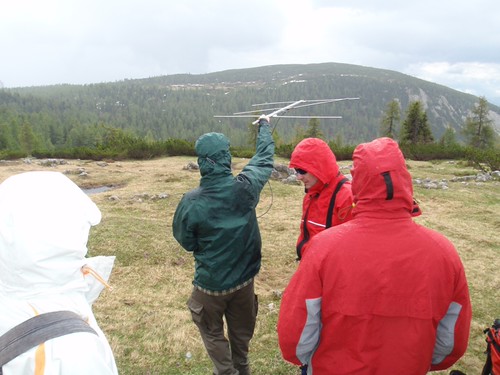
It was pretty windy and cold up there, at Midday we had about 10°C. The antenna was used for an introduction to radiotelemetry.
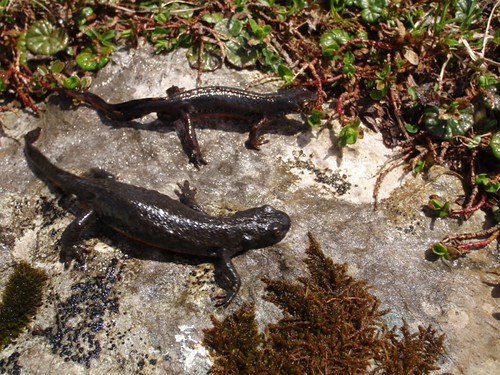
Pair of mountain newts. The upper one is the male, recognisable through the smaller size and during the mating season, they get a bluish bodycoloration
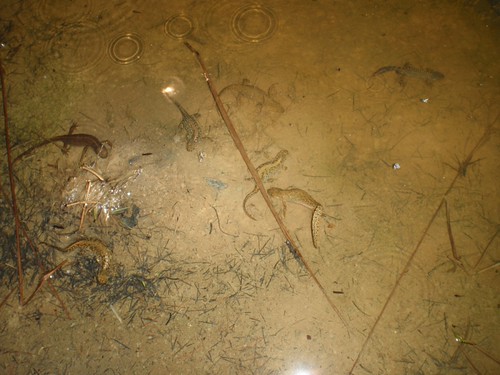
How many newts can you see?
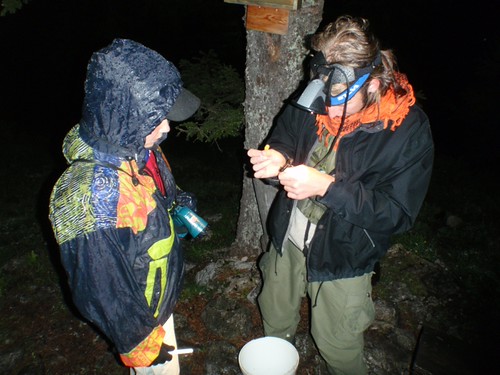
Taking DNA samples of alpine salamanders to check if there is chytrid fungus in the population:
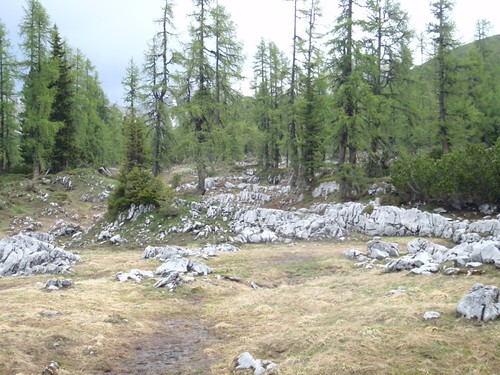
Rocky area in 1900m elevation. Perfect for common European adders (Vipera berus), but the weather was too bad.
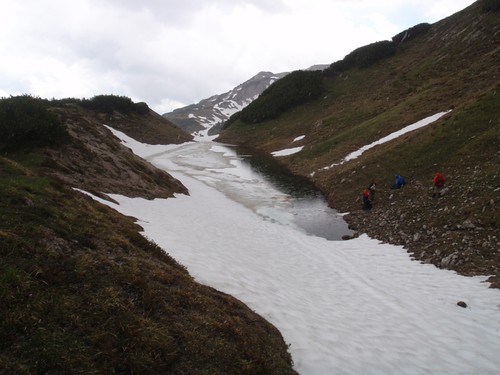
Alpine lake in 2000m height. There was still ice on the surface, but we found mating newts and eggballs of frogs in there!
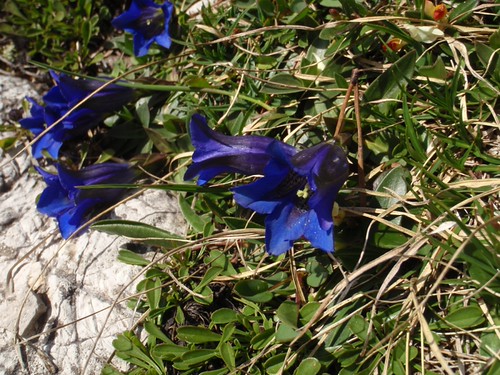
blue Gentian, you can make pretty tasty booze out of it.
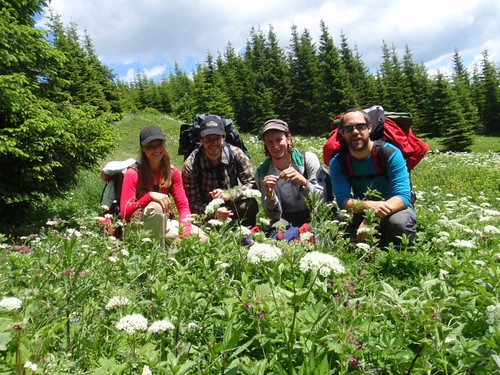
Me and some fellow students on the last day when we hiked back down into the valley
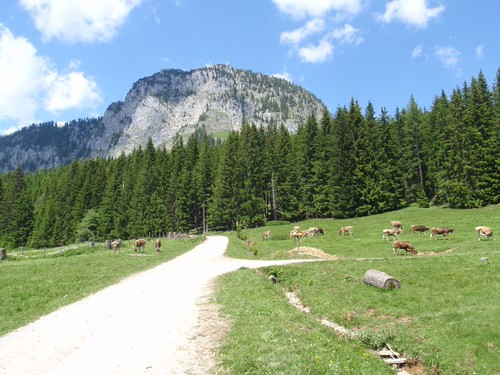
For all you city-kids: This is how cows live during the summer if they are lucky:
I was on a great trip last week and thought you might want to see the pics. It was an excursion with my university and we did some studies on alpine amphibians.
Starting the hike up to the "Hochmölbinghütte", a mountain shelter without warm water and electricity only during the generator is on. Elevation: 1700m above sealevel
Our first alpine salamander, Salamandra atra. These salamanders bear fully developed Babysalamanders instead of laying eggs into the water. Gestation time is 3 years ~cnf-blink
This is the alp where we the Hochmölbinghütte was situated:
Checking out the ponds in an area called "Kirchfeld". There is a big population of mountain newts (Triturus alpstris), some of them tagged with transponders to recognize them individually. The oldest specimens are more than 20 years old!
European common frog, Rana temporaria. They are the first amphibians to spawn in the year and newts feed on their eggs.
Overview of the Kirchfeld. The mountains in the back are the Niedermölbing and the Mittelmölbing
It was pretty windy and cold up there, at Midday we had about 10°C. The antenna was used for an introduction to radiotelemetry.
Pair of mountain newts. The upper one is the male, recognisable through the smaller size and during the mating season, they get a bluish bodycoloration
How many newts can you see?
Taking DNA samples of alpine salamanders to check if there is chytrid fungus in the population:
Rocky area in 1900m elevation. Perfect for common European adders (Vipera berus), but the weather was too bad.
Alpine lake in 2000m height. There was still ice on the surface, but we found mating newts and eggballs of frogs in there!
blue Gentian, you can make pretty tasty booze out of it.
Me and some fellow students on the last day when we hiked back down into the valley
For all you city-kids: This is how cows live during the summer if they are lucky:



