Using peat moss to crash pH

  • We are currently upgrading MFK. thanks! -neo

Goggy

Fire Eel
MFK Member
Sep 29, 2015
94
158
66
23
Thailand
Hi,
I'm trying to use peat moss to drop my aquarium's pH, but I'm not sure how much I should use.

It is a 240 gallon aquarium (8ft x 2ft x 2ft). The water I use is rainwater which has parameters of pH: 6.8, Hardness: 0
I would like to get the pH down to about 5.5

Im trying to spawn fish so this is something I really insist on doing.

Thank you.

 
Note: my hardness may be inaccurate because of an outdated test kit
If it’s only to breed fish you could just use seachem discus buffer to bring down to around that level in a controlled manner. Alternatively slowly add the peat moss it’ll probably take a descent amount to drop it. Just remember dropping the ph to that level will slow your bacteria down.
 
  • Like
Reactions: Goggy
There really isn't a one size fits all approach with peat, being a natural and gentle source of acidity, and because of the way different buffers in different water types resist (or not) the effects peat, and the acidity of peat from different geographical areas may also effect the way water your reacts.
Canadian sphagnum peat will supposedly give the most dramatic results.
To drop pH from 6.8 down to 5.5 is quite a leap, and may take a quart of peat with some water types, but may take as much as 3 cubic yards to make a dent, depending on the buffering capacity of you particular water, so you will need to experiment with dosage.
if so, be prepared for the peat to turn your water quite brown.
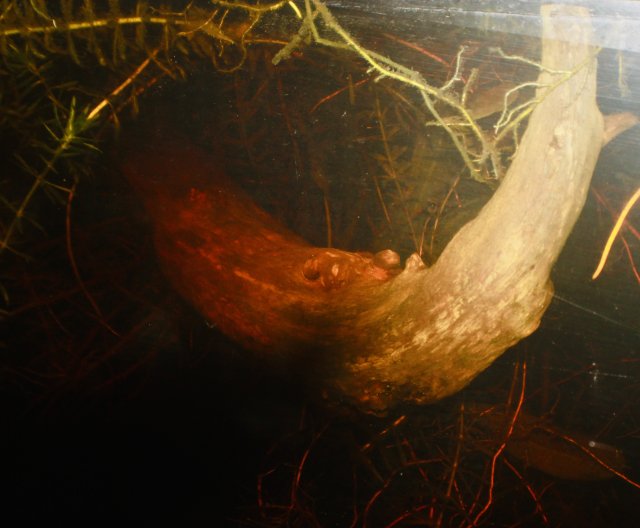
The photo below is from surrounding plants, that leach tannins into the water during the rainy season, not peat, but may be an example of what to expect from using pear in your tank.
This tanks water fluctuates from a pH of 8.2 in the dry season, down to about 7, during the rainy season because it is outside, and influenced by natural elements of rain dripping the tannins in with daily rain..
D7ECA5D9-CC50-4476-9247-7FA058D7EC99_1_201_a.jpeg
55A3DAA7-93E0-4337-B812-38F8CDE175A8_1_201_a.jpeg
As you can see, certain times a year I can not see thru than 12" of the 24" width of the tank due to the tannin saturation.
 
When I used to keep wild discus and Uaru (some 15 years ago), I was in the Boston area and with tap water about pH 7, and relatively soft. I kept a system of 3 connected 55gal blue plastic barrels, with a large hanging mesh bag containing Canadian Sphagnum moss, which I bought by the bale. Because I was changing a lot of water daily (many discus, quite a few tanks), the turnover rate was quite fast, and so was the replacement of the moss.
However, using the Sphagnum moss as described, water was quite brown-tainted and pH lowered by a bit (not a whole lot). However the fish loved it, and greeted me with good growth and survival and frequent spawns. It works, perhaps not so much in changing the pH, but by producing a water environment the fish liked better than the tap water.
Prior to that, I attempted to use moss in the actual aquaria. It didn't work as well and was a pain as it needed to be replaced too often (in each tank!) or obtain no results. I also got the feeling that it was prone to large fluctuations of water characteristics. I would not recommend to do it in the actual aquaria.
 
  • Like
Reactions: Goggy
What are you trying to spawn?

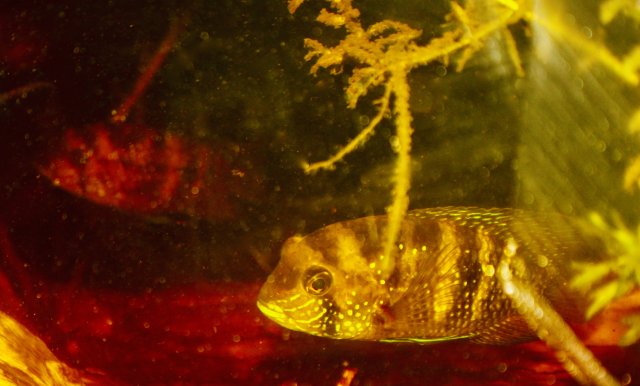
Crenicichla sp. Atabapo 1 (Atabapo Red)
Its a bit embarrassing, since so many people halfheartedly state that they want to spawn these guys despite how difficult it is, but I am fully dedicated. I have a single pair in this large aquarium and have been trying many different methods to create a spawning trigger. Right now it is the rainy season in Thailand and storms are very common, I really want to use this time to attempt at breeding them. Recently I am experimenting with the pH value and have tried dumping 100 almond leaves in which dropped the pH by 0.4 and made the water heavily stained with very little visibility.

There really isn't a one size fits all approach with peat, being a natural and gentle source of acidity, and because of the way different buffers in different water types resist (or not) the effects peat, and the acidity of peat from different geographical areas may also effect the way water your reacts.
Canadian sphagnum peat will supposedly give the most dramatic results.
To drop pH from 6.8 down to 5.5 is quite a leap, and may take a quart of peat with some water types, but may take as much as 3 cubic yards to make a dent, depending on the buffering capacity of you particular water, so you will need to experiment with dosage.
if so, be prepared for the peat to turn your water quite brown.
The photo below is from surrounding plants, that leach tannins into the water during the rainy season, not peat, but may be an example of what to expect from using pear in your tank.
This tanks water fluctuates from a pH of 8.2 in the dry season, down to about 7, during the rainy season because it is outside, and influenced by natural elements of rain dripping the tannins in with daily rain..
View attachment 1426778
View attachment 1426779
As you can see, certain times a year I can not see thru than 12" of the 24" width of the tank due to the tannin saturation.

I shall take your advice and experiment with the amounts of moss needed.
I have an empty cycled 240 gallon and have put in 10 quarts of peat in, I will see what happens in the following days.
 
  • Like
Reactions: fishhead0103666
MonsterFishKeepers.com