


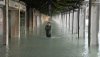
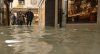
The recent "acqua alta" (high water) in Venice, Italy reached a depth of 1.56 meters (5 ft, 1 in.) on Monday - the deepest flood in 22 years, and the fourth highest flood level in recent history, claimed Venice's Tide Center. The water began to subside on Tuesday, while residents and tourists made their way through the city, hip-waders or not - one man even took the opportunity to ride his wakeboard through Piazza San Marco (until police stepped in). Although this flood was severe enough for the mayor to ask tourists to temporarily stay home, Venetian floods are fairly routine, several occurring every year, and residents usually take it all in stride.






VENICE has suffered its worst flooding in 22 years, with the "acqua alta" (high water) reaching a depth of more than 1.5m deep before beginning to recede in the Renaissance city.
A change in the direction of the wind helped the water start backing down from a high of 1.56m, the tide monitoring centre said.
Authorities had warned that the sea lapping at the lagoon city threatened to rise to 1.60m, a 30-year high mark, and warned residents and tourists to stay indoors.
"It's an exceptional acqua alta, and unless you absolutely have to, don't go out," Venice mayor Massimo Cacciari said in a statement.
Nearly all the streets of the city, including the central tourist district, were already under water by mid-morning - the famous Piazza San Marco by 80cm.
Workers set up elevated walkways as sirens and loudspeaker announcements reinforced the alert. Under a new system, warnings and updates were also being sent out by text message.
The tidal centre predicted earlier that floodwater would fall back to normal levels by 7pm (0500 AEDT Tuesday), but said another surge was expected in the early hours of Tuesday local time.
The situation was complicated by a national transport strike affecting the city's "vaporetto" water bus service.
Experts said the surge in the sea level was caused by a combination of persistently high southerly winds and heavy rain and snowfall in northern Italy over the past few days.
The worst incident of acqua alta in Venice came on November 4, 1966, when the city was submerged by 1.94m of water amid catastrophic flooding throughout Italy.
VENICE has suffered its worst flooding in 22 years, with the "acqua alta" (high water) reaching a depth of more than 1.5m deep before beginning to recede in the Renaissance city.
A change in the direction of the wind helped the water start backing down from a high of 1.56m, the tide monitoring centre said.
Authorities had warned that the sea lapping at the lagoon city threatened to rise to 1.60m, a 30-year high mark, and warned residents and tourists to stay indoors.
"It's an exceptional acqua alta, and unless you absolutely have to, don't go out," Venice mayor Massimo Cacciari said in a statement.
Nearly all the streets of the city, including the central tourist district, were already under water by mid-morning - the famous Piazza San Marco by 80cm.
Workers set up elevated walkways as sirens and loudspeaker announcements reinforced the alert. Under a new system, warnings and updates were also being sent out by text message.
The tidal centre predicted earlier that floodwater would fall back to normal levels by 7pm (0500 AEDT Tuesday), but said another surge was expected in the early hours of Tuesday local time.
The situation was complicated by a national transport strike affecting the city's "vaporetto" water bus service.
Experts said the surge in the sea level was caused by a combination of persistently high southerly winds and heavy rain and snowfall in northern Italy over the past few days.
The worst incident of acqua alta in Venice came on November 4, 1966, when the city was submerged by 1.94m of water amid catastrophic flooding throughout Italy.



