

Wild Jack dempsey
- Thread starter doomiedee
- Start date
You are using an out of date browser. It may not display this or other websites correctly.
You should upgrade or use an alternative browser.
You should upgrade or use an alternative browser.



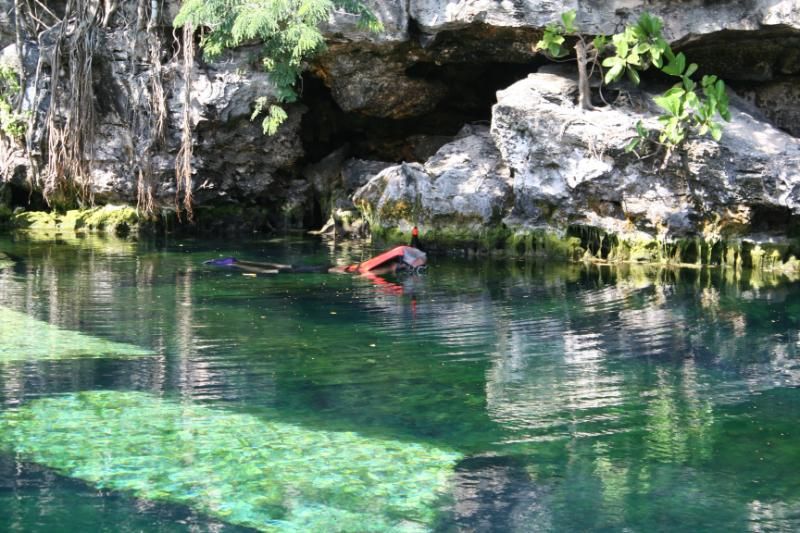
I had JDs in the 1960s, and again in the mid 80s and thought I was over them, until snorkeled with the wild ones in Mexico. The wild ones are very different from the generations of stubby aquaria bred strains, wild are much more sleek, and varied in coloration.
I also thought that generations inbreeding in a small cenote might also create a lesser fish, but some cenotes contain millions of gallons, and competition for mates and breeding sites is fierce, allowing only the strongest to procreate.
Each pair would defend a site at least 4 X 4 ft X 2 (or more)square, easily 500-1000 gallons.
And almost all adult males had fungus covered jaw wounds,

the most vigorous pairs holding sunlit, algae covered territories with crevices to dash into, while old worn out males were relegated to the periphery of darkened caves.
I also thought that generations inbreeding in a small cenote might also create a lesser fish, but some cenotes contain millions of gallons, and competition for mates and breeding sites is fierce, allowing only the strongest to procreate.
Each pair would defend a site at least 4 X 4 ft X 2 (or more)square, easily 500-1000 gallons.
And almost all adult males had fungus covered jaw wounds,

the most vigorous pairs holding sunlit, algae covered territories with crevices to dash into, while old worn out males were relegated to the periphery of darkened caves.

I saw one on aquabid the other day. If you look up jack dempsey and it should be there if no one bought it yet.
Sent from my iPod touch using MonsterAquariaNetwork app
Sent from my iPod touch using MonsterAquariaNetwork app
I saw one on aquabid the other day. If you look up jack dempsey and it should be there if no one bought it yet.
Sent from my iPod touch using MonsterAquariaNetwork app
I just saw them. I for one would be skeptical as to weather those are actual wild jacks
Sent from my iPhone using MonsterAquariaNetwork app
The guy selling on AB says that they're "wild-type" JD's... not "wild" ones.
Matt
Matt
I just saw them. I for one would be skeptical as to weather those are actual wild jacks
Sent from my iPhone using MonsterAquariaNetwork app
All the more reason to be suspicious of pristine, super-sized "wild" Central Americans!
As an aside, there's a great article in this month's Nat Geo about Cenotes...
Matt
As an aside, there's a great article in this month's Nat Geo about Cenotes...
Matt
I had JDs in the 1960s, and again in the mid 80s and thought I was over them, until snorkeled with the wild ones in Mexico. The wild ones are very different from the generations of stubby aquaria bred strains, wild are much more sleek, and varied in coloration.
I also thought that generations inbreeding in a small cenote might also create a lesser fish, but some cenotes contain millions of gallons, and competition for mates and breeding sites is fierce, allowing only the strongest to procreate.
Each pair would defend a site at least 4 X 4 ft X 2 (or more)square, easily 500-1000 gallons.
And almost all adult males had fungus covered jaw wounds,
the most vigorous pairs holding sunlit, algae covered territories with crevices to dash into, while old worn out males were relegated to the periphery of darkened caves.