

Aquired new festae. Stunted for life?

  • We are currently upgrading MFK. thanks! -neo
I have an experiment that's been running for a little over a year.
There are 6 Gymnogeophagus quilero in a tank that gets a water change about once per month, and 6 in a tank that get water changes twice per week.
All 10 Gymnos are from the same spawn, (brothers and sisters).
Each tank is fed the same food once per day, each tank is planted, and each at room temp.
The fish in the the tank that gets once per month water changes are 2.5- 3".
The fish in the tank that gets twice per week water changes are 4-5".
The ones in the more frequent water change tank, have a bit better color.
1 X per month water change tank

2 X per week water change tank

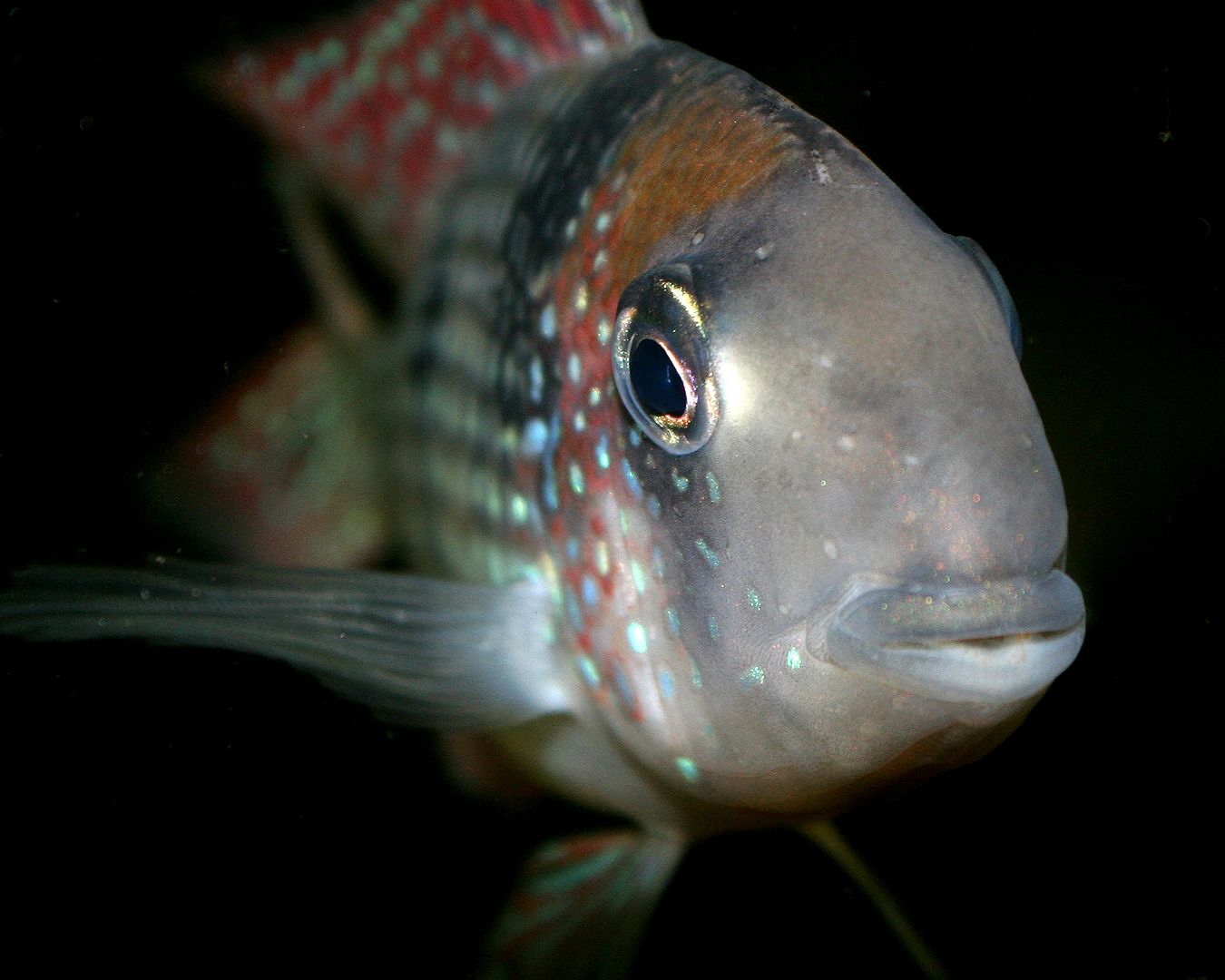
and a close up of one of the 2 X per week fish
 
I have an experiment that's been running for a little over a year.
There are 6 Gymnogeophagus quilero in a tank that gets a water change about once per month, and 6 in a tank that get water changes twice per week.
All 10 Gymnos are from the same spawn, (brothers and sisters).
Each tank is fed the same food once per day, each tank is planted, and each at room temp.
The fish in the the tank that gets once per month water changes are 2.5- 3".
The fish in the tank that gets twice per week water changes are 4-5".
The ones in the more frequent water change tank, have a bit better color.
1 X per month water change tank

2 X per week water change tank

and a close up of one of the 2 X per week fish

Thank you very much Duanes for this post. This should be a sticky in the breeding section.

Nice looking festae and Thai silk. Good luck keeping them together or even as a pair(if paired)... Next best move might be to add a couple caves and dithers just in case he snaps.

www.youtube.com/crushalot329
 
Thanks and the guy had it for a over a yeah which normally a festae should be around the 6-8" mark by now or a little bigger


Sent from my iPhone using MonsterAquariaNetwork app

I think your trying to push it with the 8". Also depends on the size you got them! It took me a year to grow mine from .5 to 4" and that's slow. Mostly because I slowly upgraded from a 10-29-70 (I had all the tanks just moved them later) they are just slow growers and she does seem to be a little small but looks perfectly fine to me if not yay for mini festae

Sent from my HTC One using MonsterAquariaNetwork App
 
I have an experiment that's been running for a little over a year.
There are 6 Gymnogeophagus quilero in a tank that gets a water change about once per month, and 6 in a tank that get water changes twice per week.
All 10 Gymnos are from the same spawn, (brothers and sisters).
Each tank is fed the same food once per day, each tank is planted, and each at room temp.
The fish in the the tank that gets once per month water changes are 2.5- 3".
The fish in the tank that gets twice per week water changes are 4-5".
The ones in the more frequent water change tank, have a bit better color.
1 X per month water change tank

2 X per week water change tank

and a close up of one of the 2 X per week fish


that's really cool. I do agree that it should be a sticky because I will show people how important water changes are
 
I think your trying to push it with the 8". Also depends on the size you got them! It took me a year to grow mine from .5 to 4" and that's slow. Mostly because I slowly upgraded from a 10-29-70 (I had all the tanks just moved them later) they are just slow growers and she does seem to be a little small but looks perfectly fine to me if not yay for mini festae

Sent from my HTC One using MonsterAquariaNetwork App

I saw a festae at the lfs wen I got min that was 8" and was about a year
 
Hormones & Pheromones
Fish give off hormones and pheromones which in a closed system such as an aquarium build up in the water. In a natural environment these would be diluted and/or washed away by the flow of a river or by rainfall in a pond. Some can affect growth. For example, Trudeau et al (2000) concluded that gamma aminobutyric acid (GABA) has been associated with inhibited growth in goldfish. Goldfish are not the only species to produce this, therefore it is reasonable to link GABA to reduced growth in other species.

Matty (1985) also found that “many species of fish are capable of conditioning the surrounding water to produce an effect on other individuals. The chemical cues thus produced facilitate or inhibit growth …” (Matty, 1985, p202). Matty goes on to state that “the decrease in growth rate or stunting brought about by crowded conditions has been recognised for a long time” (Matty, 1985, p202).
Fish breeders have demonstrated that large frequent water changes can aid good growth as these dilute and/or remove some of the growth inhibiting hormones such as somatostatin. Mark Brumell (PFK interview with Jeremy ***, 2012) recommends an unlimited supply of fresh water for optimal growth in goldfish breeding.
Dr Richmond Loh recently answered a question posed by a Practical Fishkeeping forum member, Skwishee, on behalf of INJAF, regarding fish ‘growing to the size of their tank’. Dr Loh stated that,

“Growth in fish, like other organisms, are influenced by many factors including nutrition and hormonal influences … Goldfish are one that produce growth inhibitory hormones (e.g. somatostatin) and in nature, it’s their way of reducing intraspecific competition by suppressing growth of other goldfish. This is a particularly useful survival mechanism especially if you’re a “big fish in a small pond”! In a tank situation, and if partial water changes are not performed regularly, this hormone can build up and suppress the goldfish itself!” (Loh, 2012).
The process described above by Dr Loh is intended to help the fish suppress the competition, in a closed environment the fish can end up suppressing itself which has a significant impact on its growth. (http://injaf.org/articles-guides/do-fish-grow-to-the-size-of-their-tank/)
 
MonsterFishKeepers.com
