

haitiensis (black nasty) deformed?

  • We are currently upgrading MFK. thanks! -neo
This is a common mutation that the breeder may not have noticed (and culled), because it is fairly subtle. It easily may blend into a large spawn that is common in haitiensus. It is even hard to notice in your photos, only obvious in a side view.
Sexual differences appear after about 3 inches.
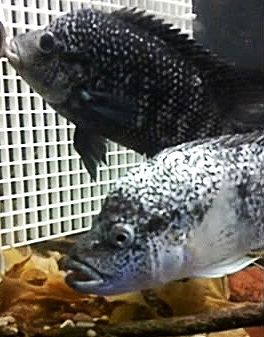
Below is a young pair, male in front.
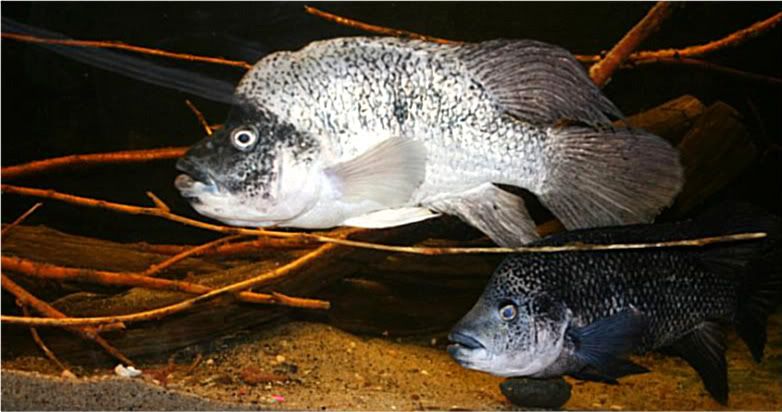
Same pair later in life, male 14", female around 11"
 
This is a common mutation that the breeder may not have noticed (and culled), because it is fairly subtle. It easily may blend into a large spawn that is common in haitiensus. It is even hard to notice in your photos, only obvious in a side view.
Sexual differences appear after about 3 inches.
Below is a young pair, male in front.

Same pair later in life, male 14", female around 11"

Thanks a lot. I was trying to search common deformities in haitiensis but could not find anything. Just thought it was due to fighting.


Sent from my iPhone using MonsterAquariaNetwork app
 
These mutations of color and/or form are common percentages in all cichlid spawns, and can be negative or positive in nature, especially if the environment would change drastically, such as the need to change feeding strategy after a natural disaster.
If all remains the same in a certain habitat, the mutated individuals quickly perish.
In aquariums mutants often survive.
I believe the blood parrot not to be a hybrid, but simply a cultivated mutant with a distorted mouth of either a severum, or one of the midevil types.
I wouldn't allow these individual mutants to breed, because they only produce more and more of the same, or with even more severe mutations.
Other aquarists may differ.
I suppose the common black moor goldfish dating back thousands of years is a prime example of mutation becoming desirable.
 
These mutations of color and/or form are common percentages in all cichlid spawns, and can be negative or positive in nature, especially if the environment would change drastically, such as the need to change feeding strategy after a natural disaster.
If all remains the same in a certain habitat, the mutated individuals quickly perish.
In aquariums mutants often survive.
I believe the blood parrot not to be a hybrid, but simply a cultivated mutant with a distorted mouth of either a severum, or one of the midevil types.
I wouldn't allow these individual mutants to breed, because they only produce more and more of the same, or with even more severe mutations.
Other aquarists may differ.
I suppose the common black moor goldfish dating back thousands of years is a prime example of mutation becoming desirable.

I was thinking of using him as a feeder but I'm going to wait until I have one confirmed male out of the three. This little mutant is the largest and most dominant. Also seen his tune sticking out and it was pointy and facing backward a bit so we'll see wat happens


Sent from my iPhone using MonsterAquariaNetwork app
 
I believe the blood parrot not to be a hybrid, but simply a cultivated mutant with a distorted mouth of either a severum, or one of the midevil types.


http://parrotcichlid.com/history


BP's are man made hybrids manipulated by man and selected for their mutant physical characteristics.
 
the oddballs are the best. i have a bloodparrot and his mouth is way of off center .. he looks like peter griffin lol.. I love the lil nasty hope ya keep her :)
 
MonsterFishKeepers.com
