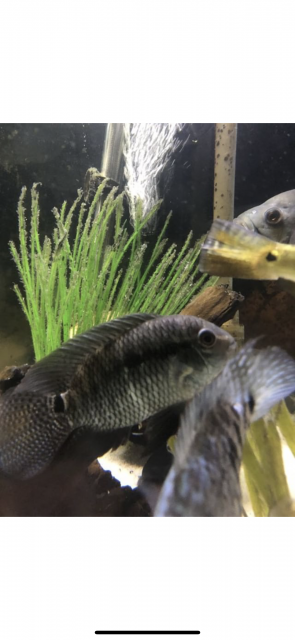
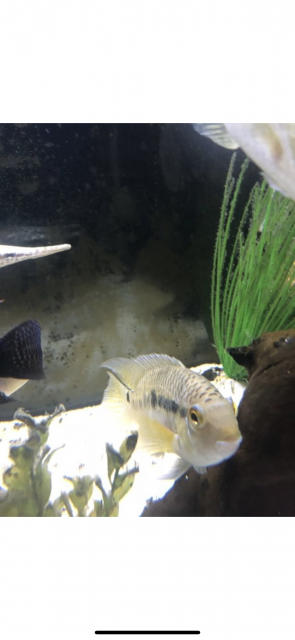
Tell me about Andinoacara Stahlbergi

  • We are currently upgrading MFK. thanks! -neo
Reportedly, stalsbergi reach about 8 inches, if well fed in a tank it wouldn't surprise me to find they can get larger, I'd be interested in feedback from stalsbergi owners on that. Male rivulatus reach 8 inches easily, often more like 9-10, occasionally larger. Blombergi are smaller (reportedly) more like 6 inches, they look nice in photos I've seen, I wouldn't mind trying them, the trouble is finding them.

People who say stalsbergi are more aggressive than rivulatus are comparing wild or near wild stalsbergi to tank raised rivulatus. It's a faulty comparison. I've had wild rivulatus, mine were plenty feisty at two inches, by 3 inches or so they relentlessly wanted to fight everything, by 5 inches I'd traded away all but one to keep in a tank by himself.

Some similar or related fish (Aequidens and Andinoacara) stay smaller. Last I looked Jeff Rapps has Andinocara biseriatus, which (reportedly) are more like 5-6 inches. Jeff says they're fairly peaceful, he'd suggested them as a possible tankmate for my Geo sveni juvies.
 
  • Like
Reactions: TigerTalon1
Reportedly, stalsbergi reach about 8 inches, if well fed in a tank it wouldn't surprise me to find they can get larger, I'd be interested in feedback from stalsbergi owners on that. Male rivulatus reach 8 inches easily, often more like 9-10, occasionally larger. Blombergi are smaller (reportedly) more like 6 inches, they look nice in photos I've seen, I wouldn't mind trying them, the trouble is finding them.

People who say stalsbergi are more aggressive than rivulatus are comparing wild or near wild stalsbergi to tank raised rivulatus. It's a faulty comparison. I've had wild rivulatus, mine were plenty feisty at two inches, by 3 inches or so they relentlessly wanted to fight everything, by 5 inches I'd traded away all but one to keep in a tank by himself.

Some similar or related fish (Aequidens and Andinoacara) stay smaller. Last I looked Jeff Rapps has Andinocara biseriatus, which (reportedly) are more like 5-6 inches. Jeff says they're fairly peaceful, he'd suggested them as a possible tankmate for my Geo sveni juvies.

My male riv is wild caught. He was very aggressive and held his own at 2”. Now as a 10”+ adult he is very peaceful in his harem. Other then putting the big female in her place of course. She is the real trouble maker.

I’d love a chance to keep wild caught stals in the future.
I think either way to get the most enjoyment out of them they need their own tank. Mixing with other cichlids I know has worked for some, but they don’t get a chance to truly shine. And tank size makes all the difference as well. I can only imagine how much happier mine would be in an 8’ tank.

Op- 40b is really only good for a grow out tank for any of them imo. A 55-75 would be more suitable for a lifetime tank for the smaller ones.
 
Never heard of the A.Biseriatus are they somewhat similar to acara? Also are acara in Andinocara now as well?
 
Andinoacara biseriatus, same family as rivulatus, stalsbergi, etc. "Acara" comes from a native name for cichlid fish, you can find it within the Latin names, or even more often, the former Latin names, of many SA cichlids. These days fishkeepers typically use acara to describe any of a number of similar shaped cichlids of various sizes, colors, temperaments, genera, or species, like using "eartheater" to refer to various fish with similar shapes or behavior. So there are a lot of 'acara types' or 'acara like' fish, small, large, peaceful, aggressive, plain, colorful, etc.

Andinoacara, Andino + acara, essentially means "Andes cichlid" or "cichlid from the Andes".
 
Andinoacara biseriatus, same family as rivulatus, stalsbergi, etc. "Acara" comes from a native name for cichlid fish, you can find it within the Latin names, or even more often, the former Latin names, of many SA cichlids. These days fishkeepers typically use acara to describe any of a number of similar shaped cichlids of various sizes, colors, temperaments, genera, or species, like using "eartheater" to refer to various fish with similar shapes or behavior. So there are a lot of 'acara types' or 'acara like' fish, small, large, peaceful, aggressive, plain, colorful, etc.

Andinoacara, Andino + acara, essentially means "Andes cichlid" or "cichlid from the Andes".

So what about the black acara and the blue acara how do they differ? Also are electric blue acara a color strain of black acaras or blue acaras?
 
I've seen a couple of fish called black acara, not sure why that is, but both are Cichlasoma genus. Haven't kept either one and don't know a lot about them, but there are some nice looking Cichlasoma I'm more familiar with, like C. dimerus, another 'acara type'.

Blue acara are Andinoacara pulcher, same family as rivulatus. Along with rivulatus, they used to be lumped with Aequidens until the Andinoacara genus was erected. You still see them listed as Aequidens in some places. A bit smaller than rivulatus, more like 6-7 inches, some can get bigger.

Fish sizes can be a matter of opinion. Some fish species are like humans. Average American male height right now is 5' 9" (I looked it up). I'm 6 ft., above average but not exceptional, there are plenty of taller guys around. I sometimes see people act as though the max possible size for a fish is average or expected. For example, I've seen people say rivulatus can get 12" and sternly insist you need a minimum 6' tank. I've kept my share of rivulatus and seen many more. A 12" rivulatus would be like a 7ft human, not many of them around.

Blue acara have been around for ages and kind of come and go in availability. It's a fish that's worth getting wild, from a good breeder, or at least being selective about, since lfs specimens aren't always great quality. Electric blue acara are a version of blue acara, but their origin is a little cloudy, some say line bred, some say hybrid. I haven't followed them closely enough to an opinion. They look nice, though.
 
Never heard of the A.Biseriatus are they somewhat similar to acara? Also are acara in Andinocara now as well?
To add some more info about A. Biseriatus. They come from the rivers to the west of the Andes in Colombia. There are not many plants which occur in their natural habitat but there is a good ammount of riparian growth around the pools where they have been collected from. They are more closely related to the Rivaltus complex in the Andinoacaara genus but even so they are unique. They exhibit a more drab color than most fish in the genus. Of the smaller fish that occur with them in the wild there are two (or three) notable ones which are found in the hobby. The tetras from the Nematobrychon genus and the hatchetfish G. Maculatus. They have the same dietary requirements as other fish of the genus such as A. Stalsbergi in which they need to be fed a diet consisting of mainly vegetable matter but with some protein added in. A pair should be able to work in a 40b with some dithers as long as you make sure they have a strong pair bond. The picture below shows a habitat in which they were collected.
alfbioto.jpg

As for the Eletric Blue Acaras I believe that they are a hybrid between a Electric Blue Ram and a Blue Acara. Electric Blue Acara's are very prone to defects and not many look the same.
 
Last edited:
  • Like
Reactions: neutrino
I am not sure where you live nor am I an expert in identifying cichlids but I will try. I presume you live in southern flordia so this fish could either be Cichilasoma Bimaculatum or a fish from the Aequidens genus.

Cichlilasoma isn't a genus anymore...
 
MonsterFishKeepers.com