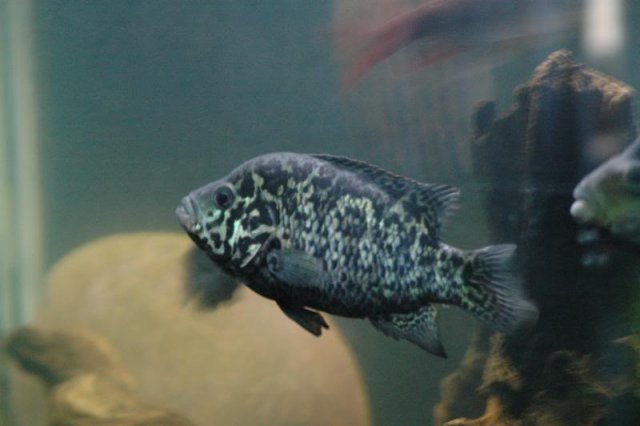
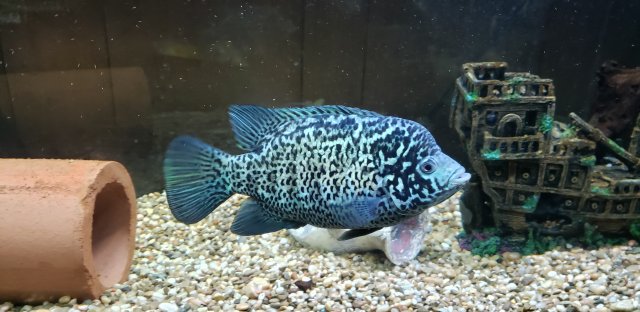
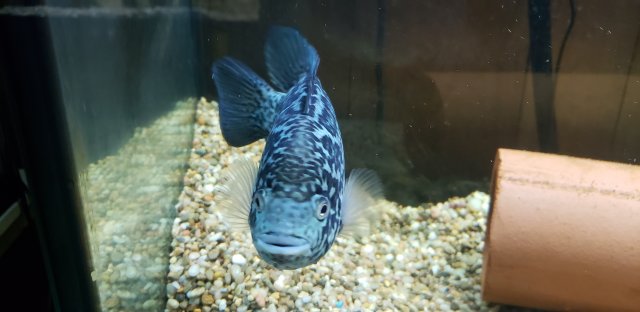
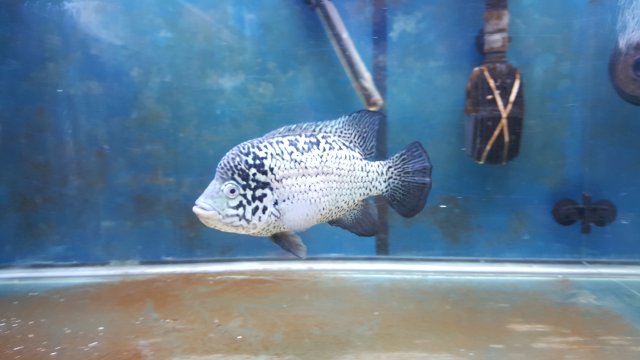
Intense to say the least.
Consider they come from an island where there are no other endemic cichlids in their area.
And on an island of that size, you might expect more, so it may mean they were able to outcompete, and exterminate any other cichlid competition, just as haitiensus on Hispaniola.
But this also happens in some mainland (even larger) environments, consider Mayaheros beanii in the rivers of the northern pacific region of Mexico, it is the only cichlid found.
All these 3 species above, normally do terribly in cichlid community tanks.
If you look to nature, in places where species live sympatrically, these are cichlids that it is "possible" to combine in the same tank (if it is large enough), and if they have all grown up together as juvies.
Also consider that in nature, one "usually" doesn't find 2 similar looking species, or two of the same genus together, even in those varied communities.
One may find 1 species of Thorichthhys, 1 Vieja, 1 Parachromis, and 1 Cincilichthys, unless the habitat is enormous like a large lake, because they would either compete, or end up hybridizing into something else that may be better suited to the habitat in a limited space with limited available resources.
One does not find 2 species of predatory Parachromis(or similarly Nandopsis) together, or usually even two Vieja species, unless they have adapted to different food sources.
It seems many aquarists are drawn to similar shapes of cichlids, so they want an all Parachromis (or similar variants like Cubans or grammodes), or an all Amphilophus tank.
When in reality this goes against the reality of how nature works, these cichlids usually have separate niches.
One might argue that our tanks are not really nature, which is true, but the limited space of a tank only then, serves to amplify the problem.
Consider they come from an island where there are no other endemic cichlids in their area.
And on an island of that size, you might expect more, so it may mean they were able to outcompete, and exterminate any other cichlid competition, just as haitiensus on Hispaniola.
But this also happens in some mainland (even larger) environments, consider Mayaheros beanii in the rivers of the northern pacific region of Mexico, it is the only cichlid found.
All these 3 species above, normally do terribly in cichlid community tanks.
If you look to nature, in places where species live sympatrically, these are cichlids that it is "possible" to combine in the same tank (if it is large enough), and if they have all grown up together as juvies.
Also consider that in nature, one "usually" doesn't find 2 similar looking species, or two of the same genus together, even in those varied communities.
One may find 1 species of Thorichthhys, 1 Vieja, 1 Parachromis, and 1 Cincilichthys, unless the habitat is enormous like a large lake, because they would either compete, or end up hybridizing into something else that may be better suited to the habitat in a limited space with limited available resources.
One does not find 2 species of predatory Parachromis(or similarly Nandopsis) together, or usually even two Vieja species, unless they have adapted to different food sources.
It seems many aquarists are drawn to similar shapes of cichlids, so they want an all Parachromis (or similar variants like Cubans or grammodes), or an all Amphilophus tank.
When in reality this goes against the reality of how nature works, these cichlids usually have separate niches.
One might argue that our tanks are not really nature, which is true, but the limited space of a tank only then, serves to amplify the problem.
Last edited: