- Have you tested your water?
- Yes
- If I did not test my water...
- ...I recognize that I will likely be asked to do a test, and that water tests are critical for solving freshwater health problems.
- Do you do water changes?
- Yes
- If I do not change my water...
- ...I recognize that I will likely be recommended to do a water change, and water changes are critical for preventing future freshwater health problems.
Hi all,
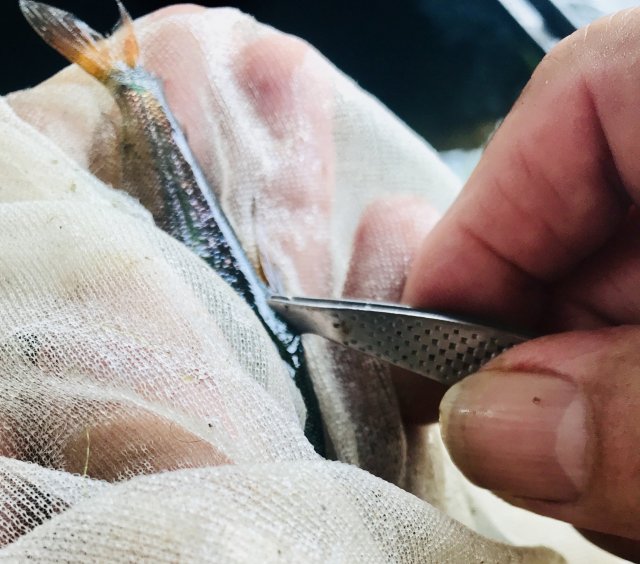
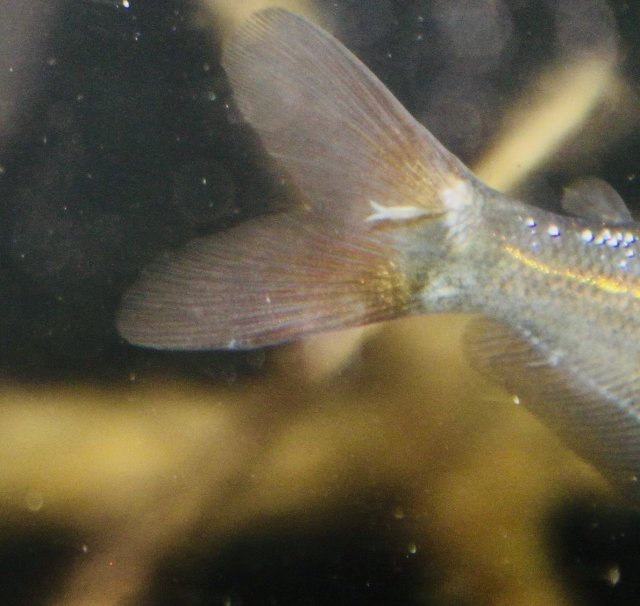
Been reading the posts for a while and enjoy the content! I recently ran into issues with anchor worms and I have several infected fish that I have isolated into one tank.
I've been dosing with Microlift and doing water changes about once every 3-7 days for about 3 weeks now (about 30-60% change at a time, and redosing Microlift after water change). Intermittently, I have been taking the fishes out to pull off worms I can see.
There are still adult anchor worms (that I can see) on 2 or 3 fishes. I realize the adult female anchor worms are pretty tough to kill and might have a 30 day life span. I just want to make sure I'm on the right track regarding treatment. Also want to confirm that Microlift will kill off the female adults or at least stop the anchor worm life cycle. Of course, other suggestions welcome on any speedier way to move past this problem. Also, any input on whether Microlift can be used with other chemicals would be tremendously helpful. I do add API Stress Coat+, Seachem Flourish, and algae remover with each water change along with Microlift. Appreciate all the help!
Been reading the posts for a while and enjoy the content! I recently ran into issues with anchor worms and I have several infected fish that I have isolated into one tank.
I've been dosing with Microlift and doing water changes about once every 3-7 days for about 3 weeks now (about 30-60% change at a time, and redosing Microlift after water change). Intermittently, I have been taking the fishes out to pull off worms I can see.
There are still adult anchor worms (that I can see) on 2 or 3 fishes. I realize the adult female anchor worms are pretty tough to kill and might have a 30 day life span. I just want to make sure I'm on the right track regarding treatment. Also want to confirm that Microlift will kill off the female adults or at least stop the anchor worm life cycle. Of course, other suggestions welcome on any speedier way to move past this problem. Also, any input on whether Microlift can be used with other chemicals would be tremendously helpful. I do add API Stress Coat+, Seachem Flourish, and algae remover with each water change along with Microlift. Appreciate all the help!