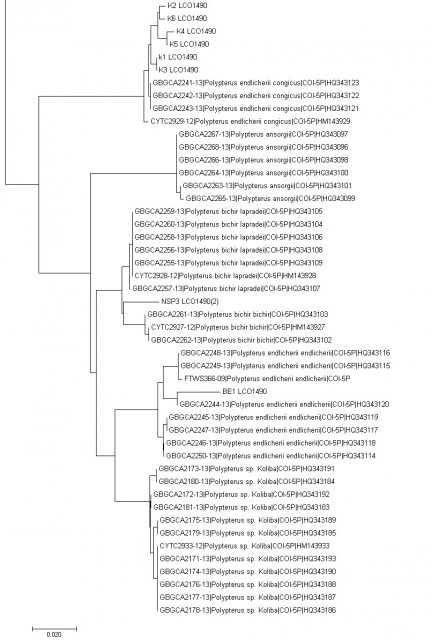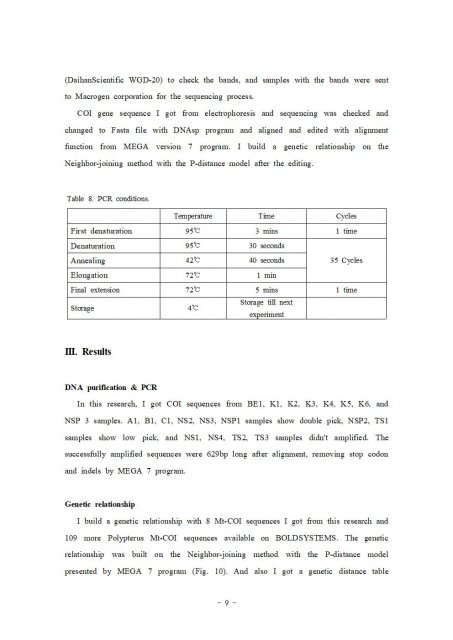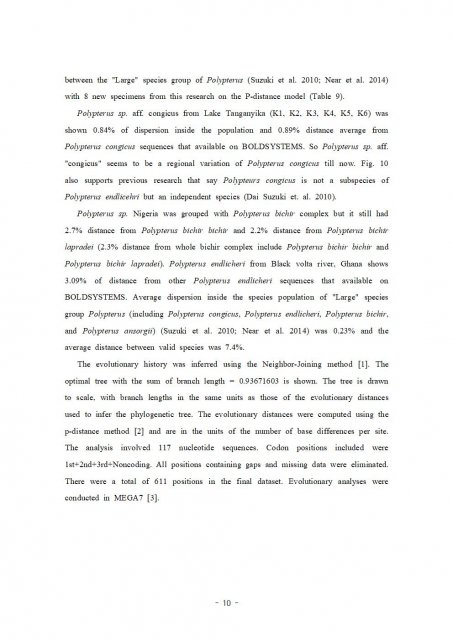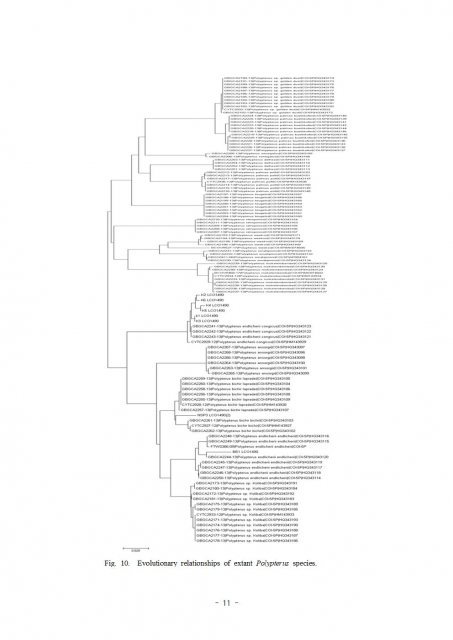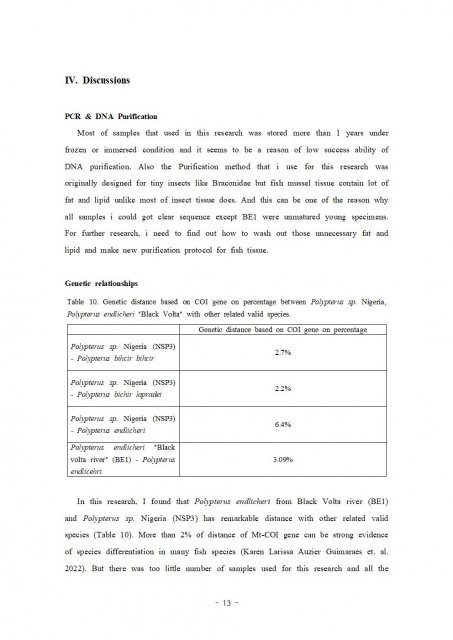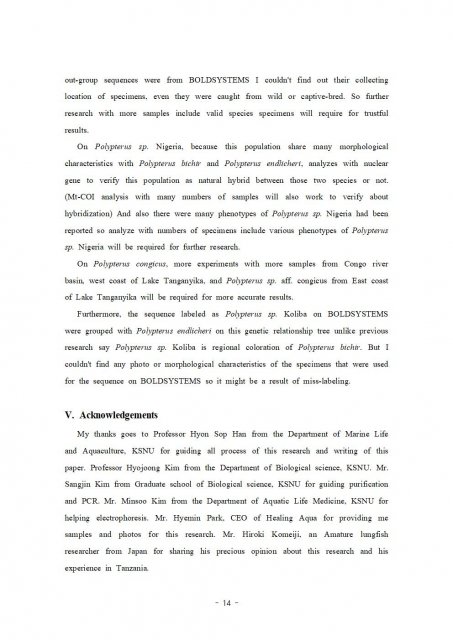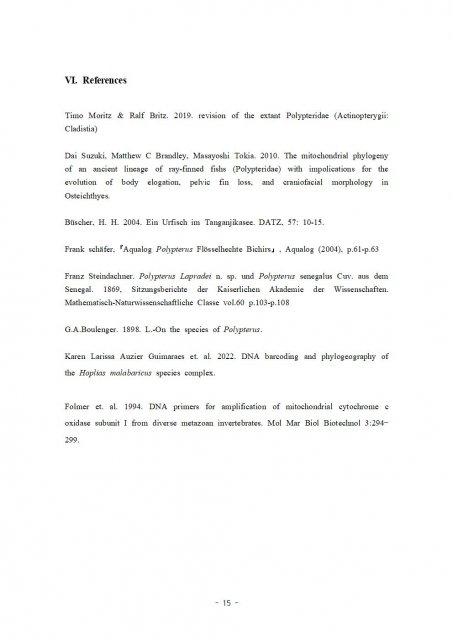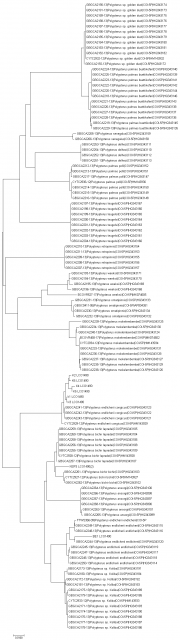
Neighbor joining tree of extant Polypterus species with Mitocondrial cytochrome C cooxydase subunit 1 (mtCOI)

  • We are currently upgrading MFK. thanks! -neo

giseok jung

Silver Tier VIP
MFK Member
Dec 20, 2014
758
3,155
1,409
26
south korea
www.facebook.com
Neihbor joining.PNG

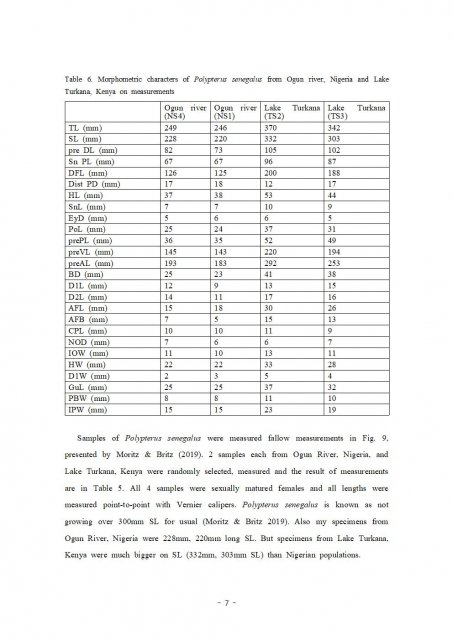
Neighbor joining tree of extant Polypterus species with Mitocondrial cytochrome C cooxydase subunit 1 (mtCOI) i made lately for graduation paper.

K1~K6 are stands for Giselas bichir that catched from Kirando area, East coast of Lake Tanganyika.

BE1 is stand for Polypterus endlicheri from Black volta river.

NSP3 is stands for Polypterus sp. "Nigeria" formally i posted as Polypterus sp. aff. "bichir".

It's too small number of samples to make sure these are different species or not but still very interesting result for sure.

Rest of samples are from Boldsystems and many of them are quite an old data. (that's why some of them has non-valid name now)
And also i still don't have no idea what is "sp.Koliba" on that sequence sample. (It might can be just endlicheri from Koliba area or something else because i can't find any photo of the sample)

If i get any chance to get more numbers of samples, i'll try this again with more samples with other gene like 16srRNA too.

I don't know that i will write my paper on English or Korean yet but i will share if i write it on English.

This tree made with MEGA 7 program.
 
KakaoTalk_20210115_001848033_01.jpg
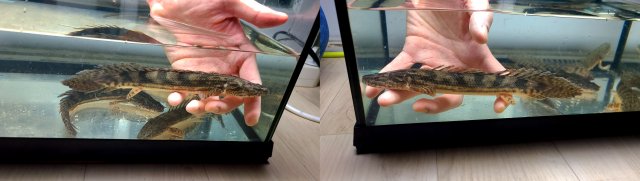
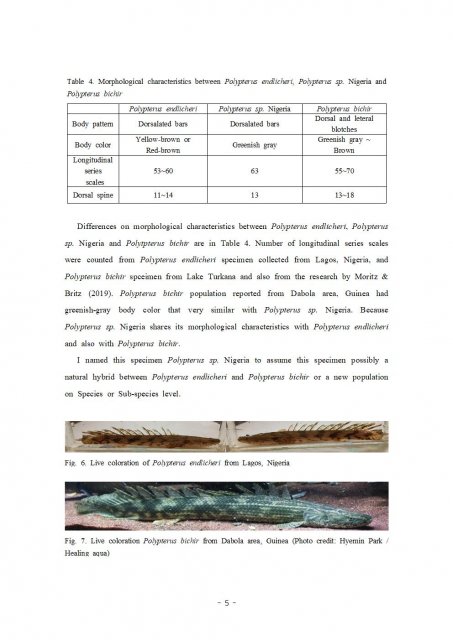
Actual fish that i used for the tree below (NSP3 on the tree)

tree final lower jaw.jpg

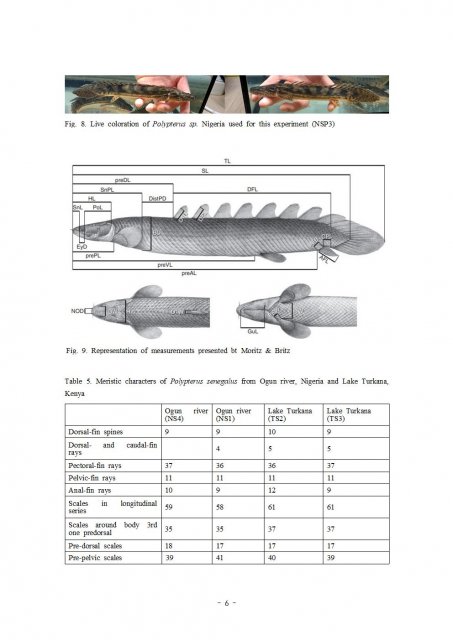
Polypteurs sp. Nigeria, also known as Nigerian lapen or Fake endlicheri might not related with endlicheri.

The first photo is the exact fish that i used to extract DNA and make the phylogeny tree (NSP3 on the tree) with other species sequence i could found on BOLDSYSTEMS.

You can see it grouped with Polypterus bichir complex but still with quite an distance even with them. (on mtCOI gene)

We know there are several more phenotype of Polypterus sp. Nigeria we can see on aquarium fish trade and there was only one specimens sequence was available this time.

Hope we can try further research with more specimens with various phenotype soon.
 
  • Like
Reactions: clm08k
Bro is so advanced in polypterus species I don’t understand anything ???
Bro +1
View attachment 1493021
Actual fish that i used for the tree below (NSP3 on the tree)

View attachment 1493022

Polypteurs sp. Nigeria, also known as Nigerian lapen or Fake endlicheri might not related with endlicheri.

The first photo is the exact fish that i used to extract DNA and make the phylogeny tree (NSP3 on the tree) with other species sequence i could found on BOLDSYSTEMS.

You can see it grouped with Polypterus bichir complex but still with quite an distance even with them. (on mtCOI gene)

We know there are several more phenotype of Polypterus sp. Nigeria we can see on aquarium fish trade and there was only one specimens sequence was available this time.

Hope we can try further research with more specimens with various phenotype soon.
I think I understand this…
 
KakaoTalk_20220421_221143510.png
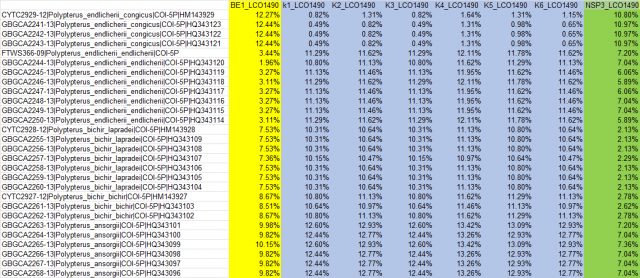
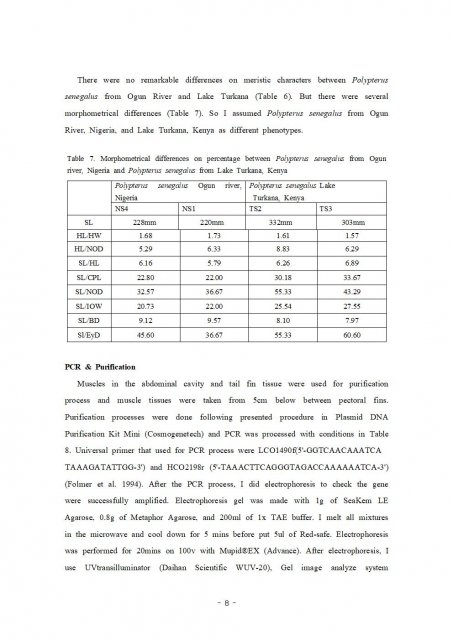
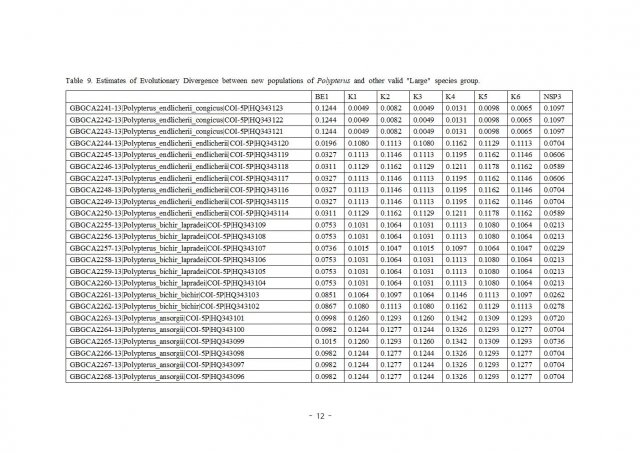
mtCO1 Genomic distance between Polypterus sp. Nigeria (NSP3 on the chart), Giselas bichir (K1~K6 on the chart), Polypterus endlicheri "Black Volta" (BE1 on the chart) with other valid lower-jaw species of Polypterus.

More than 2% of differences are can be strong signature of species differentiation in many species of fish species. (Karen et al. 2022)

Average difference between different species of lower jaw-type Polypterus were about 0.074 (7.4%) and average difference in species were 0.0023 (0.23%).

Average difference between Giselas bichir - P.congicus was 0.79%, Endlicheri "Black volta" - other endlicheri was 3%, Sp. Nigeria - bichir was 2.3% and Sp. Nigeria - endlicehi was 6.4%.
(P. bichir lapradei -P. bichir bichir was about 1.4%)

This might provide us that there might be many more unknown species of Polypterus out there and waiting for further research.

The gene i used for this research was mtCOI (Mitochondria Cytochrome-C cooxydase subunit 1).

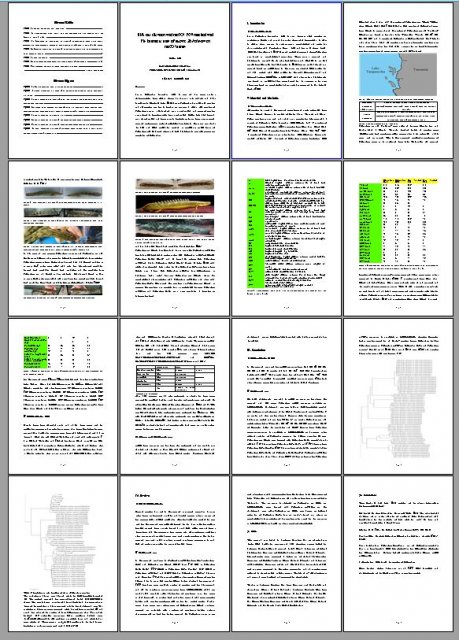
And also, draft work for my paper was just finished.
I'll share it if i have enough time to translate it to English.
 
Quite interesting! Would it not be ideal to combine this with nuclear samples and a more robust cladistic tree building method? Maybe just out of scope for your project? :D

A phylogeny sampled on a variety of wild locations using mtDNA and nuDNA would be a dream :D
 
  • Like
Reactions: PhishMon84
MonsterFishKeepers.com