Is it safe to keep rams with chocolate cichlid or are they too small ?

  • We are currently upgrading MFK. thanks! -neo
After viewing esoxlucius esoxlucius awsome Chocolate Cichlid, I bought two of them for my 120 gal. Current tankmates include Filamentosa Barbs, Denison Barbs, Columbian & Diamond Tetras as well as varieties of Botia Loach.
My largest Chocolate is six inches, the other one is four inches.
My Chocolates spend most of the time near the top or mid level of the tank, heads angled upward apparently waiting for grasshoppers or pellets. They pay very little attention to the tankmates & have no aggression towards each other.
I've had the Chocolates for about six months & can't positively attribute any tankmate deaths to them. During that time two smaller Denison Barbs mysteriously died, but were not consumed. The Chocolates might have killed them.
If plenty of hardscape is provided for the Rams, chances are a long term cohabitation between the Rams & Chocolate is possible.

If they are the same age, that size difference may indicate you have a male and female! I found out mine is a female after she laid eggs but with no mate she ate them within 24hrs.

If yours are male and female, and they decide to pair up, I'm not sure if their current laid back demeanour to other tank mates would continue.

I'm a bit jealous really because if yours are a pair and they eventually " get it on", then their change of colouration and markings should be a sight to behold. Their colours are fantastic as a solo fish, but I'd love to see courtship display colours from a pair.

I pm'd another cichlid expert a couple of weeks ago on the forum to pick their brains about adding more choc cichlids to my set up with a view to breeding them. Unfortunately my situation isn't as straight forward as it seems now. My beefy female is the boss of the tank and possibly wouldn't take too kindly to "intruder" choc cichlids being added.

I have some thinking and rearranging to do if I want to go down the breeding route, lol. Keep us posted on developments with yours.
 
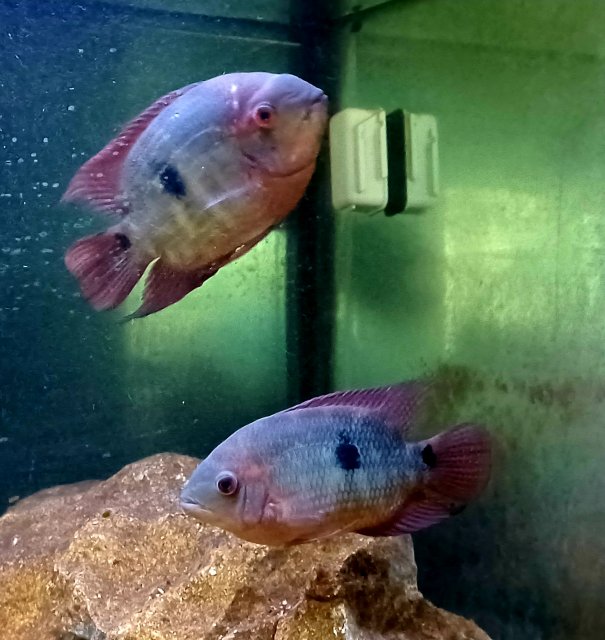
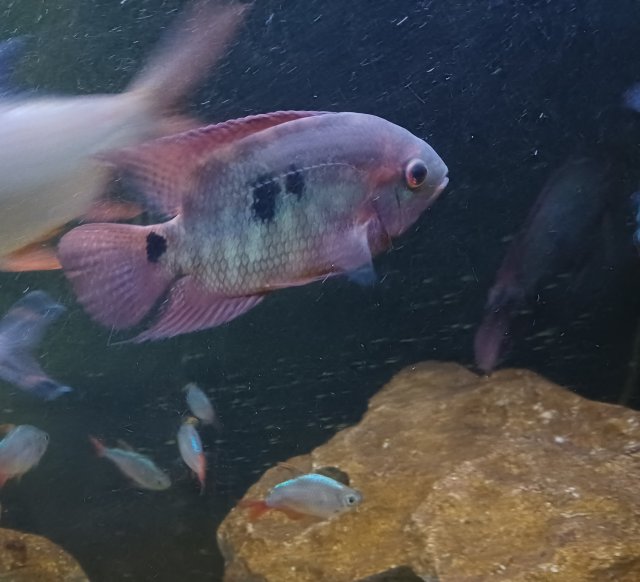
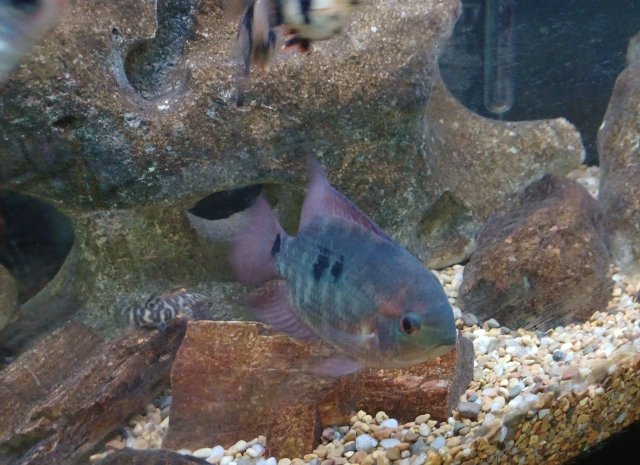
esoxlucius esoxlucius I just took a few "poor quality cell phone" pics of the two Choc's.
I believe stocking additional juvenile Chocs to your 120 is quite doable.
As you know, Chocolates have a very special somewhat docile demeanor as compared to most Cichlids.
Considering your advanced knowledge & fishkeeping skills, no worries.
20220602_092353.jpg20220602_092002.jpg20220602_123126.jpg20220602_084537.jpg
 
I believe stocking additional juvenile Chocs to your 120 is quite doable.
As you know, Chocolates have a very special somewhat docile demeanor as compared to most Cichlids.

I have a few issues regarding adding more chocs. Firstly, as already mentioned, my choc is the boss of the tank. The red shoulder sev which is in there with her certainly knows this. She will shoo it away quick style if it gets too close. This is a definite alarm bell regarding adding further chocs.

So adding multiple strangers, as in another three or four juvenile chocs to make sure I have a good chance of getting a male, could, potentially backfire. It would be a total crapshoot. Also bear in mind the tank is only a 120, hardly spacious.

Now of course this is all if's, what's and maybes. I could get lucky and have one of the males pair up with her and then i'd return all the others to the store. This would be the best outcome, though I feel unlikely it'll pan out that way.

I believe the best chance I have is to put my current choc cichlid and the sev in my 360 com tank, well out of the way.

Then start afresh with four or five juve chocs in my 120. If they all go in together it should work out. Still a crapshoot of a plan, but better than throwing multiple juve chocs in as things stand currently.

Like I said, I have some thinking and rearranging to do.

Your two are beautiful by the way, I hope they are male and female. Be sure to post pics when those breeding colours start popping.
 
I've always had a special liking for gold rams; not really interested in bolivian rams. You are not the first person to recommend cupid. I think what I will do (I have will 2 400 gallon tanks) is keep the chocolate with the clown loaches and kubotia and try the rams with the geo winemilleri. Originally i was going ot put the angels in the loach tank but i think i will skip that and put a few angels with the geo.


Bit confused by one point in your post - what is the difference between Hypselecara coryphaenoides and Hypselecara temporalis; er i mean in terms of colour changing and behavior (other than your comment that coryhaenoides are more aggressive). ALso why do folks favor males over females ?


Or get Biotodoma which look like giant Bolivian rams.

My temporalis were pretty passive but I never kept them with any cichlids as small as rams. I did keep sub-adult chocolates with Laetacara dorsigera and Laetacara thayeri which were similarly-sized to rams but also more pugnacious.

Hypselecara coryphaenoides, on the other hand, have been very aggressive for me, attacking lots of my other large cichlids and trying to stealthily obliterate anything smaller than 4” or so. This includes Ancistrus.

I’d say as with most cichlids, you have more luck finding placid individuals among commercially-bred fish than wild-caught ones. The closer to wild-caught they are, the more they tend to exhibit those behaviors, including opportunistic feeding on tankmates.
 
Aside from Bolivian rams, the rest are difficult to keep.
personally I feel Bolivians are the best looking rams. Especially the adults
 
  • Like
Reactions: tlindsey
So this isn't lost what is the difference between coryphaenoides and temporalis and why do people prefer males over females ?
 
H. temporalis and H. coryphaenoides are two separate species in the Hypselecara genus. Temporalis is the most common in the hobby.
 
The main difference as far as hobbyists are concerned would be their physical appearance — coryphaenoides are more elongated IMO and the colors and body markings are different. They are also a blackwater species, much like altum angels or Uaru fernandezyepezi. My experience with them is that they’re a lot more aggressive with each other and with tankmates, where temporalis are usually fairly mild for large fish.
 
MonsterFishKeepers.com