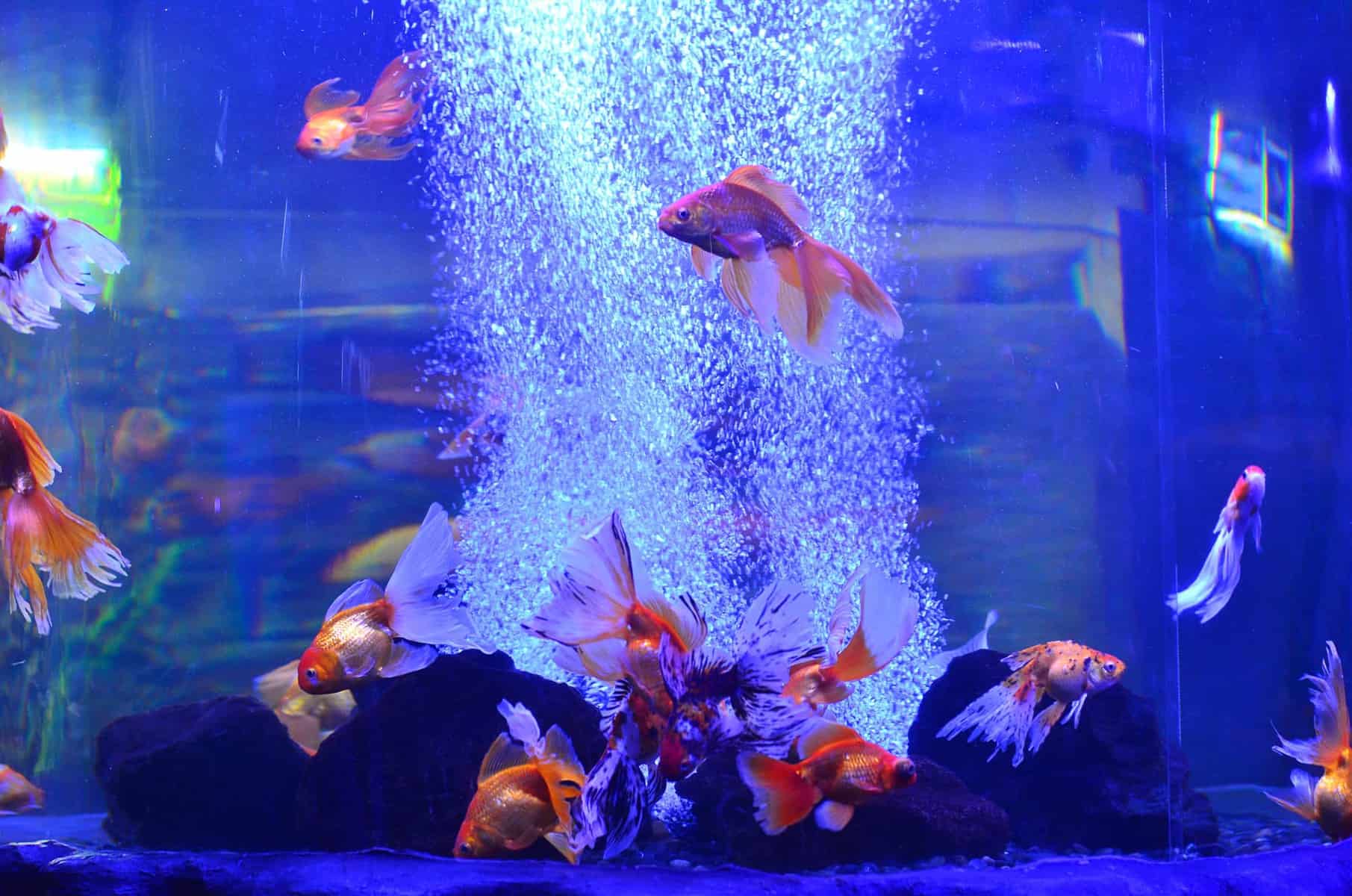
With a decent air pump and airstone, the amount of surface is increased significantly which in turn creates much more area for gas exchange. And when I say surface, I mean both the surface area around the bubbles hitting the surface and the volume of air travelling through the water column along with the original surface area of the tank.
Adding to the area of tank water meeting air will increase gas exchange, whether this is by airstone, wave maker, filter splash return, spray bar, trickle filter, etc. etc. some are more efficient than others (both cost wise and effectiveness) but at the end, the most efficient is the one which provides the largest air to water surface area over time, along with water movement.
As for planted tanks, the concept of co2 feed imo is purely a financial one. Co2 costs money, so making the bubbles the most efficient size relative to the time they spend in the water allows for the maximum exchange of co2 at the minimum cost. If bottles of co2 were free then we could just as easily pump bigger bubbles and more of them the same way we do with airstones and “throw away” semi depleated bubbles to atmosphere, BUT this then is also counter productive as we also increase the surface area and add more oxygen.
Much of the discussion over which is better, needed, best, etc. comes down to the individual, the individual tank, a cost factor, but mainly the stocking level and how much agitation is required.