Panda Uaru - Uaru fernandezyepezi

  • We are currently upgrading MFK. thanks! -neo

RealCrix220

Peacock Bass
MFK Member
Jan 22, 2017
622
552
115
Lets talk about these little Jem's

anyone kept these and have any info for them

Id like to see who's grew them out, what's your feeding them and what your keeping with them with ( tank mates )
 
Lets talk about these little Jem's

anyone kept these and have any info for them

Id like to see who's grew them out, what's your feeding them and what your keeping with them with ( tank mates )
Yes
I’ve got 3 good adults and 1 that’s a bit thin.
In a 450
Feed broccoli and string beans along with NLS TheraA
Grew from 2” to that size of my hand in 2.5 years
PM me if you have more questions
As far as water chemistry.....dunno, don’t test
My tap water is filtered through Kold Steri-l system
 
thats great

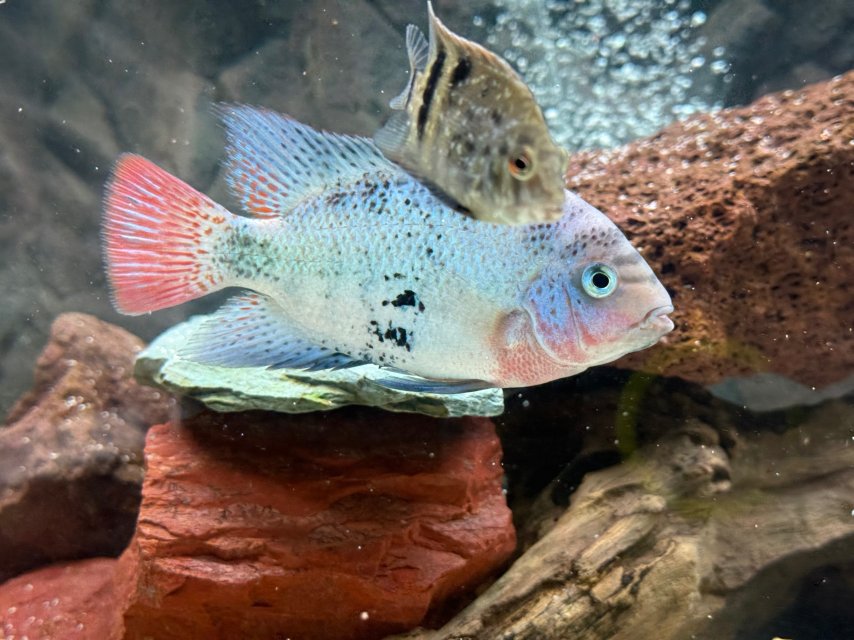
they are amazing looking and its great how they change from a small brown spotted fish to a beautiful white colour
 
These cichlids come from low pH (4 to 5) soft , and tannin stained waters of the Rio Orinoco/io Negro basin.

I have always wanted this species, but because of its specialized water parameter needs, I have never attempted to keep them.
My pH 7.8 in Wisconsin, and now in Panama pH of 8.2 and hard water, would make trying to keep them, an exercise in futility

The low pH, almost RO quailty softness, and tannins that have evolved and support very individual species and type of bacteria are those these cichlids have adapted to resist,
but the typical tap water where I lived, does not support these bacterial species, so makes this species of Uaru vulnerable to diseases more adaptive fish are not.

The conditions needed to breed Panda Uaru in captivity are similar to those needed to breed Altum Angels, so the breeders mimic those conditions to a tee,

so not try to buck them, and here in lies the rub.
The last time I saw them for sale, they wer $60 each, and because they are somewhat social, I figured I would beed at least 6.
So spending over $300 plus another $100 in shipping for a species that would probably die, or at best flounder health wise under my water parameters did not seem like a good investment to me.
If I had naturally low pH, soft water, that I could have easily inundated with tannins, I would have done it in a heartbeat.

Or if was willing to invest in an RO unit to make my water acceptable, although here in Panama the waste to create such water, would also have been prohibitive, and nion feasable,.

 
Last edited:
These cichlids come from low pH (4 to 5) soft , and tannin stained waters of the Rio Orinoco/io Negro basin.

I have always wanted this species, but because of its specialized water parameter needs, I have never attempted to keep them.
My pH 7.8 in Wisconsin, and now in Panama pH of 8.2 and hard water, would make trying to keep them, an exercise in futility

The low pH, almost RO quailty softness, and tannins that have evolved and support very individual species and type of bacteria are those these cichlids have adapted to resist,
but the typical tap water where I lived, does not support these bacterial species, so makes this species of Uaru vulnerable to diseases more adaptive fish are not.

The conditions needed to breed Panda Uaru in captivity are similar to those needed to breed Altum Angels, so the breeders mimic those conditions to a tee,

so not try to buck them, and here in lies the rub.
The last time I saw them for sale, they wer $60 each, and because they are somewhat social, I figured I would beed at least 6.
So spending over $300 plus another $100 in shipping for a species that would probably die, or at best flounder health wise under my water parameters did not seem like a good investment to me.
If I had naturally low pH, soft water, that I could have easily inundated with tannins, I would have done it in a heartbeat.

Or if was willing to invest in an RO unit to make my water acceptable, although here in Panama the waste to create such water, would also have been prohibitive, and nion feasable,.

I’ve been reading that they are really hard to keep due to the PH level they need

I picked one up about 5 weeks ago and didn’t want to talk to much on here about it because people judge and rather then help have stupid comments BUT

Mine is living in hard water with a PH of 8 with large American cichlids and he’s thriving I’ve even had a bit of aggression out of him, not that that is a good thing but he’s not taking no sh*t and he’s the smallest fish in the tank by a mile.

I’m so impressed I’m thinking of getting more, very picky eater but I’ve ordered veg flake and some plants for it to munch on but currently it loves tetra prima and goes crazy for blood worm

I’m keeping on top of my water and keeping it very clean

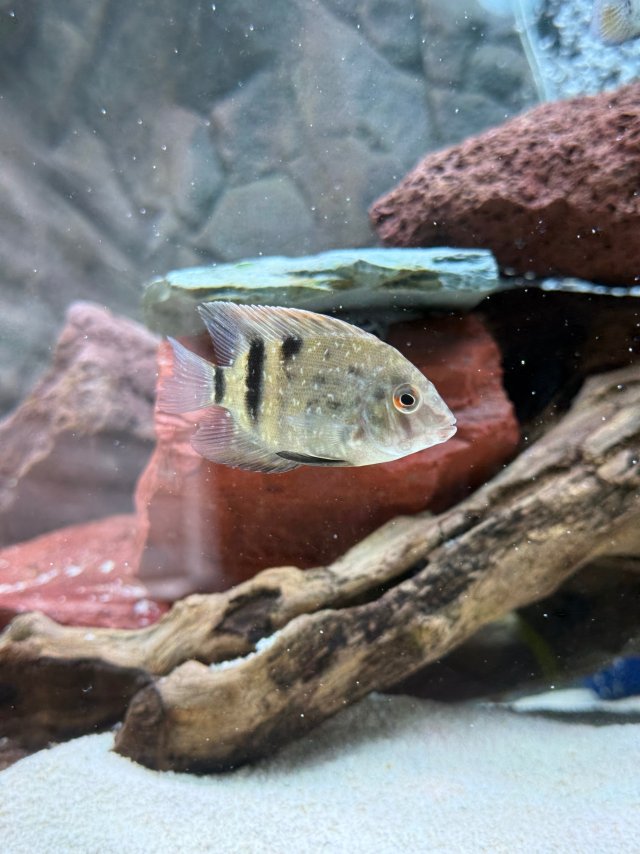
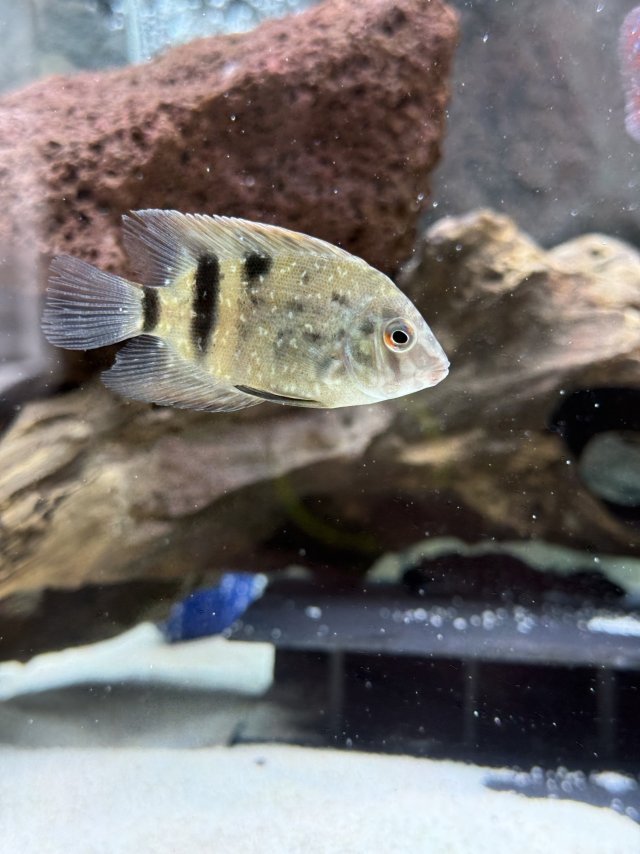
Few photos below of him and his best mate ( my large black belt )

IMG_2015.jpeg

IMG_2013.jpeg

IMG_2156.jpeg
 
Some naturally social species can become more territorial when kept alone or in small numbers or in less spacious tanks, that and individual temperament can vary with most any cichlid species. If yours is F1 or higher, it's likely to acclimate better than wilds to non-native type conditions, but don't be tricked by short term success into thinking the majority are wrong about their needs or being a challenging fish to keep healthy long term. Not uncommon when trying to keep black-water obligate species too much out of their natural range is susceptibility to HITH. Another issue can be shorter life-span due to chronic, environmental, low to moderate stress. This isn't naysaying, there are biological realities you need to be aware of.

A common issue with black-water obligate species is greater susceptibility to bacteria not found in their naturally low pH, high tannin waters-- there's a difference between species found in blackwater that a) have a wider distribution to varying water conditions or b) their ancestry and history is such that they've inherited greater water adaptability and inherited immunity vs species with more limited adaptability and a more "naïve" immune system. That and with warmer water species, like Uaru, there's a double edge sword in that you don't want temperatures too low at the same time that bacteria do better in warmer temperatures. This makes it especially important to keep on top of tank and filter maintenance, including being generous with water changes and, if it was me, I'd do UV to try and better my odds-- because that's what it's about when trying to keep a fish many have had trouble with, and in less than ideal conditions, get as close as you can to meeting their needs (can you soften the water a little, add tannins, etc?) then do everything else within your control to improve the odds.

 
Some naturally social species can become more territorial when kept alone or in small numbers or in less spacious tanks, that and individual temperament can vary with most any cichlid species. If yours is F1 or higher, it's likely to acclimate better than wilds to non-native type conditions, but don't be tricked by short term success into thinking the majority are wrong about their needs or being a challenging fish to keep healthy long term. Not uncommon when trying to keep black-water obligate species too much out of their natural range is susceptibility to HITH. Another issue can be shorter life-span due to chronic, environmental, low to moderate stress. This isn't naysaying, there are biological realities you need to be aware of.

A common issue with black-water obligate species is greater susceptibility to bacteria not found in their naturally low pH, high tannin waters-- there's a difference between species found in blackwater that a) have a wider distribution to varying water conditions or b) their ancestry and history is such that they've inherited greater water adaptability and inherited immunity vs species with more limited adaptability and a more "naïve" immune system. That and with warmer water species, like Uaru, there's a double edge sword in that you don't want temperatures too low at the same time that bacteria do better in warmer temperatures. This makes it especially important to keep on top of tank and filter maintenance, including being generous with water changes and, if it was me, I'd do UV to try and better my odds-- because that's what it's about when trying to keep a fish many have had trouble with, and in less than ideal conditions, get as close as you can to meeting their needs (can you soften the water a little, add tannins, etc?) then do everything else within your control to improve the odds.

Thank you so much for the detail, I am being very generous with water changes which I’m doing weekly and my filter I’m doing every 3 weeks.

If I manage to grow this out to an adult I’ll feel like I’ve achieved something but I am thinking of either clearing out a tank or setting up new to have a few of these little dudes.

I am also keeping a very close eye on its stress and scanning it everyday for any signs of HITH
 
  • Like
Reactions: neutrino
Below some scientific data about water parameters common in the rivers that this Uaru comes from.

The Rio Negro’s water is extremely poor in mineral content, with conductivity as low as 8 µS, and is extremely acidic, with pH’s ranging from 2.9 to 4.2. The largest blackwater river in the world, the Rio Negro provides roughly 14% of the average annual discharge into the Amazon,
 
MonsterFishKeepers.com