


I've had a leucistic male Axolotl for almost 15 years now; he's about a foot long, a nice big white frilly-gilled slithery slippery gob of animated snot. About 4 years ago I picked up an albino female, a bit smaller at maybe 8 inches now. The two get along swimmingly, with no aggression, good appetites, and typical Axolotl activity levels, i.e. they occasionally move a bit. They share a 70gallon tank in a cool location in my basement, with no tankmates other than a few small snails. The snails never overpopulate, and I assume the Axolotls are eating them, but since both the predator and the prey move with such lightning speed  I've never actually witnessed the predation.
Every fall, when water temperatures drop a couple degrees, usually down into the mid- to low-fifties in that floor level tank, the Axolotls produce a spawning of a couple hundred eggs. I don't try to encourage spawning; I just like to provide good conditions to my critters, and most of them will spawn if things are right. The Axolotl eggs cling to plants and airlines and other objects, and take a couple weeks to hatch. A day or so later, the larvae are free-swimming...and thus begins the most brutal, violent, ghoulish period of my entire aquarium year.
These fry are utterly ferocious; I offer them baby brine shrimp at first, and adult brine and other frozen foods later as they grow a bit. But it's pretty apparent that the favourite food of baby Axolotls is chunks of other baby Axolotls. These things are in constant combat, and within a week or so there are literally no undamaged survivors remaining. Everybody is missing gills, tails, etc. I don't need to even worry about predation by the adults on the young; by the time the young are a half-inch long most are gone, consumed by their siblings. By the 3/4-inch stage, there are usually only a small handful remaining. After another week, they're all gone. I don't have any inclination to separate them all out and try to raise them, so they are born, live out their short miserable combative lives and then die under their parents' uncaring gaze.
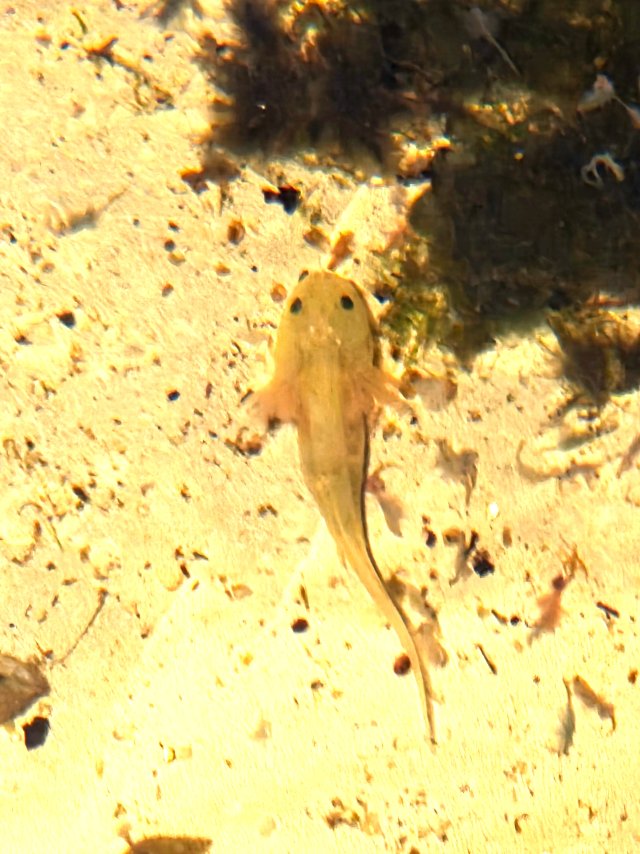
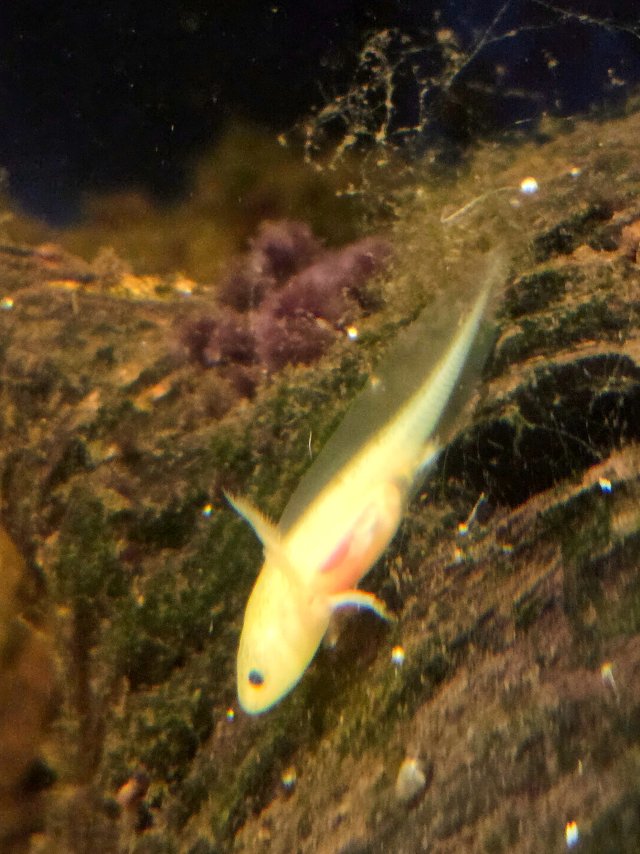
But this year, something weird happened. I was thinning the hornwort from that tank this morning, many weeks after the last larva sighting, and I stumbled upon a youngster well over an inch in length. I've never seen one that big before. A continued careful search revealed two more, one of them almost 2 inches long.
Well, now that they were big enough to start looking tasty to their parents, and since only three of them seemed like a less daunting task than raising hundreds, I netted the little guys out and introduced them to a tank with no potential predators in it. Still not going into Axolotl production, but I'm looking forward to seeing how they develop. These guys have their front legs already...never had one survive long enough to grow those...and hind legs should follow shortly.
I've never actually witnessed the predation.Every fall, when water temperatures drop a couple degrees, usually down into the mid- to low-fifties in that floor level tank, the Axolotls produce a spawning of a couple hundred eggs. I don't try to encourage spawning; I just like to provide good conditions to my critters, and most of them will spawn if things are right. The Axolotl eggs cling to plants and airlines and other objects, and take a couple weeks to hatch. A day or so later, the larvae are free-swimming...and thus begins the most brutal, violent, ghoulish period of my entire aquarium year.
These fry are utterly ferocious; I offer them baby brine shrimp at first, and adult brine and other frozen foods later as they grow a bit. But it's pretty apparent that the favourite food of baby Axolotls is chunks of other baby Axolotls. These things are in constant combat, and within a week or so there are literally no undamaged survivors remaining. Everybody is missing gills, tails, etc. I don't need to even worry about predation by the adults on the young; by the time the young are a half-inch long most are gone, consumed by their siblings. By the 3/4-inch stage, there are usually only a small handful remaining. After another week, they're all gone. I don't have any inclination to separate them all out and try to raise them, so they are born, live out their short miserable combative lives and then die under their parents' uncaring gaze.
But this year, something weird happened. I was thinning the hornwort from that tank this morning, many weeks after the last larva sighting, and I stumbled upon a youngster well over an inch in length. I've never seen one that big before. A continued careful search revealed two more, one of them almost 2 inches long.
Well, now that they were big enough to start looking tasty to their parents, and since only three of them seemed like a less daunting task than raising hundreds, I netted the little guys out and introduced them to a tank with no potential predators in it. Still not going into Axolotl production, but I'm looking forward to seeing how they develop. These guys have their front legs already...never had one survive long enough to grow those...and hind legs should follow shortly.





 Unfortunately my room temperature in the family room is not cold enough 69°. My basment is cooler during the summer but don't want to keep a axolotl down there.


