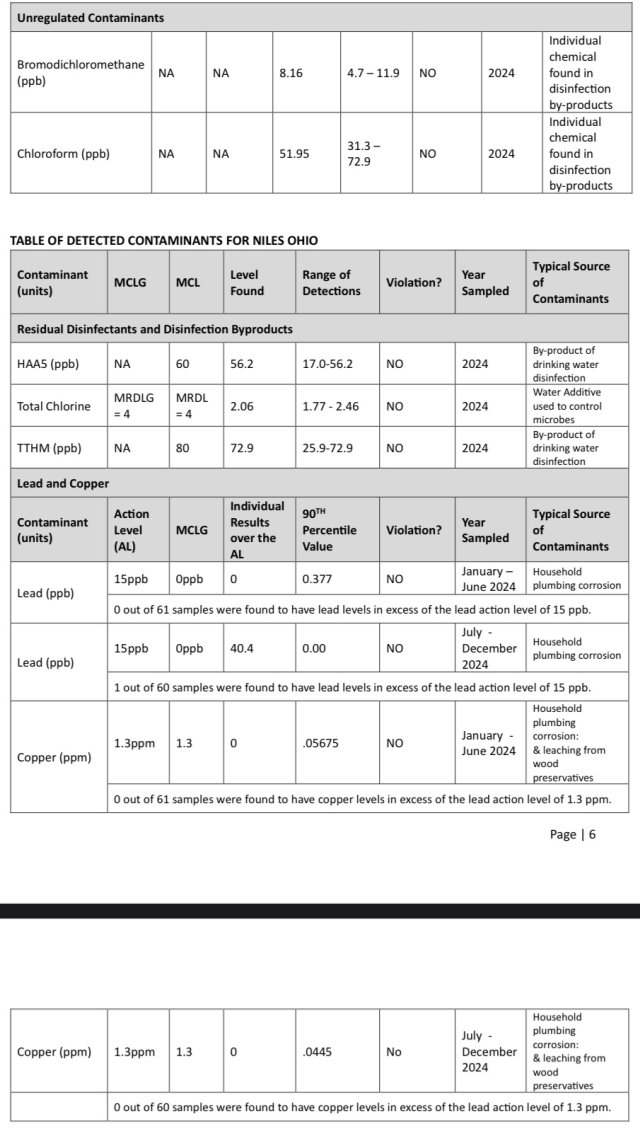
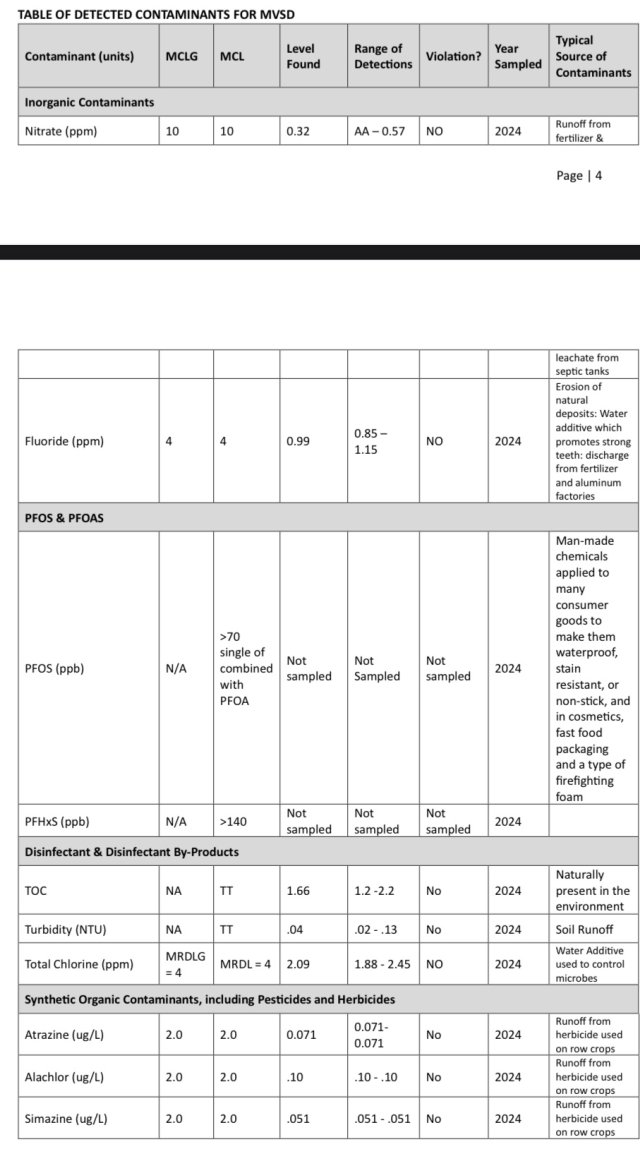
Is it possible in your opinion for a filter to be so dirty everything stays stable and "cycles" out even if some of the bacteria is dying? I don't clean anything for years and years and ive always found if i clean too much or drip too much fresh water a system can crash super quickly. I'm honestly starting to think ive been running with chloramines for several years if not the whole time and not even noticing. Or noticing in my own way indirectly. Too much fresh water equates to higher nitrates and that would mean in my eyes my filters/systems cant break down that much new ammonia quickly enough so turn the drip down. I started by cutting my drips all together and nitrates dropped in the first 24hrs. I let that ride for almost 2 weeks before they went up again. After that i returned to dripping at 100-150% a week over time to restore nitrates to 10-20 and back to "normal". Trying to use as little water as possible now to add less chlorine/chloramine but still keep nitrates under 20. My tanks are 230,450,500,650... as i mentioned in another comment im "testing" with a couple 40 breeders at 200% weekly tank volume replacement trying to create a problem

but tests are all still good.
IMO chlorine poisoning is less of an issue with an establish filter compared to the immediate danger your fish will be in. You'd be hard pressed to find any natural environment, outside of physical extremes, where micro-biological life cannot exist and this is reflected even with the bacterial colonies in our home aquariums.
Most bacteria colonies in an establish filter will have a natural bio-film (think of it as a physical barrier) that will protect against the immediate washing of even untreated tap water. Of course if you repeatedly scrub it down or soak the bio-media for an extended period you could probably kill 99.9% of your colony but a quick rinse most likely won't kill everything instantly. Again, this has to do with the concentration of the solution as I mentioned in a previous post; chlorine will only kill a cell if it can access/enter the cell membrane so it's a game of probability. Of course this statement doesn't tell the full truth but for the purpose of explaining to the layman it is good enough.
The issue with a fish compared to bacteria is that the gills have evolved to become an interdependent organ to a larger organism; it's specialized in a specific way to assist in keeping the larger organism alive rather than itself. The hope being the organism as a whole will have other specialized cells/organs who can assist it keeping the other cells/organs alive. On the flip side, bacteria are single-cellular self-reproducing organisms so their defenses maximize for the individual which coincidentally helps keep the colony alive.
You can think of it like this: an organ is like a bus, a bacteria colony is like a car, and people are individual cells. You can fit a lot of people inside a bus but you can field more cars then busses in a given amount of space. Both vehicles are protected against glancing outside threats due to their metal exteriors but obviously overwhelming force could bypass this defense. However, what if we say 50% of the cars have their windows open and 50% of the windows on the bus are open. If a thick chlorine gas cloud suddenly appeared and spread through this population of cars and 1 bus it is clear that at most only 50% of the cars will be affected but the bus will definitely have all of its people affected. Ergo, 50% of the cars will remain fine, the other 50% are injured or dead, and the entire bus is now in mayhem as there is a mix of people dying and severely injured. In other words, leaving the analogy, while half of the bacteria colonies may end up dead at least half survived compared to the organ which has severe, possible permanent damage.
Of course in that example I used an extremely high concentration of chlorine gas with guaranteed contact to make a point but the real expanation isn't as simple and clean as the hypothetical above. The main points still stand though, at a high enough concentration you may not see all your bacteria colonies die off but your fishes' gills will definitely be affected.
To help people understand further, if they want, below is where I will describe why "chlorine poisoning" occurs and how it leads to cellular death. Although it won't be a 100% in-depth explanation I hope it will explain the chemical & physical reactions occurring well enough for everyone.
Chlorine (CL) is a naturally occurring highly reactive (meaning it wants to bond) chemical element; it is actually a vital building block of life for most plants and animals on this planet. Of course in nature due to it being so reactive you will almost never find it naturally in it's mono-elemental state but rather mixed with something else like sodium chloride (table salt). As a result when CL is mixed with water to be a disinfectant they use chlorine gas (CL2). When CL2 mixes with water we get mostly hypochlorous acid (HOCL) and hydrochloric acid (HCL) with some leftover undissolved CL2. Typically the leftover CL2 will gas off at the earliest opportunity due to the water and air trying to reach equilibrium but the other two chemicals typically stay to some degree.
First, HCL is extremely water-soluble so it immediately turns into hydronium (H3O+ but you will often see H+ as shorthand in scientific literature) and chloride (CL-) ions when introduced to water. While this reaction does generate quite a bit of heat and is acidic, -> lower pH, the amount created from CL2 is so miniscule in normal home aquarium setups this part of the reaction is just here for a more complete explanation. Unless you directly pump CL2 into you tank you should never have to worry about HCL.
Next, HOCL is partially water-soluble so it can eventually break into separate chemicals producing H+ and hypochlorite ions (OCL-). However, this reaction is not instantaneous and is pH dependent ( ph <7.5 more HOCL stays; pH >7.5 more OCL- formed). Both HOCL and OCL- are considered disinfectants but due to their chemical composition they behave differently when interacting with a cell membrane or cell wall.
To understand the next explanation first you need to know that most cell membranes are
amphipathic meaning they have hydrophillic ("water-loving") and hydrophobic ("water-fearing") parts to them. Typically the hydrophillic part of the membrane is on the outside while the hydrophobic parts are on the inside. In addition almost all cell membranes will have a negative charge associated with them on the outer layer and all of this is fairly compact. As a result, only relatively small neutral or positively charged molecules can typically enter a cell membrane.
Now, since HOCL has a neutral charge most cell membranes do not push it away when it comes close enough for contact. This results in the molecule slipping past the cell membrane which inevitably causes an oxidation reaction with the DNA, proteins, or essential enzymes causing the cell to die but also results in the HOCL molecule to decompose into non-reactive forms. OCL- could perform in a similar manner but due to it's negative charge it attracts water molecules to it forming a "shell" of sorts. As a result OCL- ions are both negatively charged (and therefore pushed away due to the cell membrane's charge) and too large to easily enter a cell.
Final note, monochloramine, the chloramine most commonly used to treat water, can also form in your home aquarium if HOCL and NH3 (ammonia) (or CL2 and NH4+ [ammonium]) is present. Therefore, it's always best practice to dechlorinate your water with chemicals before adding it to your tank. Unfortunately if you do not use a dechlorinator, even if your tank has 0 ammonia available, a small amount of the HOCL will turn back to CL2 and gas off but most will likely turn into OCL-. This chemical will not degrade unless it reacts with left over organics or unless UV light is hitting it turning it into O(xygen)2 and CL-. If you really don't want to use any chemicals at all for dechlorination and you know for a fact you only have chlorine in your water then a wave maker/surface fan + open bucket/container +UV light is all required over the course of several days to ensure 100% dechlorination has occured. OCL- is less reactive than HOCL so if you're fine with good enough dechlorination with no chemicals, 24-48 hours is also enough.
The question is then why do fish die from "chlorine poisoning", there isn't enough chlorine in 2-4ppm to cause total body cellular death right? And that is 100% true. The issue of "chlorine poisoning" is the servere and potentially permanent scarring of the gills for our fish (with an extremely low chance of direct internal organ & blood vessel damage). Since a fish's gills act as lungs they quickly sufficate if the damage is too servere.
Let me know if you have anymore questions.
HTH




www.qcsupply.com



 … Def. understand worst case scenario. Just trying to figure out if my source is bad enough to need chemical improvement. Not opposed to chemicals either if it comes to that. If things can be as bad as ur saying i feel like i should have alot of dead fish on my hands already. 95% of the fish here are ancients and breathe air so technically any gill damage wouldnt matter as much lol (joking)… i cant just be that lucky tho to think i havent been dealing with this for years or at the very least over a year since ive experienced more water main breaks locally and ive really changed nothing.