I recently wrote a short article about Blackchin Tilapia from a different angle.
Most people today associate this species with invasive species discussions, but it also belongs to the cichlid family—one of the most popular fish families in the aquarium world.
The article looks at its distinctive black chin, mouthbrooding behavior, West African origins, and why some fish hobbyists may have found it interesting as an uncommon cichlid.
I’d be interested to hear what cichlid keepers, aquarists, or ecology-minded readers think about this perspective.
Most people today associate this species with invasive species discussions, but it also belongs to the cichlid family—one of the most popular fish families in the aquarium world.
The article looks at its distinctive black chin, mouthbrooding behavior, West African origins, and why some fish hobbyists may have found it interesting as an uncommon cichlid.
I’d be interested to hear what cichlid keepers, aquarists, or ecology-minded readers think about this perspective.
When people hear the name “Blackchin Tilapia” today, many associate it with recent discussions in the media. However, few realize that this species has long been known within the aquarium and fishkeeping community as a member of one of the world’s most popular fish families: the cichlids.
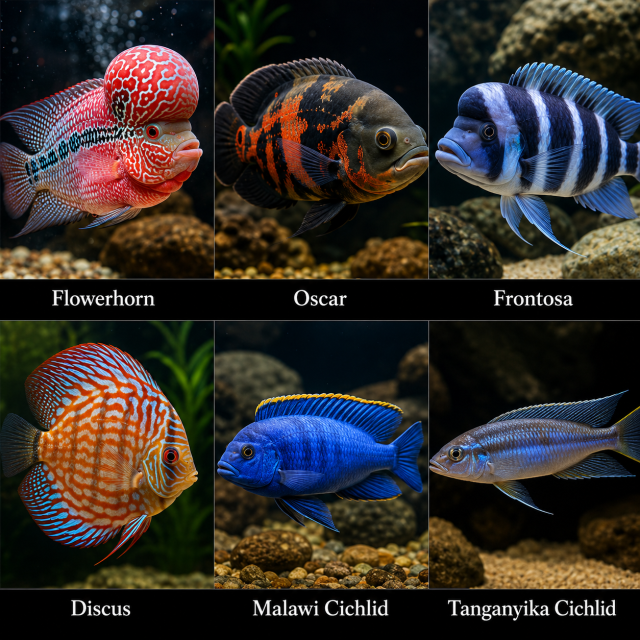
Scientifically known as Sarotherodon melanotheron, the Blackchin Tilapia belongs to the Cichlidae family—the same family that includes many famous ornamental fish such as :
- Flowerhorn
- Oscar
- Frontosa
- Discus
- African cichlids from Lakes Malawi and Tanganyika
- Cichlids are among the most admired aquarium fish in the world. Fish enthusiasts are attracted to them because of their striking appearance, intelligence, adaptability, and fascinating behaviors.
Although Blackchin Tilapia has never achieved the global popularity of Discus or Flowerhorn, it possesses several unique characteristics that have attracted the interest of fish hobbyists and collectors in various countries.
One of its most distinctive features is its appearance.
The fish typically displays a shimmering silver-gray body with subtle vertical barring patterns. Its dorsal and tail fins often exhibit elegant markings, while breeding males develop darker and more intense coloration during the spawning season.
Most notably, the species is named after the distinctive black coloration beneath its lower jaw and chin—hence the name “Blackchin Tilapia.”
In some subspecies, this dark pigmentation extends toward the throat and chest, creating a striking contrast that differentiates it from more familiar tilapia species.
Beyond its appearance, many aquarists are fascinated by its behavior.
Blackchin Tilapia is a mouthbrooder—a reproductive strategy in which a parent carries eggs and young fry inside its mouth for protection.
After spawning, either the male or female may incubate the eggs and shelter the newly hatched offspring, providing a remarkable display of parental care. For aquarium enthusiasts, observing this behavior is often considered one of the most fascinating aspects of keeping cichlids.
Because of these characteristics, Blackchin Tilapia has been introduced to various countries for aquaculture, research, and ornamental fish collections.
Reports and records indicate that the species has appeared in ornamental fish trade channels or private collections in places such as:
- The United States
- The Philippines
- Taiwan
- Several European countries
- Various countries in Southeast Asia

Particularly among enthusiasts of African cichlids, the species has attracted interest as a relatively uncommon fish originating from the coastal regions of West Africa.
Historically, the global ornamental fish industry has traded hundreds of cichlid species from Africa, South America, and Central America. Some are valued for their brilliant colors, while others are appreciated for their unusual behaviors and breeding characteristics.
Blackchin Tilapia belongs to the latter category—a fish admired not necessarily for dazzling coloration, but for its distinctive appearance, adaptability, and fascinating parental instincts.

The global ornamental fish industry itself is worth billions of dollars annually and involves the movement of millions of fish across international borders every year.
Rare species, unusual varieties, and fish with unique characteristics often attract the attention of collectors and hobbyists. As a result, many countries maintain strict regulations governing the importation and trade of ornamental fish to ensure compliance with animal health standards and legal requirements.
The story of Blackchin Tilapia highlights an interesting reality within the aquarium world: a species may hold significant value and appeal to fish enthusiasts because of its beauty, rarity, behavior, or biological uniqueness.
For cichlid enthusiasts, Blackchin Tilapia may not be the most colorful fish in the aquarium trade. Yet its distinctive black chin, remarkable mouthbrooding behavior, and origins in the coastal waters of West Africa continue to make it an intriguing and respected member of the global cichlid community.
Sometimes, it is not the brightest fish that captures attention but the one with the most interesting story.