

Axolotls...whether you want them or not...

  • We are currently upgrading MFK. thanks! -neo

jjohnwm

Sausage Finger Spam Slayer
MFK Member
Mar 29, 2019
4,968
12,654
194
Manitoba, Canada
I've had a leucistic male Axolotl for almost 15 years now; he's about a foot long, a nice big white frilly-gilled slithery slippery gob of animated snot. About 4 years ago I picked up an albino female, a bit smaller at maybe 8 inches now. The two get along swimmingly, with no aggression, good appetites, and typical Axolotl activity levels, i.e. they occasionally move a bit. They share a 70gallon tank in a cool location in my basement, with no tankmates other than a few small snails. The snails never overpopulate, and I assume the Axolotls are eating them, but since both the predator and the prey move with such lightning speed :ROFL: I've never actually witnessed the predation.

Every fall, when water temperatures drop a couple degrees, usually down into the mid- to low-fifties in that floor level tank, the Axolotls produce a spawning of a couple hundred eggs. I don't try to encourage spawning; I just like to provide good conditions to my critters, and most of them will spawn if things are right. The Axolotl eggs cling to plants and airlines and other objects, and take a couple weeks to hatch. A day or so later, the larvae are free-swimming...and thus begins the most brutal, violent, ghoulish period of my entire aquarium year.

These fry are utterly ferocious; I offer them baby brine shrimp at first, and adult brine and other frozen foods later as they grow a bit. But it's pretty apparent that the favourite food of baby Axolotls is chunks of other baby Axolotls. These things are in constant combat, and within a week or so there are literally no undamaged survivors remaining. Everybody is missing gills, tails, etc. I don't need to even worry about predation by the adults on the young; by the time the young are a half-inch long most are gone, consumed by their siblings. By the 3/4-inch stage, there are usually only a small handful remaining. After another week, they're all gone. I don't have any inclination to separate them all out and try to raise them, so they are born, live out their short miserable combative lives and then die under their parents' uncaring gaze.

But this year, something weird happened. I was thinning the hornwort from that tank this morning, many weeks after the last larva sighting, and I stumbled upon a youngster well over an inch in length. I've never seen one that big before. A continued careful search revealed two more, one of them almost 2 inches long.

Well, now that they were big enough to start looking tasty to their parents, and since only three of them seemed like a less daunting task than raising hundreds, I netted the little guys out and introduced them to a tank with no potential predators in it. Still not going into Axolotl production, but I'm looking forward to seeing how they develop. These guys have their front legs already...never had one survive long enough to grow those...and hind legs should follow shortly.
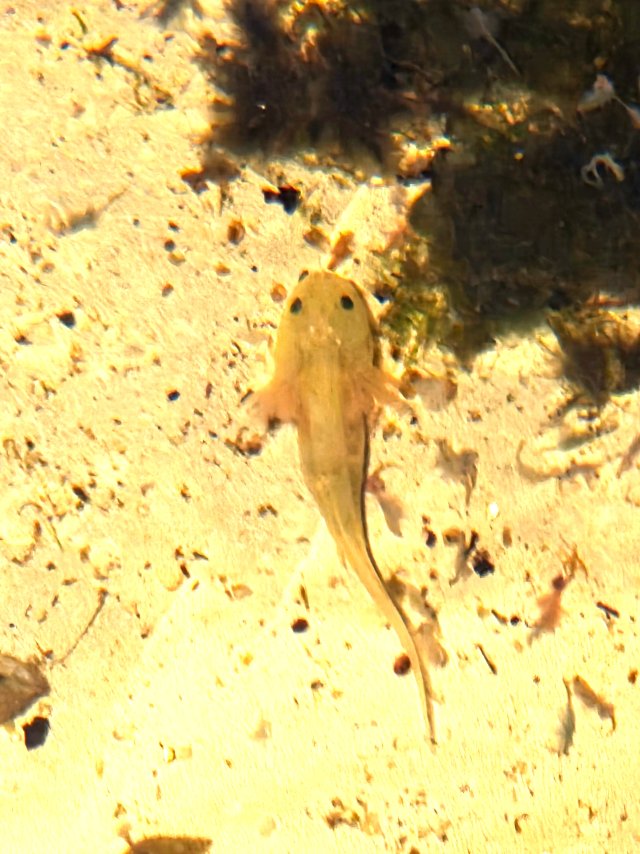
axo1.jpg
axo3.jpg
 
I’ve read so many articles and medical papers that have been researching their regeneration capabilities. Their ability to resist age-related diseases is also being studied. They are exploring how axolotls are used as a model system to study regenerative processes.

 
They are indeed incredible in that regard. My female came my way because she was badly thrashed by fish with which she should never have been housed. When I got her she was missing one entire front limb as well as the opposite rear one. Both regenerated completely; the front one grew back quite crooked while the rear is perfect. Her gills were also at least 50% destroyed and were quickly grown back.

I received her in that terrible condition in early summer; yes, yes, another "rescue". By December of that same year she was completely recovered and produced her first large clutch of eggs. Amazing critters.

Edited to add: Hah! I just looked at those pics in the first post again. Looking at them now, magnified on the larger screen of my laptop, I see one of them has at least one tiny rear limb becoming visible. As I said: Amazing! :)
 
I've had a leucistic male Axolotl for almost 15 years now; he's about a foot long, a nice big white frilly-gilled slithery slippery gob of animated snot. About 4 years ago I picked up an albino female, a bit smaller at maybe 8 inches now. The two get along swimmingly, with no aggression, good appetites, and typical Axolotl activity levels, i.e. they occasionally move a bit. They share a 70gallon tank in a cool location in my basement, with no tankmates other than a few small snails. The snails never overpopulate, and I assume the Axolotls are eating them, but since both the predator and the prey move with such lightning speed :ROFL: I've never actually witnessed the predation.

Every fall, when water temperatures drop a couple degrees, usually down into the mid- to low-fifties in that floor level tank, the Axolotls produce a spawning of a couple hundred eggs. I don't try to encourage spawning; I just like to provide good conditions to my critters, and most of them will spawn if things are right. The Axolotl eggs cling to plants and airlines and other objects, and take a couple weeks to hatch. A day or so later, the larvae are free-swimming...and thus begins the most brutal, violent, ghoulish period of my entire aquarium year.

These fry are utterly ferocious; I offer them baby brine shrimp at first, and adult brine and other frozen foods later as they grow a bit. But it's pretty apparent that the favourite food of baby Axolotls is chunks of other baby Axolotls. These things are in constant combat, and within a week or so there are literally no undamaged survivors remaining. Everybody is missing gills, tails, etc. I don't need to even worry about predation by the adults on the young; by the time the young are a half-inch long most are gone, consumed by their siblings. By the 3/4-inch stage, there are usually only a small handful remaining. After another week, they're all gone. I don't have any inclination to separate them all out and try to raise them, so they are born, live out their short miserable combative lives and then die under their parents' uncaring gaze.

But this year, something weird happened. I was thinning the hornwort from that tank this morning, many weeks after the last larva sighting, and I stumbled upon a youngster well over an inch in length. I've never seen one that big before. A continued careful search revealed two more, one of them almost 2 inches long.

Well, now that they were big enough to start looking tasty to their parents, and since only three of them seemed like a less daunting task than raising hundreds, I netted the little guys out and introduced them to a tank with no potential predators in it. Still not going into Axolotl production, but I'm looking forward to seeing how they develop. These guys have their front legs already...never had one survive long enough to grow those...and hind legs should follow shortly.
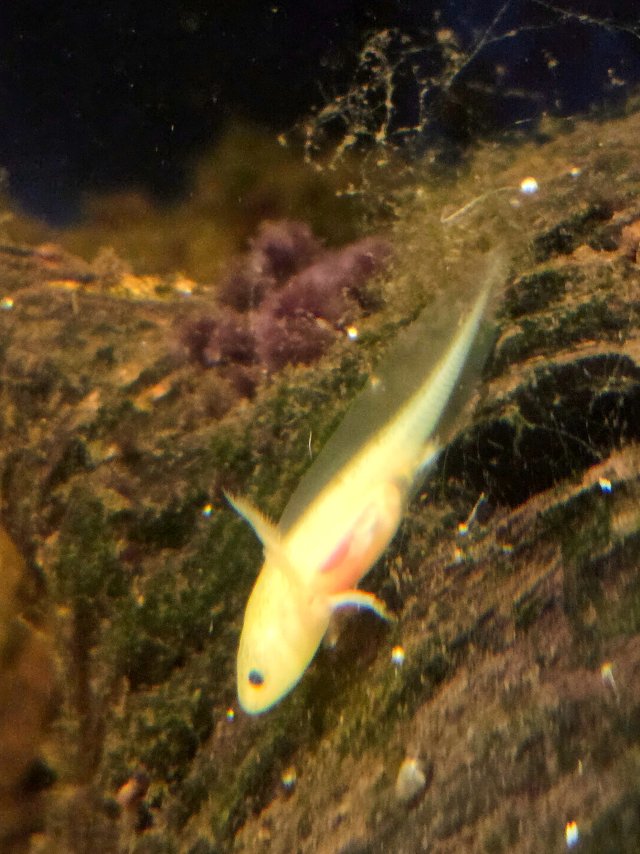
View attachment 1573123
View attachment 1573124
Wow it's crazy I was talking to my Daughter and Grandbaby who loves the axolotl.☺️ Unfortunately my room temperature in the family room is not cold enough 69°. My basment is cooler during the summer but don't want to keep a axolotl down there.
That's a awesome discovery of the baby axolotl's. Don't try to convince me to get one 😆
 
Wow it's crazy I was talking to my Daughter and Grandbaby who loves the axolotl.☺️ Unfortunately my room temperature in the family room is not cold enough 69°. My basment is cooler during the summer but don't want to keep a axolotl down there.
That's a awesome discovery of the baby axolotl's. Don't try to convince me to get one 😆
Come on, tlindsey tlindsey ...you know you want one! And don't forget, these aren't just regular dusty old Ambystoma mexicanum, no sir! These specimens are the rare "canuckistanius" subspecies, a unique variety that some attention-deprived taxonomist-warrior somewhere is likely trying to have elevated to full species status.

Yes, they do need cooler conditions to really thrive. But aside from that they are terrific wet pets. They grow pretty slowly, live a long time, are easy to feed, have a completely weird and unique look and are extremely personable and interactive, in an inert pet-rock kind of way. :)

They're a huge hit with kids. I'll have to see if I can find a pic of my middle granddaughter, a precocious and inquisitive child, wearing a T-shirt that she got after first meeting my Axolotls. It reads "I axolotl questions!" :)

Tell ya what: let's meet up at the border...on the Canadian side. It's a couple-or-three hours drive for me, maybe a bit more for you. I'll give you a single Axolotl youngster...that's 20% of my entire stock...absolutely free, no strings attached. Maybe you can buy me a coffee at Tim Horton's. Then you can drive back home, burning another tank of gas and a few more hours. Set up a tank with a chiller; they're cheap, right? Not a horrible investment for a critter you can probably buy at your LFS for a few bucks (but not a canuckistanius!).

Install your new little monster in it, and then your granddaughter can sit and enjoy it. If she's really lucky, it might even move while she's watching.

Hmmm...in reading over this...I'm not sure I'm really pitching this idea very well... :)
 
Last edited:
Come on, tlindsey tlindsey ...you know you want one! And don't forget, these aren't just regular dusty old Ambystoma mexicanum, no sir! These specimens are the rare "canuckistanius" subspecies, a unique variety that some attention-deprived taxonomist-warrior somewhere is likely trying to have elevated to full species status.

Yes, they do need cooler conditions to really thrive. But aside from that they are terrific wet pets. They grow pretty slowly, live a long time, are easy to feed, have a completely weird and unique look and are extremely personable and interactive, in an inert pet-rock kind of way. :)

They're a huge hit with kids. I'll have to see if I can find a pic of my middle granddaughter, a precocious and inquisitive child, wearing a T-shirt that she got after first meeting my Axolotls. It reads "I axolotl questions!" :)

Tell ya what: let's meet up at the border...on the Canadian side. It's a couple-or-three hours drive for me, maybe a bit more for you. I'll give you a single Axolotl youngster...that's 20% of my entire stock...absolutely free, no strings attached. Maybe you can buy me a coffee at Tim Horton's. Then you can drive back home, burning another tank of gas and a few more hours. Set up a tank with a chiller; they're cheap, right? Not a horrible investment for a critter you can probably buy at your LFS for a few bucks.

Install your new little monster in it, and then your granddaughter can sit and enjoy it. If she's really lucky, it might even move while she's watching.

Hmmm...in reading over this...I'm not sure I'm really pitching this idea very well... :)
Man you are a great salesman got me thinking about it 😆
 
The carnage continues...

In the almost two months since my discovery of the young Axolotls, I managed to locate another 4 or 5 in the tank with the adults. This came about when I did a complete purge of the tank's decor and plants, revealing the latest finds at various sizes and stages of growth. I removed them all and placed them with the earlier ones, into a tank they share with a few Corydoras paleatus cats, a problematic but harmless Chinese HiFin Sucker and a dozen or so Buenos Aires Tetras. The latter are all survivors of the numerous spawnings that have occurred in my 360 tank, but which have almost entirely fallen prey to the adult Tetras, Goldfish, Gymnogeophagus and others in that tank. They are barely more than fry, far too small to pose a threat to the amphibians.

The temperature in the Axolotl's new home is now just a hair over 60F, so cool enough for them to do well. I had hoped that their cannibalistic tendencies would subside as they grew...but no. When I added the last small batch to the tank, I could find only 2 of the original 3 I had placed in there. A week has passed, and I can now only see a total of 3 in that tank. I did find the head of one of the smaller ones the other day, completely severed from the body. No amount of regenerative ability is going to bring that guy back to health. :(

But the big one is now very close to three inches in length. I expect that he will find and devour the other two sometime soon. So, by my calculations, my adult pair of Axolotls has produced something like 1000-1200 eggs since I got the female...and it appears that, at best, exactly one (1) of them will survive to reach adulthood. These young certainly do not require live food, and can easily be observed scarfing up sinking fish food pellets or frozen foods from off the bottom of the tank. I feed the tank very generously, and as a result my water changes are frequent and probably total about 250% to 300% per week. When I feed there are large quantities of food on the bottom for hours afterwards. Both the Axolotl young and also the HiFin are very slow to find and consume food, and I was hoping to maximize the HiFin's growth and to minimize the Axolotl's cannibalism so I let the food sit much longer than I normally would.

The HiFin's growth continues to be glacially slow...and the Axolotls' cannibalism continues unabated. Oh, well...:(

I'll try to get a pic of the biggest one.
 
Wow...Axolotls are truly horrid little creatures. I find them interesting, impressive (if not beautiful), easy to keep, but...wow...

I ended up removing 7 or 8 that managed to avoid death this year to another tank. They were all between 1 and 2 inches in length. It was obvious that even here they were still disappearing quickly, so I decided to net out whatever survivors still persisted and separate them into individual floating breeding-trap-like plastic bins. Since my two adults are completely nonaggressive to one another, I hoped that the young would also outgrow their natural cannibalistic tendencies and could be re-combined a bit later in life.

I set up a few small floating plastic bins in that tank, planning on putting one in each. By this time the largest was over 3 inches, and the other one or two survivors were 1.5 - 2 inches. They were very active, always foraging and especially after food was introduced. All were missing limbs, gills, etc. They are also still very quick swimmers, and proved difficult to catch without a huge upheaval in the tank, but yesterday I spotted two of them side-by-side and in the open. I cautiously lowered two nets and luckily got them both. Their attempt at escape was hindered by the fact that the small one had one of the large one's entire rear legs inside its mouth, and refused to let go until they were in the net. There, it finally disentangled itself from the big guy by completely severing that limb!

There appear to be none left aside from these two. The large one is now missing both rear limbs. The smaller is missing a front leg and most of the gills on one side. They appear to suffer the same degree of trauma from these horrendous injuries as we would from a sub-standard haircut. They're a sad spectacle. I'm curious how long it will take to regenerate those missing bits. The smaller one already has one rear leg much smaller than the other, an obvious replacement that isn't full size yet.

Honestly...these things are worse than people...
 
Last edited:
MonsterFishKeepers.com
