

50 THINGS EVERYONE SHOULD KNOW

  • We are currently upgrading MFK. thanks! -neo
EVEREDY BATTERIES
He gave the company away to work on model trains.
lionel4.jpg
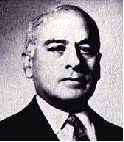
This foolish man was Joshua L. Cowen. That's him in the 1954 photograph on the right.
Cowen was your typical turn of the century inventor. Lots of ideas - some that worked, some that didn't.
His first major invention was intended to revolutionize photography. He designed a fuse to ignite magnesium powered flashes, but the invention was a dud.
His best customer for his fuses was the U. S. Navy. They didn't want to take pictures with his fuses, however. They bought 24,000 of them in 1898 to detonate underwater mines.
His next creation was the development of little metal tubes that were designed to illuminate flowers in their pots.
These illuminated flower pots were difficult to perfect (if he could have gotten them to dance to music, he would have earned a fortune). Cowen became bored with his flower pot lights and in 1898 gave the project away to one of his salesmen - some guy named Conrad Hubert. Hubert could care less about the lighted flower pots. Instead, he liked the device Cowen developed to operate them - a lightbulb and dry cell battery combination that had a 30 day life.
Hubert took Cowen's battery operated device and developed it into the flashlight. The company that Cowen gave away was named the American Eveready Company, and it earned Hubert nearly six million dollars in two decades (a large sum of money for the turn of the century). When Hubert died, he left behind a $15,000,000 estate, virtually all earned from Cowen's invention.
One would think that Cowen would feel like a real loser for giving an idea like Eveready batteries away for nothing, but he actually came up with a better idea that earned him even more money.
lionel3.jpg
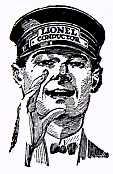
What I failed to mention was that the "L" in Joshua L. Cowen's name stood for Lionel - as in Lionel trains.
When Cowen gave away his flower pot light company, he turned his attention to these small electrical devices.
The first Lionel train that he produced was a flatbed car that ran on batteries.
He sold them as eye catching displays for shop windows. However, people quickly wanted them for their homes, particularly for under the Christmas tree.
By 1906, he had introduced the transformer and famous three rail track. In 1907, he introduced the first locomotive.
The rest is model train history.
Useless? Useful? I’ll leave that for you to decide.
 
PEZ
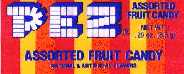
Available in Eucalyptus, Peppermint, and Chlorophyll flavors!
PEZ!
You must be living in a box if you are not familiar with this candy and its flip-top head dispensers.
Over 1 billion of these little bundles of compressed sugar are sold each year.
So where did this novel approach to selling candy come from?
To find out, we must take a trip back to Vienna, Austria in 1927. Here we will find a candyman named Eduard Haas III
Eddie did not try to sell his candy to kids, however. His market was adults - adults that smoked cigarettes.
PEZ was originally marketed as a compressed breath mint for smokers (or to cover up smoker's breath).
I know what you are thinking - How did those fruit flavored pellets cover your bad breath?
The answer is quite simple - they weren't fruit flavored back then!
In fact, they were peppermint flavored, which explains the origin of its unusual name. The German word for peppermint is PfeffErminZ. Take the first, middle, and last letters of the word and you get PEZ!
The first dispensers weren't introduced until the late 1940's and are now referred to as "regulars" - they lacked the character heads PEZ is famous for.
In 1952, it was time to come to America. The company did extensive market research with children that led to the introduction of the fruity flavors and character heads on the dispensers.
pez.jpg
Since then, over 275 different PEZ heads have been designed, with some 48 models on the market at any one time.
The most popular dispensers of all-time are the Mickey Mouse and Santa Claus models. When the Flintstones models were introduced several years ago, they quickly rose to become a hot seller, with Dino the purple dinosaur being in short supply.
Believe it or not, people actually pay big bucks for these things! The highest price ever paid was $3600 for a rare Big Top Elephant, which was sold by David Welch in July, 1995.
Technology has also played a part in the history of Pez. For example, a company named Cap Toys makes the battery powered Power Pez which twirls and shoots the candies out into your mouth. Another company, Dream Castle, markets the Pez Watch which dispenses the candies out the side of the watch.
Which leads to the available flavors.
In the United States, only Grape, Lemon, Orange, Strawberry, and Peppermint (I am a large consumer of PEZ and don't recall ever having peppermint) flavors are available. Hop across the border to Canada and you can add Cherry to your stash.
Raspberry and Apple are available in Spain. Chocolate is available in Hungary and Thailand.
An unusual type known as IZO PEZ is also available - it is vitamin enriched (does a vitamin enriched candy make sense to you?).
The most unusual flavors, however, have to be the discontinued ones: Chlorophyll, Cinnamon, Coffee, Eucalyptus, Flower (just what do flowers taste like?), Licorice, and Menthol.
What were the marketing guys thinking of when they came up with some of these flavors?
 

Raisins
What's the difference between the Sun-dried and Golden varieties?
raisins1.gif
We all know what they are.
Dried out grapes.
No big secret here.
But what is the difference between the Golden and Sun-Dried varieties?
I know what you're thinking - color.
Well, that's pretty obvious - the golden ones are, well, golden. The sun-dried types are typically dark brown to black.
I'm talking about what makes them different.
It turns out that both types of raisins are usually made from the same exact grapes - Thompson Seedless - the same seedless ones that you buy in the supermarket.
The real difference is in the processing.
But first, a little background: Grapes have been used for human consumption for many centuries, long before the birth of Christ.
They were of particular value in the Middle East. After all, the desert is a hot place. Grapes dry out and give a nice tasty raisin. The raisins would keep indefinitely without spoiling, making them a choice food among the wanderers of the day.
Of course these grapes, and therefore the raisins, had seeds in them. The seedless type weren't a part of nature in those days.
No matter what type of raisin you consume, they start out with about 78% water content. After drying, the water content is reduced to around 15%. Go too far and you have a hard rock!
As a result, it takes between four and five pounds of grapes to make one pound of raisins.
Now to answer the question: What is the difference between the Golden and Sun Dried raisins?
Not much.
The Sun Dried are seedless grapes that are placed on paper trays and allowed to - you guessed it - dry in the sun! This process takes 2-3 weeks and produces the dark raisins that we are all familiar with.
To make the Golden variety, they bathe the grapes in warm water and place them in wood trays. Warm air is then blown through the grapes to dry them quickly. This process is called the "Spa Treatment" and takes about 24 hours.
Unfortunately, the Spa Treatment can also produce dark raisins, so a bit of modern technology is used.
The raisins are treated with sulfur dioxide prior to drying to preserve the golden color.
So you have a choice - tasty golden raisins that have been chemically treated or the less tasty sun dried ones that have avoided man's magic potions.
It's a tough decision, but most of us go for the Sun Dried varieties (the cheaper ones!).
 
bigspizz;3014326; said:
I laugh about 200 times a day.
How did you figure that?:confused:
 
bigspizz;3016429; said:
Are you being serious?
I was trying to find out.:grinyes:
 
Nose Picking

Now I'm sure that we all know how one goes about picking their nose, so we can skip the step-by-step instructions.
We've all caught someone at sometime picking their nose. Some try to do it in secret. Others do it openly without embarrassment. Maybe even you have been caught in the act.
Nose-picking is one disgusting habit and is certainly not socially acceptable. So, are these people normal?
One would guess that this is not the type of thing researched at our institutions of higher learning.
Guess again.
Believe it or not, there was a study on nose-picking published in February of 1995 in the Journal of Psychiatry. Yes, you read it right - college professors being paid the big bucks to find out who picks their nose.
Of course, scientists must give everyday things complicated scientific names. Nose-picking is a term for us common folk. Nose-picking should really be referred to as rhinotillexomania (rhino=nose, tillexis=habit of picking at something, mania=obsession with something). So, the next time that you see a person picking their nose, tell them that they are a rhinotillexomaniac.
The researchers prepared their "Rhinotillexomania Questionnaire" and randomly mailed it to 1000 residents in Dane County, Wisconsin. Each survey included a cover letter that stated "The University of Wisconsin is conducting a survey of a common but understudied habit scientifically known as 'rhinotillexomania'. Its common name is nose-picking."
Even better, the letter actually defined what nose-picking is: "Insertion of a finger (or other object) into the nose with the intention of removing dried nasal secretions." I'll bet that you already knew that.
Can you imagine getting this survey in the mail? Even with the University's seal on the stationary, one would have to wonder whether this was a joke or not.
Now for the results (assuming that they are reliable):
Of the 1000 surveys mailed out, only 254 were completed and returned to the researchers.
  • 8.7% claim that they have never picked their nose. (In other words, they are liars or they can't remember doing it as a kid.)
  • 91% stated that they had picked their nose in the past and were still actively practicing this habit. Yet, only 49.2% of the respondents actually thought that nose-picking was common in adults.
  • 9.2% rate their pickin' as "more than average."
  • 25.6% actually pick their noses daily, 22.3% do it 2 to 5 times each day, and three people admitted to doing it at least hourly.
  • 55.5% spent 1-5 minutes, 23.5% spent 5-15 minutes, and 0.8% (2 people) spent 15-30 minutes each day cleaning their nostrils. One lone soul claims to devote over 2 hours each day to this ritual (I'm not a doctor and I can tell you that this guy definitely has rhinotillexomania).
  • 18% reported nosebleeds, while 0.8% claimed perforation of the nasal septum from their nose-picking.
  • 82.8% had picked their noses to "unclog the nasal passages", 66.4% had done it to relieve discomfort or itchiness, 35.7% to avoid the unsightly appearance of a booger hanging from their nose, 34.0% for personal hygiene, and 17.2% picked out of habit. 2.1% (five people) claimed to pick solely for enjoyment. To no one's surprise, one perverted person picked his/her nose for "sexual stimulation."
  • 65.1% use their index finger, 20.2% use their pinky, and 16.4% use their thumb (must have BIG nostrils to fit a thumb in) as their instrument of choice.
  • Most people (90.3%) disposed of the goop in a tissue or a handkerchief, while 28.6% used the floor, and 7.6% stuck it to the furniture.
  • 8% of the respondents actually ate the end product. In case you are thinking of trying this delicacy, the study claims that the pickings are quite tasty (salty).
So, what have we learned from this groundbreaking study?
First, we now have positive proof that picking one's nose is almost a universally practiced custom, although most won't admit to it.
Second, boogers apparently taste good, although I can guarantee to you that I will never do the taste testing to find out.
And, lastly, when researchers are devoting money and time to studying the picking habits of the United States, it comes as no surprise that we can't find a cure for cancer or HIV.
Useless? Useful? I’ll leave that for you to decide.

 
bigspizz;3016441; said:
I laugh a lot. I feel that happiness is my success......
Oh absolutely.:D
 
Theaters in Glendale, California can show horror films only on Monday, Tuesday, or Wednesday.
You can't plow a cotton field with an elephant in North Carolina.
In Lehigh, Nebraska it's against the law to sell donut holes.
Under the law of Mississippi, there’s no such thing as a female Peeping Tom.
Anti-modem laws restrict Internet access in the country of Burma. Illegal possession of a modem can lead to a prison term.
Lawn darts are illegal in Canada.
In Idaho a citizen is forbidden by law to give another citizen a box of candy that weighs more than 50 pounds.
Every citizen of Kentucky is required by law to take a bath at least once a year.
It is against the law to whale hunt in Oklahoma. (Think about it...)
A Venetian law decrees that all gondolas must be painted black. The only exceptions are gondolas belonging to high public officials.
In the state of Queensland, Australia, it is still constitutional law that all pubs (hotel/bar) must have a railing outside for patrons to tie up their horse.
According to law, no store is allowed to sell a toothbrush on the Sabbath in Providence, Rhode Island. Yet these same stores are allowed to sell toothpaste and mouthwash on Sundays.
Before the enactment of the 1978 law that made it mandatory for dog owners in New York City to clean up after their pets, approximately 40 million pounds of dog excrement were deposited on the streets every year.
Chewing gum is outlawed in Singapore because it is a means of "tainting an environment free of dirt."
The handkerchief had been used by the Romans, who ordinarily wore two handkerchiefs: one on the left wrist and one tucked in at the waist or around the neck. In the fifteenth century, the handkerchief was for a time allowed only to the nobility; special laws were made to enforce this. The classical heritage was rediscovered during the Renaissance.
For hundreds of years, the Chinese zealously guarded the secret of sericulture; imperial law decreed death by torture to those who disclosed how to make silk.
An old law in Bellingham, Washington, made it illegal for a woman to take more than 3 steps backwards while dancing.
By law, information collected in a U.S. census must remain confidential for 72 years.
Candy made from pieces of barrel cactus was outlawed in the U.S. in 1952 to protect the species.
A slander case in Thailand was once settled by a witness who said nothing at all. According to the memoirs of Justice Gerald Sparrow, a 20th century British barrister who served as a judge in Bangkok, the case involved two rival Chinese merchants. Pu Lin and Swee Ho. Pu Lin had stated sneeringly at a party that Swee Ho's new wife, Li Bua, was merely a decoration to show how rich her husband was. Swee Ho, he said, could no longer "please the ladies." Swee Ho sued for slander, claiming Li Bua was his wife in every sense - and he won his case, along with substantial damages, without a word of evidence being taken. Swee Ho's lawyer simply put the blushing bride in the witness box. She had decorative, gold-painted fingernails, to be sure, but she was also quite obviously pregnant.
In Breton, Alabama, there is a law on the town's books against riding down the street in a motorboat.
Connecticut and Rhode Island never ratified the 18th Amendment: Prohibition.
A few years back, a Chinese soap hit it big with consumers in Asia. It was claimed in ads that users would lose weight with Seaweed Defat Scented Soap simply by washing with it. The soap was sold in violation to the Japanese Pharmaceutical Affairs Law and was banned. Reportedly, the craze for the soap was so great that Japanese tourists from China and Hong Kong brought back large quantities. The product was also in violation of customs regulations. In June and July 1999 alone, over 10,000 bars were seized.
In most American states, a wedding ring is exempt by law from inclusion among the assets in a bankruptcy estate. This means that a wedding ring cannot be seized by creditors, no matter how much the bankrupt person owes.
In New York State, it is still illegal to shoot a rabbit from a moving trolley car.
Vermont, Alaska, Hawaii, and Maine are the four states in the U.S. that do not allow billboards.
Wetaskiwin, Alberta from 1917: "It's against the law to tie a male horse next to a female horse on Main Street."
Women were banned by royal decree from using hotel swimming pools in Jidda, Saudi Arabia, in 1979.
In Riverside, California, there is an old law on the city's books which makes it illegal to kiss unless both people wipe their lips with rose water.
In Saudi Arabia, a woman reportedly may divorce her husband if he does not keep her supplied with coffee.
 
MonsterFishKeepers.com
