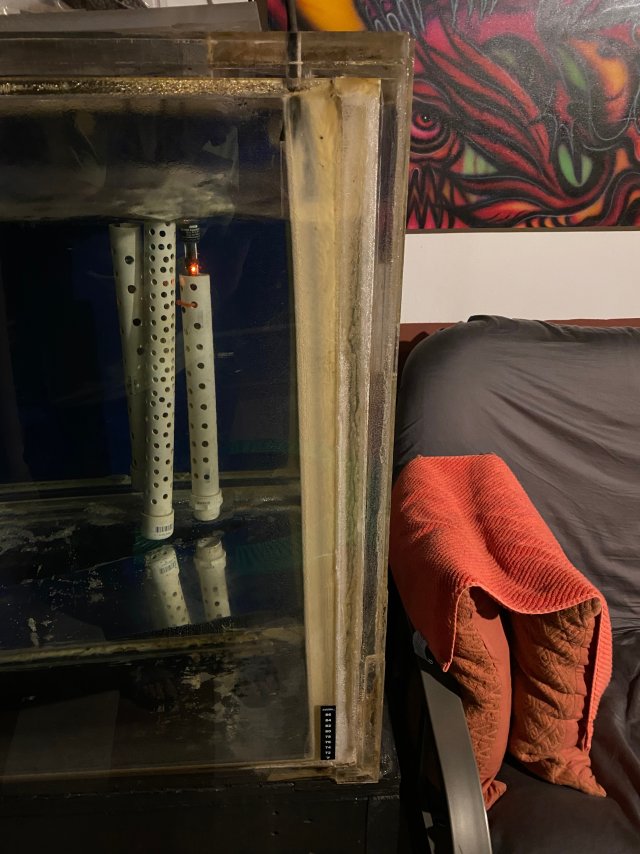
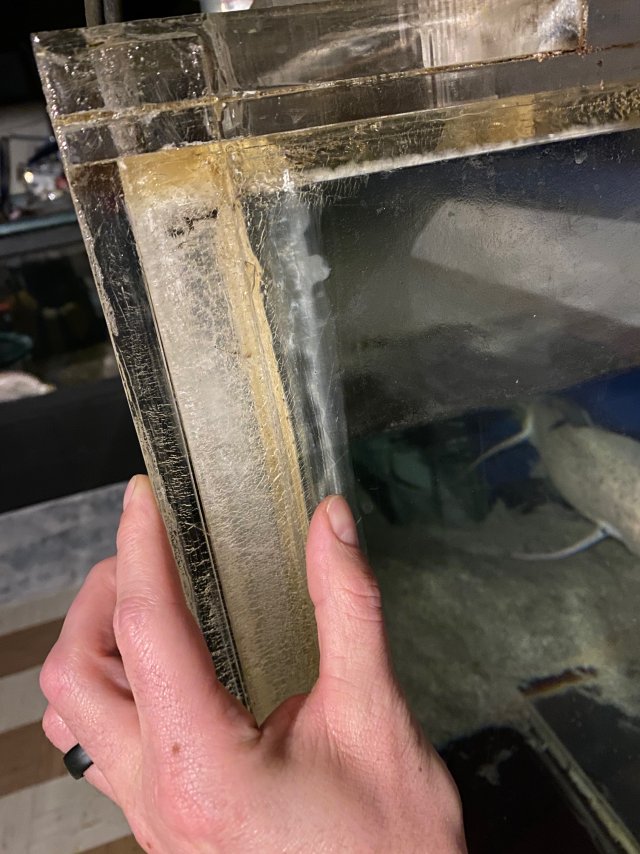
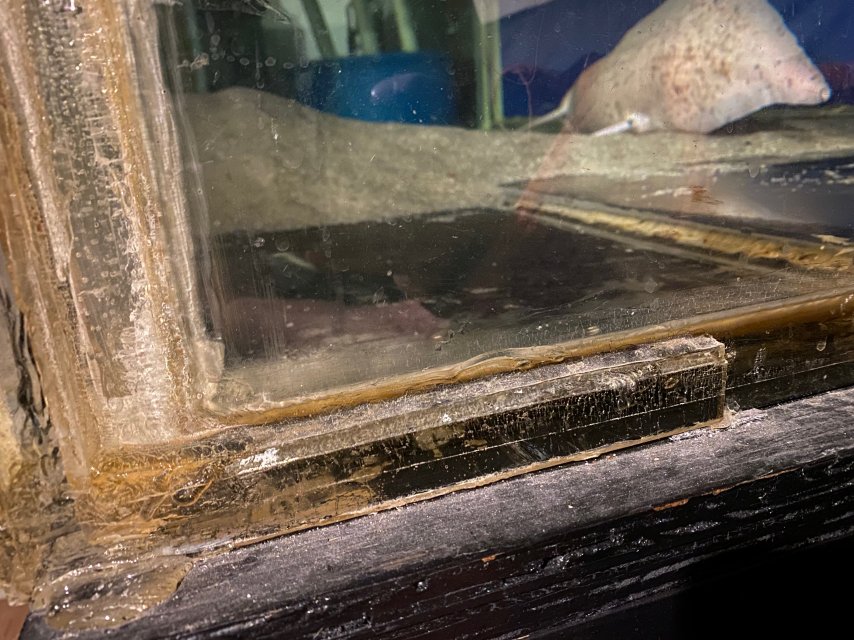
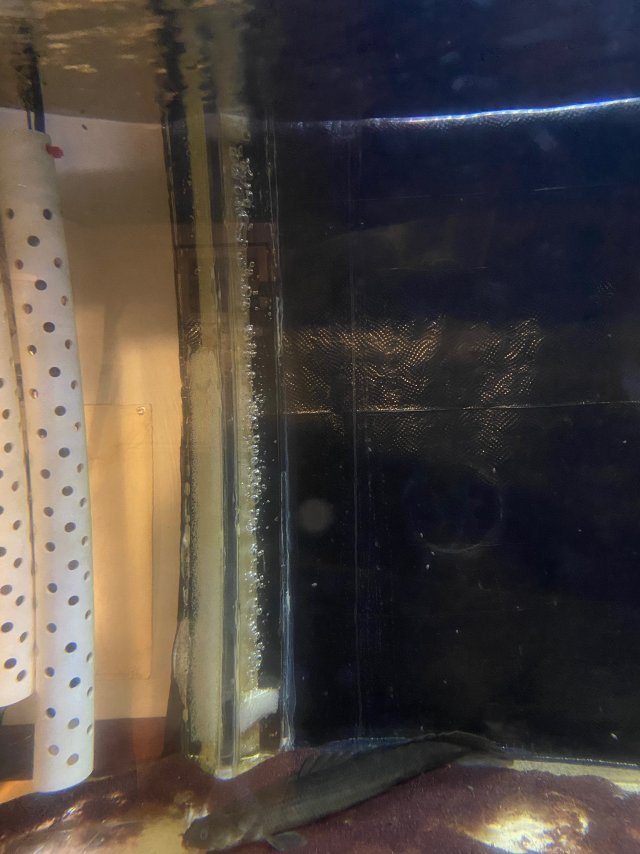
Acrylic seam repair/ assessment

  • We are currently upgrading MFK. thanks! -neo
Sorry to hear about your current resurgence of fresh problems, but...wow, this is a fantastic, informative and entertaining thread! :)

I recall back in about 1970, seeing my very first all-glass silicone-constructed aquariums. My father and I stood in front of it for a bit, marveling at the fact that it seemed to be holding water; we both "knew" that this was a crazy idea, a fad that would quickly fade into nonexistence. Yeah...not my finest example of future foretelling.

Now I read threads like this one, and I feel more and more that acrylic is just another crazy fad; it's certainly a durable fad, but...hey, come on. There's no way you can build tanks out of this stuff, not while retaining any peace of mind. :) My blood pressure rises every time I look at this thread. :)

I must admit: if I were 20 years younger, I'd be building an acrylic tank...just because. But thank goodness I'm too old to start learning new stuff. :)

Looking forward to following along here some more. :thumbsup:
 
  • Like
Reactions: Johnpeck1 and deeda
wednesday13 wednesday13 I forgot how these threads work. If I don't put your name down do you still get it?
Could you weigh in on this. This is what chatgpt says about weldon 40:

"Recommended maximum thickness (important)​

For reliable results:
  • Ideal per pass: ~1/16"–1/8" (1.5–3 mm)
  • Absolute max per pass: ~1/8"
  • Anything thicker should be built up in layers
Trying to pour a deep V-fillet all at once is one of the most common reasons leaks come back later.
  • Weld-On 40 is fine for structural acrylic bonding, but it does not “heal” a bad seam
  • If the original seam is crazed or cracked internally, fillets only buy time
  • Repeated leak recurrence often means the original joint is compromised
If the leak returns again after a proper layered fillet, the only permanent fix is panel removal and re-bonding, not surface fillets.

Why thick pours fail with Weld-On 40​


Weld-On 40 is a reactive (polymerizing) adhesive, not a simple solvent cement. When poured thick it:


  • Builds heat (exotherm) → can cause micro-cracks or weaken the bond
  • Shrinks as it cures → pulls away from the joint
  • Traps bubbles → especially in vertical or deep fillets
  • Cures unevenly → soft core, hard skin = future leak path"

It seemed to try to steer me away from encapsulating the 3/4-in vertical rods but when I grilled it about what's better, encapsulating it or pouring the fillet on each side of the rod, it finally said if it's done in thin layers then encapsulating it is probably the better repair.

I bought a laser level and it looks like the tank is dead on level.

I know there's a lot here brother, but if you could take a look at the last two posts I would appreciate it. Thanks to you I feel like I got this! I hope I just get more than 4 years this time.
 
This isn’t acrylic repair advice as I have no clue but just wanted to share that AI sent me on a wild goose chase this past weekend. I asked it advice on how to do a car repair, grilled it as you did, asked it to double, triple, quadruple check its sources, and even cleared the chat and started a new one to be safe and went through the whole ordeal again.

This stupid thing sounded so confident, I went to tearing the car apart to find out no such thing existed. So I asked it again and it gave me the same bad advice. When I told it that it made a mistake, it apologized and gave me the “actual” repair instructions and guess what man, that F~in thing was wrong again! 😆 It either made a mistake again or lied to me in the most confident, boldest, scammy way.

All I’m saying is, I wouldn’t take what ai says as gospel.
 
Last edited by a moderator:
wednesday13 wednesday13 I forgot how these threads work. If I don't put your name down do you still get it?
Could you weigh in on this. This is what chatgpt says about weldon 40:

"Recommended maximum thickness (important)​

For reliable results:
  • Ideal per pass: ~1/16"–1/8" (1.5–3 mm)
  • Absolute max per pass: ~1/8"
  • Anything thicker should be built up in layers
Trying to pour a deep V-fillet all at once is one of the most common reasons leaks come back later.
  • Weld-On 40 is fine for structural acrylic bonding, but it does not “heal” a bad seam
  • If the original seam is crazed or cracked internally, fillets only buy time
  • Repeated leak recurrence often means the original joint is compromised
If the leak returns again after a proper layered fillet, the only permanent fix is panel removal and re-bonding, not surface fillets.

Why thick pours fail with Weld-On 40​


Weld-On 40 is a reactive (polymerizing) adhesive, not a simple solvent cement. When poured thick it:


  • Builds heat (exotherm) → can cause micro-cracks or weaken the bond
  • Shrinks as it cures → pulls away from the joint
  • Traps bubbles → especially in vertical or deep fillets
  • Cures unevenly → soft core, hard skin = future leak path"

It seemed to try to steer me away from encapsulating the 3/4-in vertical rods but when I grilled it about what's better, encapsulating it or pouring the fillet on each side of the rod, it finally said if it's done in thin layers then encapsulating it is probably the better repair.

I bought a laser level and it looks like the tank is dead on level.

I know there's a lot here brother, but if you could take a look at the last two posts I would appreciate it. Thanks to you I feel like I got this! I hope I just get more than 4 years this time.

Yeaaah… i call BS on robots lol… i have factory made tanks that are now 40+ yrs old that came with 3/4” fillets “deep v’s” of #40 stock and are still holding. Thats how i learned how to do it, i didnt invent the wheel myself. Really, you only need to encapsulate each side of the L. Since theres a rod there u basically made 2 seams that need covered now. From ur pics it looks like the L rod is on there pretty good for the most part. Just didnt stick In that one area there. You can try and shoot solvent into that leak/algea area 1st for a chance to re bond anything u can before 40. Ive have the same problem before and used outside patches as i mentioned in an earlier post. 40 has a bit of trouble sticking to old acrylic. Y u need to sand with a decent grit to give er a nice bite. All part of the game here tho. Theres no book for repair work like this. I taught myself from trial and error. When solvents and #16 failed for me over years i encapsulated all of that old work with #40 and was good there on. Ive never had a 3/4”-1” deep V pour of 40 fail. Ive only had areas that already had rod or patches underneath 40 with different glues fail much like ur seeing now. 40 is not bubbly IMO… i used a parts vibrator to “degass the mix”… better yet would b a vac chamber or pressure pot like with any type of resin/silicone work. I know most people dont have these things at home and can get by without it.

ChappyPTG aint know his b hole from a bolt hole 😂😂😂… 40 is almost 100% the same chemical components of the acrylic itself. You could pour it out into a jig/form and make your own pieces with it if needed. Theres pics on here somewhere where i filled in a golf ball sized chunk on a tank corner my buddy dropped. Sanded it back to clear and you couldnt even tell it was there. Also a main point it was far off on is the thickness. When butt joining sheets together you need a gap of 1/4” to fill in because the glue actually works best with more in the seam not less. I am by know means the smartest person out there… i have probably sniffed more 40 than alot of people tho 😂. And man do i hate robots 😂😂🤖… hand made is hand made… cant teach a robot that.

Saw ur post btw and got alerts for em, been meaning to get back to ya. i have a 3yr old now and limited time between work, my own work and dad life lol 💀🤙

Ps… dont use a yoga mat or any mat or any foam under an acrylic tank. Plywood straight under the tank is what u want. If shes dead level already i wouldnt change anything. Ill try and get the pics i said i would also lol… i only turn fish lights on my big tanks once a week to save $$…
 
Hey bro, congrats on fatherhood! I got 4...19yrs -14 yrs and now im finally able to give you some advice! Spend all the time you can and hold on to every minute, because around 15 they want a lot less to do with you...and im dad of the friggin year! It goes by in a blink! And I remember 3 being a blast seeing their personalities kickin in!
And I got good news for everybody...The score is man 1 robots 0! I called weldon and they said pour that 40 thick as you want. Doing layers might actually make it weaker, so you were dead on. The bad news is 40 is the the low voc is on the label because the formula passed the test to be low voc. Its the same ol formula. WTF? If thats low voc, whats high voc?
Thanks for another informative reply! Can you explain what solvent your talking about injecting and how important it is vs getting the 40 in the crease good? And how you can tell by that pic exactly where its leaking? I see all the algae but thats going up the whole rod. The tank corner is wet, but that corner goes through the wall, so i cant pinpoint from the outside where its leaking.
Thanks man! Much appreciated!!!!

PS Any sanding pro tips and how to get in between the rod and tank wall good?
 
  • Like
Reactions: wednesday13
Hey bro, congrats on fatherhood! I got 4...19yrs -14 yrs and now im finally able to give you some advice! Spend all the time you can and hold on to every minute, because around 15 they want a lot less to do with you...and im dad of the friggin year! It goes by in a blink! And I remember 3 being a blast seeing their personalities kickin in!
And I got good news for everybody...The score is man 1 robots 0! I called weldon and they said pour that 40 thick as you want. Doing layers might actually make it weaker, so you were dead on. The bad news is 40 is the the low voc is on the label because the formula passed the test to be low voc. Its the same ol formula. WTF? If thats low voc, whats high voc?
Thanks for another informative reply! Can you explain what solvent your talking about injecting and how important it is vs getting the 40 in the crease good? And how you can tell by that pic exactly where its leaking? I see all the algae but thats going up the whole rod. The tank corner is wet, but that corner goes through the wall, so i cant pinpoint from the outside where its leaking.
Thanks man! Much appreciated!!!!

PS Any sanding pro tips and how to get in between the rod and tank wall good?
Had to go back and check the pics… i think i got confused by the original seam and piece of rod there. I wouldn’t worry about using any solvent since i can see now the outer L piece is mostly green 😬… i don’t think u used enough glue on ur L patch. Its amazing how much water will travel behind a piece of rod through various bubbles/dry spots and find its way out.

Nice to hear weld-on themselves backed up my claims 💀🤘… lol… was smart to call.

Are you planning on taking the tank out of the wall to tip and pour it now? And do u have much access above it?

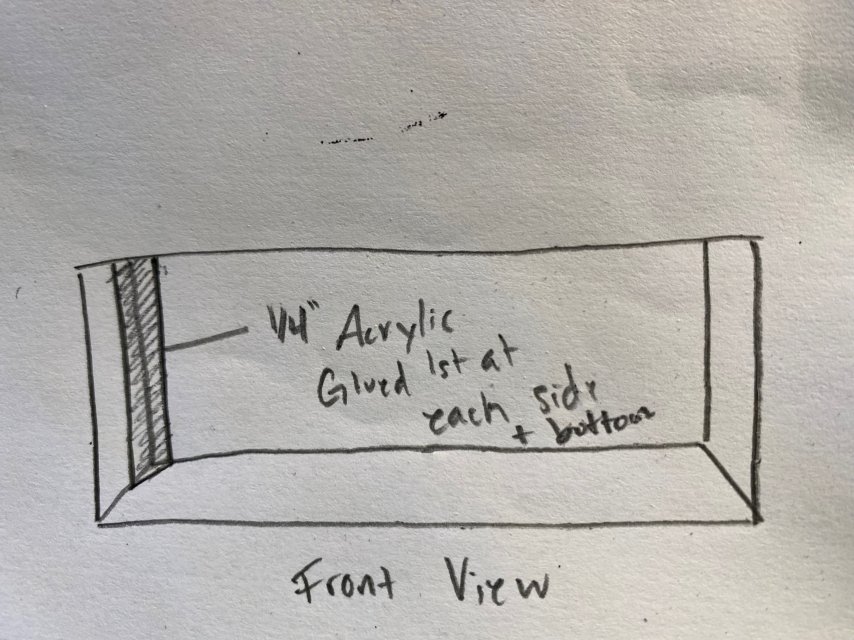
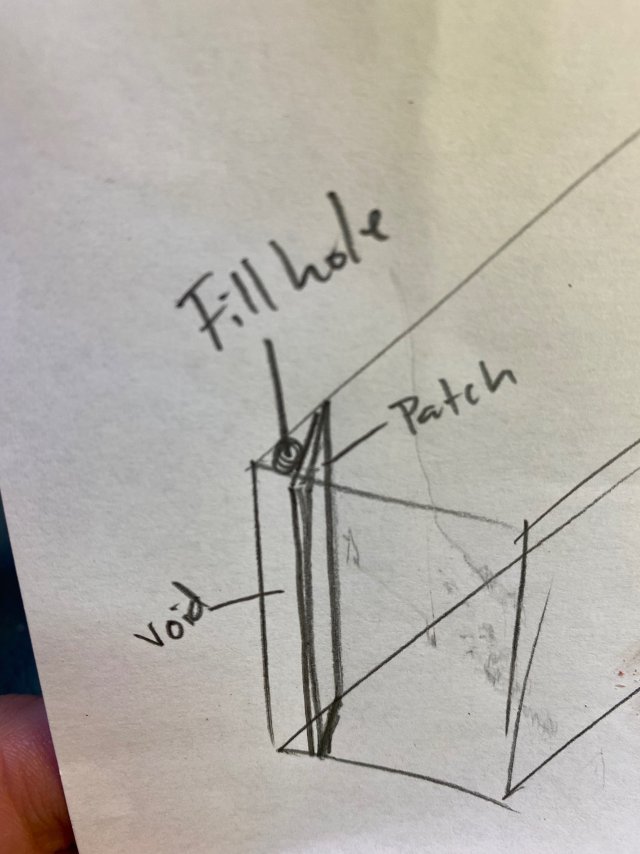
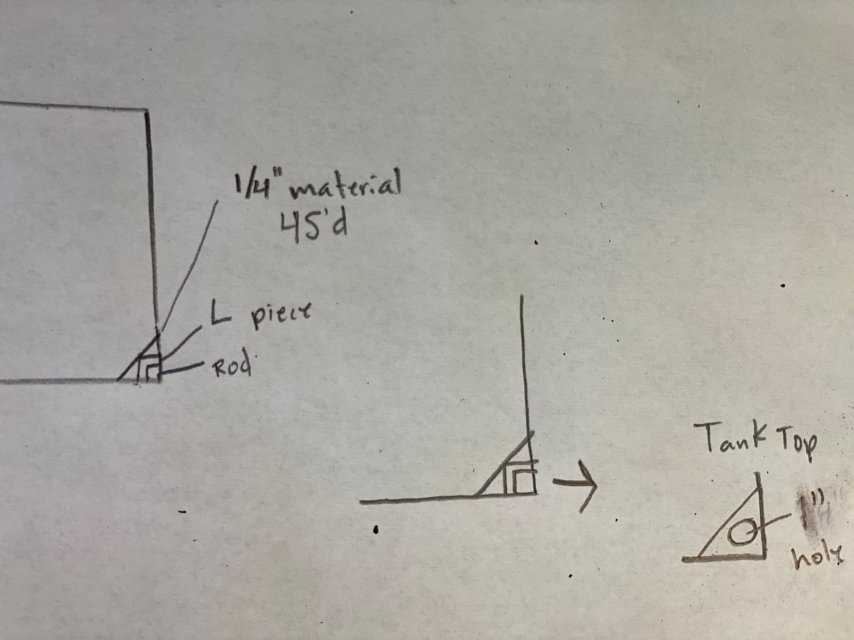
I mentioned earlier about using a piece of 1/4” 45’d in the corner there that would go over all of that rod and L patch then filling behind it with 40 by drilling a hole in the top of the tank… sounds crazy but i did this on a 500g i could not move myself and it worked great. Its not pretty but it could save you from taking the tank out of the wall. Basically does the same thing as tip and pouring that seam with enough glue to encapsulate everything.

Downside/Con either way here is the heat from the glue. It will most likely craze quite a bit and be a bit unsightly 2-3” out from where ur using it. IME older tanks craze the worst. I know its on the back seam but it looks like u have a good view from both sides.

No secret to sanding lol… just gotta scuff it up then wipe with alcohol to give u a nice surface for the glue to stick too.

Still debating for ya which way to go here…. Im not sure id b opposed to cutting some drywall out and doing a patch on that outside seam. You only need a strip that goes top to bottom and is around 3” wide. Ive done it before with 1/4” material. Youd only need a pint of glue also. Same process you did inside but its another shot to use more glue this time under ur patch. I tried doing this also with a full tank before 😂… it took 3 patches before the water stopped. Kept giving me the smallest tear drop before the glue cured. So def drain the tank and dry it well… sand… and patch if u go that route.
 
Crappy pics so far ill try again… this is my 450 with seams much like ur bad one. This tank exploded in someone’s home and i put it back together 😂… back wall blew out and the bottom is cracked end to end. The font panel also leaked. Its got 1” rod that failed in areas with #16 glue. Over top of that it has 1/2”-1” wide pours of 40 on both sides of the rod all around the tank. After all that i still had 1 seam leak (pictured) exactly like urs. It was a tear drop and i can see a trail of algea/dirt that comes from nowhere and i have no idea how under all that glue and rod. What ultimately fixed it is the outer patches spanning across the corner seam of the tank (front side panel to side panel) Its just 1/4” material in a 2-3”x32” strip applied with a generous amount of #40 and masking taped in place to dry. You can see i blocked the ends of that new seam/patch with a smaller patch and then a 3rd onto the front with scraps i had. I also put 40 in a squirt bottle and went all around the outside of the patches after they cured. This tank is basically glued to the stand in that corner now lol… i hope u understand tho its hard to tell with so many patches and reflections going on. This tank has been through the ringer and taught me everything to do and not to do 😂🤘

E83837E5-825A-4C5F-8E8A-6413526A02AD.jpeg
60967AD6-DC47-4B39-A7B4-2AF62F2E1A4D.jpeg
7C44A332-20DB-426B-A865-406155C1B651.jpeg

These were all just acrylic scraps i had lying around… this is the leak i tried to fix while it was leaking lol… that has alot to do with patches on patches. 1 patch would have been enough and i also went haywire to ensure i would not have to do it again. 💀🤞 knock knock…
 
D7221C26-1494-48B7-A924-A557174F7ACF.jpeg
Heres ur other option im thinking of… hard to make out as well. This is a 10’ rounded end tank with 2 pieces of acrylic attached vertically with a 1.5” rod. The rod failed and i used 1/4” acrylic at a 45 to encapsulate the entire rod one either side of it. I then drilled holes in the top of the tank and filled the entire voids with 40. There like 2-3” of solid glue 30” tall 😂. You can see theres bubbles everywhere because i drilled small holes and a squirt bottle of 40 to fill. Quickly learned i needed a bigger hole to fill and when u have 15 minutes to work u get what u get lol… you can see the 2nd right side patch went better with less bubbles. Regardless it works and its now built like a chit brick house lol… if i did it again it would b alot better.

Hard to see/explain this one aswell ill include some crude drawings of what would b ur tank with this patch to help. My bichirs went crazy when i tried to get you a top view shot and i have black acrylic as a lid piece above it.


0B25C3D0-26E7-496C-BF81-E483EE3CF7DB.jpeg
0744541A-6760-428B-8CBD-2B05DFF69B8B.jpeg
D971DCDE-D85D-4CA8-94A2-FD864E6698B5.jpeg
The pics are much better on my work computer than phone 😂… that might help you see something lol 💀🤙
 
Last edited:
MonsterFishKeepers.com