Aged Water Increases Ph?

  • We are currently upgrading MFK. thanks! -neo
I know my attitude is not a popular one here. Maybe I'm just lazy.
But to me, trying to keep certain type fish, that need the antitthesis of my normal tap water, would a bit of a constant, if not losing battle.

Just because we like a certain species, doesn't mean we have the proper conditions to keep it healthy.

One of my favorite species is Uaru fernandezyepezi, most are wild caught, and come from the soft acidic waters of the Amazon area, with preferred pH of @ 5, hardly any measurable hardness, and lots of tannins.
When in the U.S,. my tap water pH hovered near 8, was medium hardness, los of mineral content, and without a lot of effort, no tannins.
To keep this species of Uaru disease free, I would need to acquire, and keep up an RO unit, and constantly tinker with water chemistry of my tap water, and probably do daily large scale water changes to be successful.
With out that constant attention, I would expect HLLE scarring, and a shortened life span, and worse case scenario death by other maladies.
Due to me not having proper condition, I opted not to keep them.

Instead I opted for cichlids that appreciate my specific tap water, and with the over 3,000 species of cichlids in the world, there are plenty that fit my water type. Rift lake Africans, Central American and Mexica cichlids, Madagascans, and those cichlids from the Indian sub-continent all did fine in my water.


Above Etroplus suratensus (sometimes called poor mans discus.
Below Paretroplus maculatus from Madagascar, both well suited my pH 8, high alkalinity water.

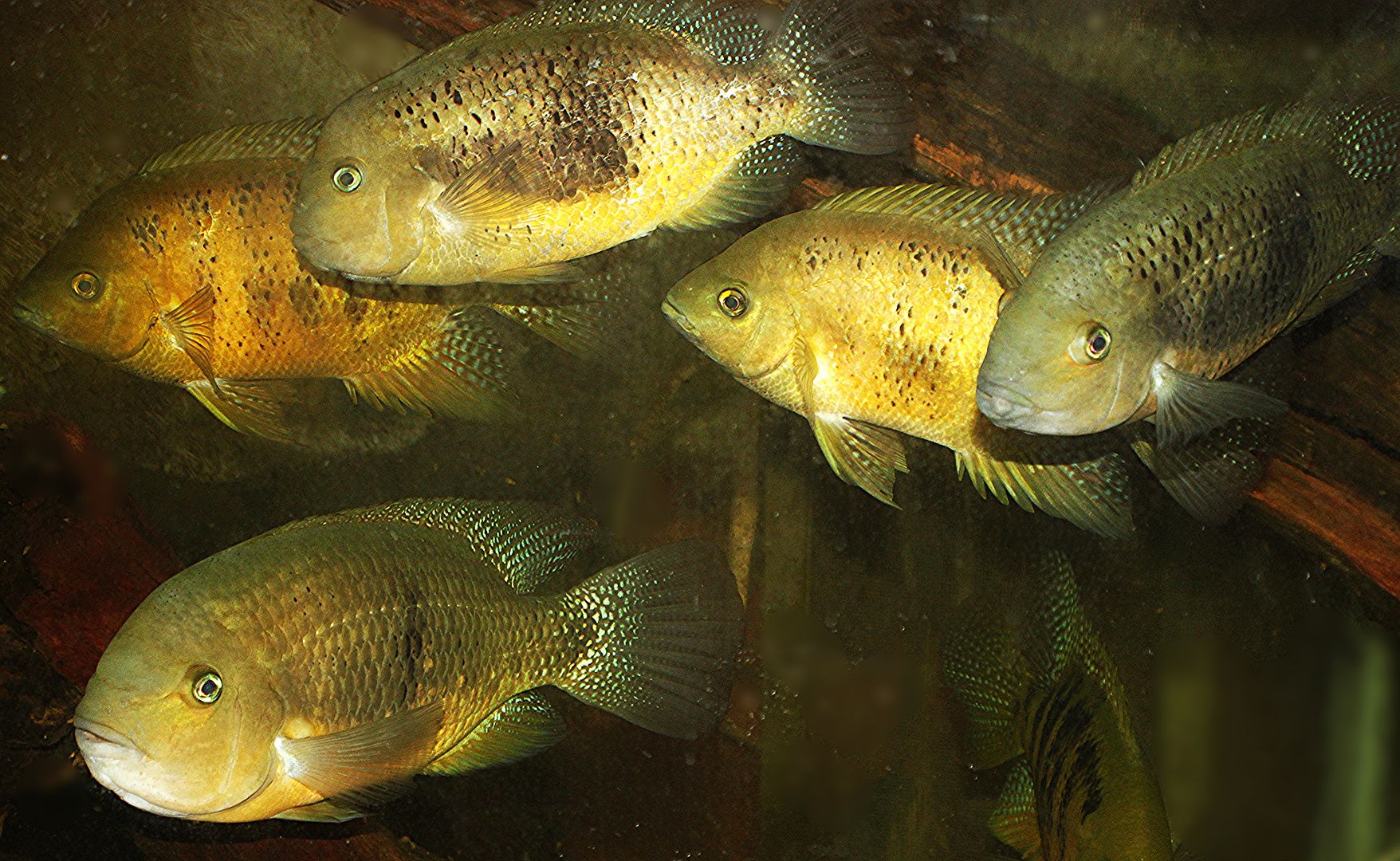
Below Chuco intermedia, and Cincilichthys bocourti from waters the exceed pH 8 in Central America.
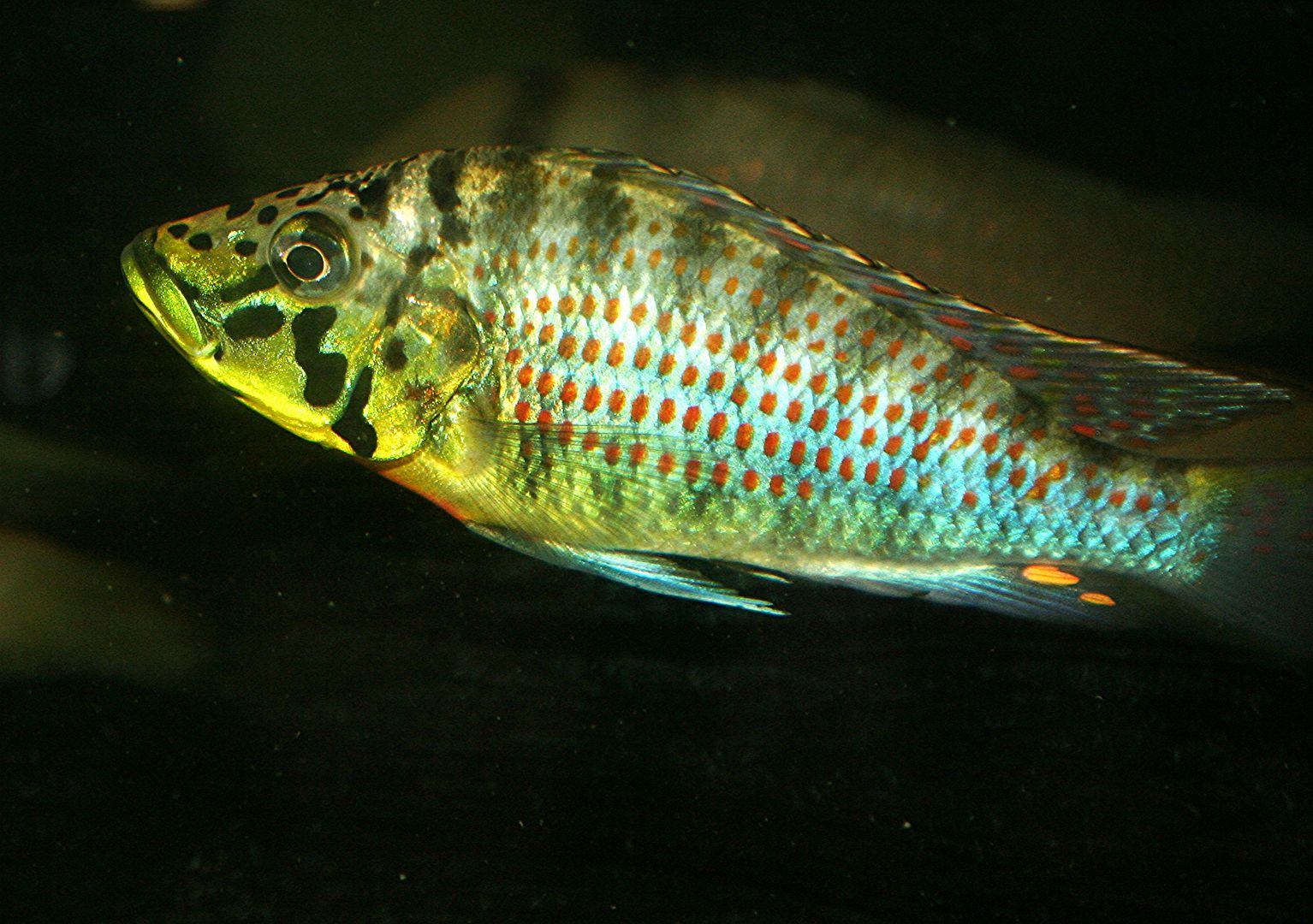
there are also at least 1000 species of beautiful rift lake species that do well in hard high pH water.
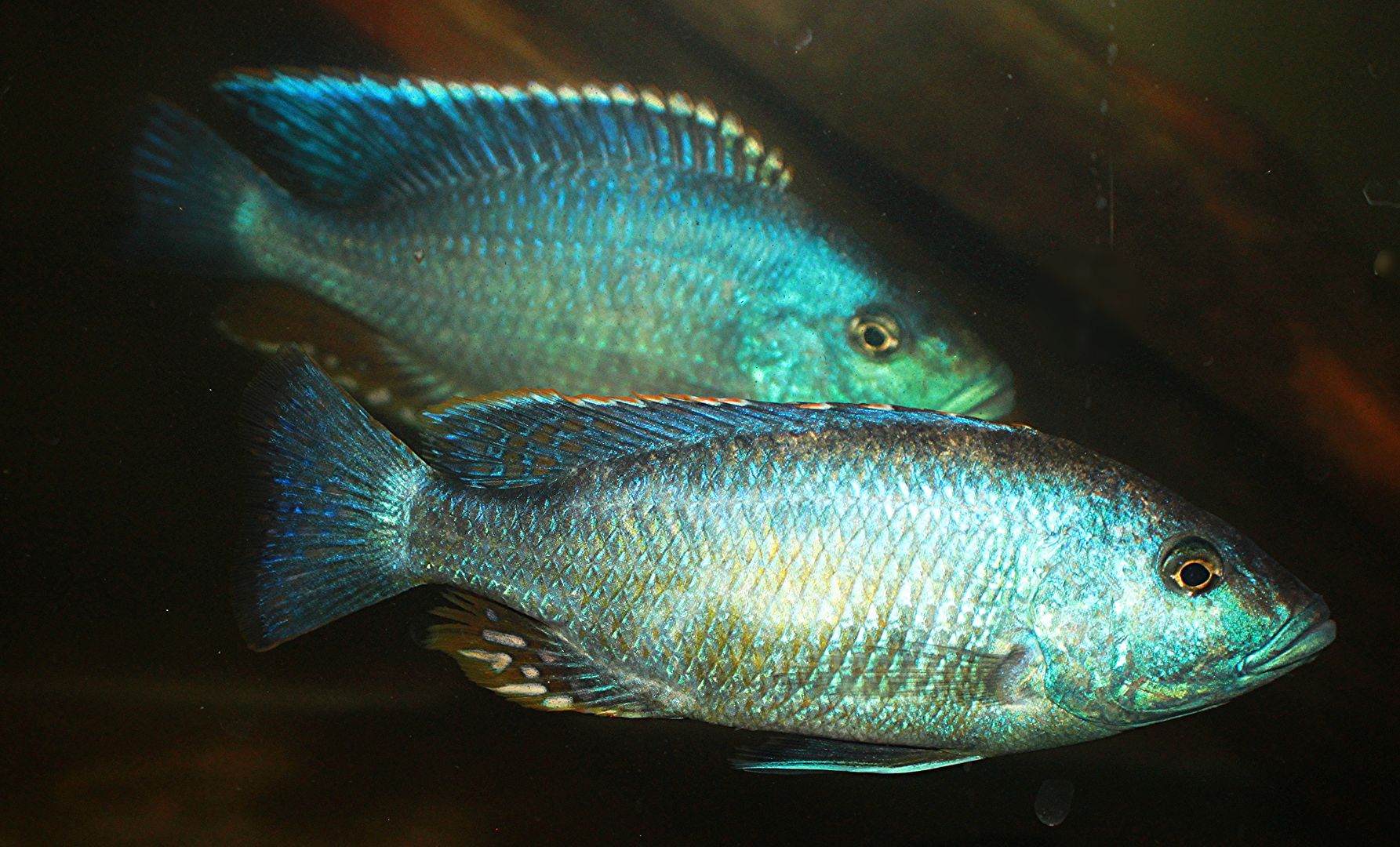
Nimbochromis above, Ctenochromis below
 
Last edited:
  • Like
Reactions: maetsuen
When co2 dissolves in water a s,mall portion of it turns into " Carbonic acid is a chemical compound with the chemical formula H2CO3 (equivalently: OC(OH)2). It is also a name sometimes given to solutions of carbon dioxide in water (carbonated water), because such solutions contain small amounts of H2CO3."

Carbonic is highly unstable and returns to being Co2 fast but at the same time other co2 breaks into carbonic acid. The net effect is that there is always a small amount of acid in the water. If the amount of co2 dissolved in the water is higher than normal. Time and/or surface agitation allows it to outgas,

When I set up mu first tank I thought my well water was in the low 6s. And then it would go to 7.4 in the tank. Almost 20 years later it comes out at almost dfead neutral.
 
  • Like
Reactions: Raka and maetsuen
Thanks for the input here guys. As a fish keeper I've never really paid attention to Ph. But looking back now I am guessing some of my unsuccessful take homes might have been caused by my disregard on the Ph of my water.
 
I believe most of my unsuccessful attempts at keeping certain cichlids in the past, were mostly due, to my not being aware of how important pH was/is back then (and of course the importance of more frequent water changes).
I tried discus in my high pH water about 30 years ago, and although they lived, they never really thrived.
I tried dwarf cichlids like Rams, and Kribensis, without decent results.
Certain Amazonian soft water Geophagines always seemed to get hole in the head in my tanks back them, until I became pH aware.
But its not just simply as the pH alone.
Later in life after becoming a microbiologist, the realization that certain bacteria are much more problematic for fish that have evolved in low pH water. Low pH water has different strains of bacteria than high pH water.
So if a fish has, over millions of years developed resistance to the low pH type, but not the high pH species, dropping them into high pH water might be the source of many problems.
This is also related not only to pH but any hard mineral rich water.
The bacteria that cause HLLE and other chronic maladies seem to be most virulent in water of pH 7.5 -to 8.5, mineral rich, with high conductivity, along with elevated nitrate.

After altering my stock selection to fit this realization, chronic disease decreased dramatically in my tanks.
 
Last edited:
I believe most of my unsuccessful attempts at keeping certain cichlids in the past, were mostly due, to my not being aware of how important pH was/is back then (and of course the importance of more frequent water changes).
I tried discus in my high pH water about 30 years ago, and although they lived, they never really thrived.

Could you elaborate on this note? This is exactly what I am aiming to keep in the future. I am reading/hearing with the years of domestic breeding that they take quite well to any ph/hardness now?

I have messed with a lot of ro/di water in the past just never for aquariums. And I'll agree that adding a step into fish keeping is never ideal as well. However this tank will replace 5 to 6 other tanks in operation a year or so down the line when I move back away from angel breeding thus freeing up a large amount of hobby time.

I have a blue lab digital ph meter (and the 4.0 and 7.0 solutions) to make checking ph easy as well for this project.
 
Some fish not only get HiTH/LLE,
Could you elaborate on this note? This is exactly what I am aiming to keep in the future. I am reading/hearing with the years of domestic breeding that they take quite well to any ph/hardness now?

I have messed with a lot of ro/di water in the past just never for aquariums. And I'll agree that adding a step into fish keeping is never ideal as well. However this tank will replace 5 to 6 other tanks in operation a year or so down the line when I move back away from angel breeding thus freeing up a large amount of hobby time.

I have a blue lab digital ph meter (and the 4.0 and 7.0 solutions) to make checking ph easy as well for this project.

I would also get a TDS meter and a liquid test kit that measures KH if you plan to soften your source water.
 
Some fish not only get HiTH/LLE,


I would also get a TDS meter and a liquid test kit that measures KH if you plan to soften your source water.
Have a TDS as well. Need the KH/GH kit next. Are there digital versions of this that are reliable that anyone has used?
 
I've known people that were able to keep and breed discus, and other soft water fish in pH 8 water, and some might say a few decades in aquarium may have toughened their immune systems up.
But as Rocksor pointed out, sometimes pH 8 is; the not the end all, because it doesn't always equate to high hardness, or high conductivity, so those parameters may be more important deciding factors, in success of certain species or not.
For me, beside having relatively high pH tap water, my total water hardness hovered above 250ppm (above 7 grains), and conductivity ranged 800-1000um.
RO is usually 0-5 um, and so is rain water.
The Amazon basin water, being inundated with rain constantly or seasonally is closer to RO than average tap water, even though pH may hit above 7.
This is why many successful discus, or other soft water species breeders use combination tap and RO, or live in areas where wells provide that type water.
I also suspect that even 10 decades of aquarium breeding may not negate millions of years of evolution.
B84DEF89-3543-405A-9EAC-00D5B5034F23_1_201_a.jpeg

29C9BD61-CAFC-49CD-AC34-48E98B428A2C_1_201_a.jpeg
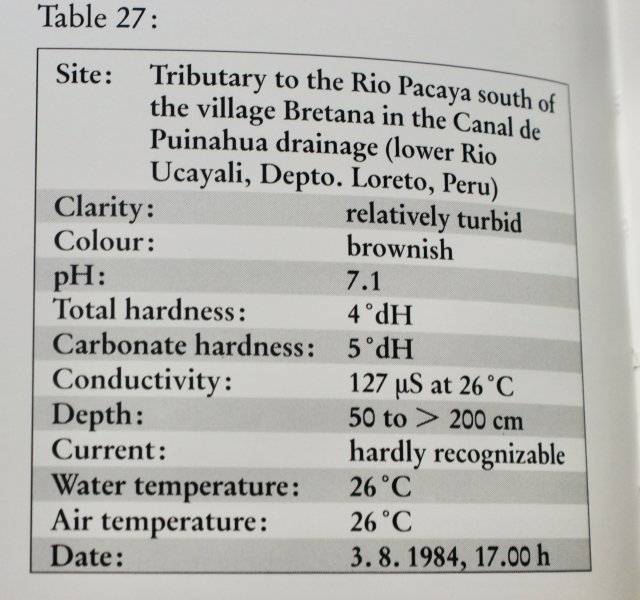
Note in these two snippets of collection point data above, South American species may encounter, not just the pH, but Hardness, and Conductivy.
But below at a pH of above 7, the hardness and conductivity are still negligible.
F4743C82-2314-439D-89DC-B243A12BE111_1_201_a.jpeg
 
Last edited:
MonsterFishKeepers.com