- Have you tested your water?
- Yes
- If yes, what is your ammonia?
- 0
- If yes, what is your nitrite?
- Between .5 and 1ppm
- If yes, what is your nitrate?
- Between 20 and 40 ppm
- If I did not test my water...
- ...I recognize that I will likely be asked to do a test, and that water tests are critical for solving freshwater health problems.
- Do you do water changes?
- Yes
- What percentage of water do you change?
- 41-50%
- How frequently do you change your water?
- Every two weeks
- If I do not change my water...
- ...I recognize that I will likely be recommended to do a water change, and water changes are critical for preventing future freshwater health problems.
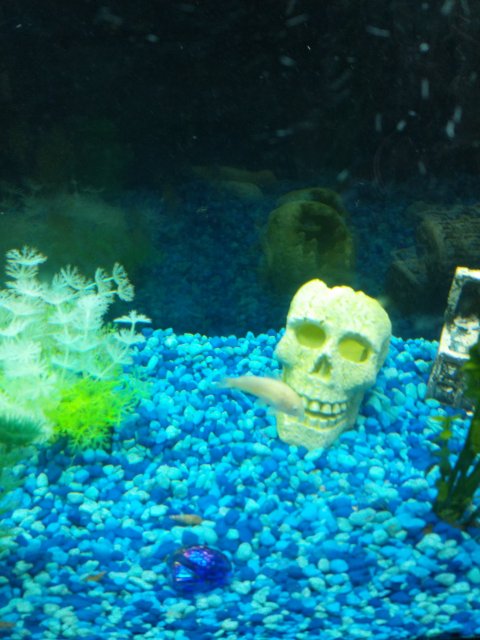
I know albinos genetically have to have red eyes. For lack of pigmentation. I have had an albino Corydoras for over a year now. He was my first fish after my Betta. I moved my community to a 50 gallon tank. Cory did not like this. He fought to not get caught. Even jumped out the net at one point. He is pretty fat from his job in population control for the guppies. Lol ? he goes around behind the mamas and sucks up the babies. So he gets plenty of protein. Only a 3 or 4 fry babies a month make it. But it doesn't bother me. It is a community tank. Not a breeding tank. So when I got them into the 50 gallon tank I had let the tank cycle for a couple days before I added the fish. And I gradually added them in bags like you would bringing them home. Our new tank has a heater so I wanted to make sure the water change wasn't too drastic. I tested the levels were fine before I out the fish in. Well I made an amateur mistake and went and bought 2 more fish and added them into the tank too early. I know now I should have waited for the tank to fully cycle for like a month. But when the spike happened I noticed because Cory was not as active as usual. We thought the stress of the move. The big tank. He needs more corys. So we got 2 more corys(again I didn't know at this time about adding fish to new tank) we thought he was lonely. So then after about 2 days then corys were acting sluggish. That is when I checked the levels and started googling about ammonia spikes. I started working to bring the levels down. But now have way too many fish and don't want to stress them more by moving them back to the 10 gallon while I figure out what is wrong with the water in the 50 gallon. We are doing partial water changes, cutting back on feedings, stablizer, testing everyday, levels are dropping. But over the course of that week my q year old Albino Corydoras that has had red eyes from the time he was a baby, eyes have slowly turned black. I noticed when it was happening. I thought it was reflection or something from the back drop. Until, his eyes went completely black. I can not find anything in google about corys eyes going from red to black. I suspect he could be blind. The water levels are back normal as of today. Last 50%water change was 2 days ago. And today I noticed my big Cory was very active again. Swimming around everywhere. He swam into the glass, and the plants and even dived into the frog. After a few moments of watching him I noticed he starts hugging the wall of the tank and slowly exploring things rather then swimming around like he normally would.if he is blind he is getting the hang of it. But why is there nothing out there on albinos eyes turning black. Could he get his sight back? Is he going to die from this? He isn't aggressive or anything. And like I said now he seems happy again. I didn't think he was going to make it for a while but he seems fine now. But his eyes are still black. You can see a little bit a red tint still there. I know he is albino. I have had him too long. But I don't understand his eyes turning black. Can anyone shine some light on what is happening to my little buddy?