You do not want 125watts bulbs. They are incandescent, and will not work at all. At the very least you must use CFL's. However, if you want a filter to do what you originally said (reduce nitrate and nuisance algae), then...
You want a series of T5HO bulbs 2 to 4 inches from the screen, on both sides. You can use 48" T5 or T8. This is a must for high filtration; it keeps all the watts near the screen, without burning a center spot. If you do go with CFL (not incandescent) bulbs, then I'm going to say that your setup may not do what you want. Thus it would only be experimental. Said again, using CFL's may not reduce your Inorganic Nitrate and Inorganic Phosphate and nuisance algae to zero, because of the un-even light spread across the screen. This is not a concern for other tanks, because they are not maxed out with bioload like yours.
The CFL problem is because CFL's concentrate all the light into a spot, and cook that spot, while not getting enough light on the outer areas. I'll say it again... if you use CFL's instead of linear T5 or T8's (even with the same wattage), it may not do the filtering you need. It will definately grow algae, more than you've ever seen, but it may not grow enough fast enough. T5 or T8's will definately do the job, because they are consistent from side to side. But if you use CFL's, just remember that you may be building this for nothing.
If you want to go the experimental route, that's fine: Get a total of twenty (20) CFL 23 watt floodlights like these:
http://www.buylighting.com/23-Watt-R40-Compact-Fluorescent-Flood-2700K-p/tcp1r4023.htm
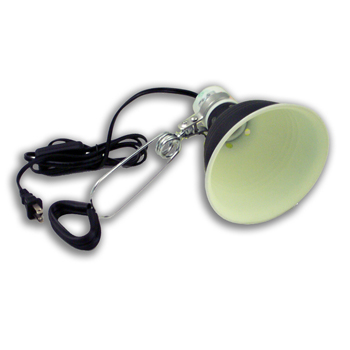
...and use clip-on holders like this:
Put two bulbs on each side of each screen like this:
This will give you 460 watts of CFL, which is more than 360 because you are already at the max capacity load with that tank, and, because only linear T5 or T8 can use all 360 watts effectively. Since CFL spots are less efficient (burning the center, and leaving out the rest), you have to go with more total power.
The 3 foot pipe needs at least 36 X 35 = 1260 gph. However you really need to divide the pipe into two sections, each with it's own pump. If you use only only pump/pipe, you WILL be sorry one day when that pumps stop, and you lose 100% of your filtering. If you just want to do this as "experimental" (which is not what you said you wanted), then fine, use one pipe. But for actual results, in no case would I put a tank like yours in the care of a single pump. A single skimmer is ok, since it does not remove any ammonia, Inorganic Nitrate or Inorganic Phosphate at all. So if a skimmer breaks, nothing happens. But if you lose your only scrubber pump, you tank is going to be a mess in just a few days.
I am not sure what the plastic bin is for; I thought you were going to use a sump.
If built properly with T5 or T8 bulbs, 360 watts, and two 630gph pumps (one for each pipe), it would do what you originally wanted: Keep Inorganic Nitrate and Inorganic Phosphate and nuisance algae at zero. A sloppy DIY, however, can only achieve this by using more power and much more space, and probably noise and salt spray.
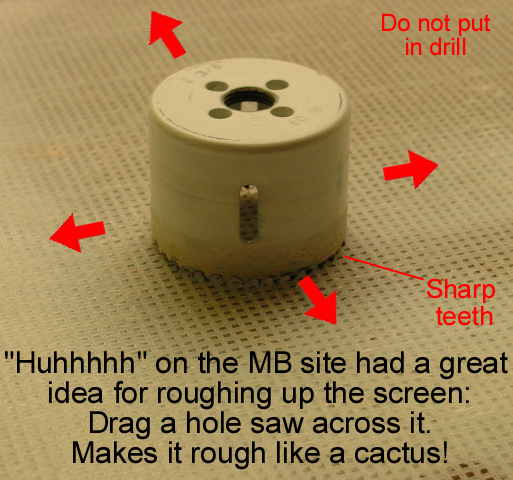
If you want to experiment, you should do it this way: Use a single screen of canvas, with four (4) of the CFL bulbs I mentioned above. Clean it every 3 to 5 days, not 7. It will grow very dark/black algae because of the very high nutrients that you are soon going to have in your water, but it will grow. It will NOT reduce your nutrients or your nuisance algae, because it is nowhere near big enough. But at least with a VERY rough screen, the black algae that grows will not die and slip off into your water, causing clouding, unless of course you wait more than 7 days to clean it.
It just comes down to power: These tanks need lots of scrubbing power, even with a skimmer, but most certainly without.
My recommendation?: Run a skimmer. Build the one-screen test unit. Use other filters too, to keep the nutrients down. Then go from there and decide about building a real scrubber that will do what you originally wanted.