Chasing pH

  • We are currently upgrading MFK. thanks! -neo
I believe that even duanes duanes agreed in that past discussion, that there's a LOT more at play than just pH values, when so called soft water species, don't do well in higher pH values. IMO one shouldn't blame pH values, for sloppy husbandry practices, which in reality the latter is most likely the actual stress trigger that caused the fish to become ill, with HITH, or whatever. Far too often pH is used as a cop out.

I believe it is the combination of "out of the norm evolutionary factors, with captive induced mistakes" that put many cichlids (and other fish) over the edge health wise.
Although the title suggest "hard water"" being the main issue, I doubt in most cases, it is always the only bugaboo.
But it, in combination with other factors such as excessive nitrate from too few water changes, gunked up filters, and then as per aquarium norm putting fish such as oscars, in much too cramped quarters, with inappropriate tank mates, together make territorial dispute, and the stress induced diseases that ensue almost "par for the course".
 
Most of my fish deaths or health issues have been directly related to my stupidity. As in everyone with years of experience says that won't work, but I think I can make it work. It doesn't. Or I'm sure I can handle more tanks, what's another couple 150's. It's only 50 tanks. Never underestimate the time it takes to keep up a water change schedule on 40 plus tanks.
 
I some ways I believe the aquarium trade, and many of its generic profiles, breed a kind of group ignorance.
Especially.....when it comes to my main interest (cichlids)

Filter efficiency and capacity is often grossly overstated.
Tank stocking capacity is often way overstated.
Water parameter tolerance such as pH range is overstated.
The need for water change frequency is grossly "under stated".
Aggression at maturity is grossly understated.

as an example, I was approached by someone for info about writing a profile about a species I had kept for at least 5 years.
But this writer had never kept that species,
yet felt confident enough with just previous regurgitated info, that that person would be able to write relevant information.
I pondered if the writer had even kept one other of that cichlid genus?
Makes me wonder how many of the hundreds of profiles have been written by authors with absolutely no personal experience.

Or have been written by someone with with at best, minimal experience.

I often see post by people saying "I've kept "so and so" cichlid for 3 months and they are just fine in a 50 gal tank".
When in reality, that species may have a 5 to 10 year life span, not reaching basic maturity and territoriality until at least 3 years old, and in nature, often holds a territory equivalent to an area of at least 300 gallons or more.

My accepted elevated nitrate skepticism, came when as a chemist testing the raw water of Lake Michigan and never getting a higher reading (every day, over 20 years of testing) of over 2 ppm.
And when I started traveling, and testing water my cichlids came from, in Mexico, and other countries in Central America, and constantly get non-detectable readings.
Much like the photos below taken here in Panama, where I have yet to get a detectable reading.
The pH sometimes changes river to river, but nitrate reading have barely budged.
2e33e1c9-e484-4c12-ba2b-6fd953c017e0.jpegIMG_2214.jpeg1265bdf6-af0b-40a4-a421-b7045f4e3985.jpegIMG_1041.jpeg
In all the above cuvettes, the darkest is pH, most yellow nitrate
IMG_5990.jpeg
In the trio of tests directly above, left is pH, middle ammonia, and right cuvette nitrate.
And in rivers with different pH values, species can be quite different.
And although some fish seems to be tolerant varying pH values, (such as gobies found in every river))
IMG_0114.jpegIMG_0067.jpeg

Some cichlids are only found in narrow value pH waters.
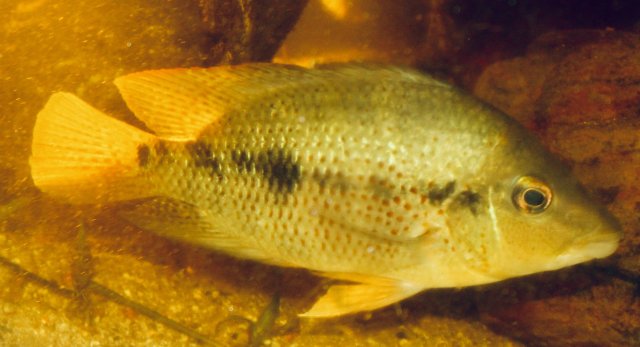
An example is the Darienheros calobrense, only found in pH waters of 8 and above.
IMG_8566.jpeg

IMG_1766.jpeg
 

Attachments

  • 2e33e1c9-e484-4c12-ba2b-6fd953c017e0.jpeg
    2e33e1c9-e484-4c12-ba2b-6fd953c017e0.jpeg
    64.7 KB · Views: 1
  • IMG_2214.jpeg
    IMG_2214.jpeg
    2.1 MB · Views: 1
  • 1265bdf6-af0b-40a4-a421-b7045f4e3985.jpeg
    1265bdf6-af0b-40a4-a421-b7045f4e3985.jpeg
    52 KB · Views: 0
  • IMG_1041.jpeg
    IMG_1041.jpeg
    1.3 MB · Views: 0
  • IMG_5990.jpeg
    IMG_5990.jpeg
    935.8 KB · Views: 0
  • IMG_8566.jpeg
    IMG_8566.jpeg
    1.1 MB · Views: 110
  • IMG_0114.jpeg
    IMG_0114.jpeg
    1.5 MB · Views: 0
  • IMG_0067.jpeg
    IMG_0067.jpeg
    576.7 KB · Views: 1
IMO nitrate toxicity is a misnomer. But in a glass box, when one sees higher nitrate levels, they typically also see higher levels of overall pollution, including dissolved organic compounds, along with elevated levels of bacteria. The latter is what weakens the fishes immune system, often triggering health issues, not the nitrates. I haven't tested my tanks for nitrates in decades, no need to - I change out 80-90% of my tank water weekly, feed lightly, and stock sparingly.
 
IMO nitrate toxicity is a misnomer. But in a glass box, when one sees higher nitrate levels, they typically also see higher levels of overall pollution, including dissolved organic compounds, along with elevated levels of bacteria. The latter is what weakens the fishes immune system, often triggering health issues, not the nitrates. I haven't tested my tanks for nitrates in decades, no need to - I change out 80-90% of my tank water weekly, feed lightly, and stock sparingly.
I agree with this too.
I use nitrate not only as a pollutant in itself, but as an indicator of other undesirable compound we as aquarists do not have the ability to test for.
But......
there has been some research findings of late, showing that elevated nitrate in itself, interferes with a fishes uptake of dissolved oxygen, causing chronic stress.
 
  • Like
Reactions: dmyersWv
Agree completely. There is no filter or chemical I have found that will replace fresh water and oxygenation. Fish need fresh water and oxygenation. I forget that people have been keeping fish before purigen and Fluval canister filters were avaliable (AKA the dark ages).
 
...I haven't tested my tanks for nitrates in decades, no need to - I change out 80-90% of my tank water weekly, feed lightly, and stock sparingly.

This is my mantra! :) All my indoor tanks get at least that much water changed weekly, and none of them are stocked to the point where fish suffer if the power goes out and the filters stop. Filtration is a luxury, not a necessity.

I do test water each spring when filling up my outdoor stock tanks, using soft/neutral snowmelt water mixed with hard/alkaline well water. For a couple weeks I do a bunch of tests on a half-dozen stock tanks; then the test kit gets put away until the next spring, assuming that it isn't completely used up.

Okay, full disclosure: I usually do a couple of tests in the fall before closing down the stock tanks for the winter. They've gone all summer with usually no water changes beyond those done by rainfall; they haven't been filtered or aerated all summer, they are choked with plants by that time...and the water always seems to test beautifully, with little or no nitrates. The stock tanks are even less crowded than the indoor aquariums. Any feeding I do outside is only supplemental to the natural food the tanks provide.
 
Yes, but again, not the fault of pH. Piss poor water conditions are the stress trigger. Even a tank with high pH and high alkalinity can suffer a dramatic drop in those values and seriously stress fish, if waste & bacteria are allowed to accumulate.

Another past thread that relates to this topic of pH.....

South American habitat-- river types | MonsterFishKeepers.com

When it comes to water conditions, too much credence is often given to clichés of region as opposed to specific habitats. This includes the notion that African = high pH, hard water and South America = low pH, soft water. Some understand the mistake in this and know that: a) not all African aquatic habitat is highly mineralized, high pH and b) not all SA habitat is low pH and soft water. However, some who understand this still conceptualize SA water conditions as divided along geographic/regional lines that inadequately account for the variations in habitat within the same region.

What's well known to science and not always to hobbyists was proposed by British naturalist Alfred Russel Wallace in the 19th century and still holds true today, with some refinement of the details: River water types in SA, though not SA alone, generally fall within the 3 basic types below:

Black water-- This is the soft, low pH, tannin stained water some imagine generally typifies SA habitat and species.

Whitewater-- In order to make things easier on myself while providing a good description, here's a quote from the link to the left:


Clearwater-- Neither tannin stained, nor muddy. Often between the two other types in water parameters, but some clearwater rivers are fairly mineralized/alkaline/higher pH-- or some portions of them are, or some portions of them are during certain times of the year.

The above is very well known in science literature and can also be found in hobbyist literature, such as that authored by Heiko Bleher. It is fundamental to understanding SA fish species and their native habitat and is more important to know and account for with some species than others. Most SA cichlid species adapt reasonably well to non-native water conditions-- within reason and within a certain range-- with the following general exceptions:

Temperature: Even the normal variation of wild-native temperatures stress some species. For example, surprising to many would be to know that some discus see temperatures in the low-mid 70s in nature, those in such habitats live with this but tend to be stressed when they see such seasonal conditions. Others, like many gymnogeophagus, are well adapted to fairly wide temperatures swings and even need the seasonal variation to maintain good health. The bottom line is temperature is important.

Breeding-- Some species that can live just fine and without issue in higher or lower than native pH or mineralization, may nonetheless be less fecund, or even have difficulty reproducing at all. Here's an example:


Sensitive species-- In varying degrees, some are simply more adaptable to dissolved solids/pH/hardness outside of native conditions than others. A few years ago, through an unintended mistake in one tank, I discovered red head tapajos geos are far more high pH/high alkalinity tolerant than Guianacara (sold to me as G. sphenozona). I 'mysteriously' lost a couple of guianacara before discovering the problem was pH was way higher than I thought. However, the red head geos didn't skip a beat.

The same river sometimes crosses more than one geologic or environmental zone and its water conditions may differ along its length or according to season. For example, some eastern slope rivers originating in the Andes will be harder and higher pH in higher elevations.

Here is another reference, with details slightly different than the one above. There's a good volume of such literature out there, but note that it can vary in the details somewhat, often according to when it was published or when the references it uses were published. This is because greater access in the past couple of decades has resulted in an earlier picture of the waters east of the Andes region being adjusted somewhat. However the basics are the same. (Parenthetical note in the quote below is mine and added for clarification.)
https://www.researchgate.net/public...nce_for_tambaqui_Colossoma_macropomum_culture


So-- if you want to be accurate: SA water habitat is not simply divided between eastern and western slope of the Andes, nor even the Amazon basin vs other regions-- in fact, geologically speaking, it's not that simple either. There are actually several distinct geologic regions east of the Andes or in what we may think of as the Amazon region. A more accurate picture is black water vs clear water vs whitewater, though even at that there can be variation or overlap in pH, hardness, nutrients, and specific mineral profile, including at times variation according to the particular stretch of the river or time of the year. Naturally, something similar can be said of lakes or reservoirs in the region

 
MonsterFishKeepers.com